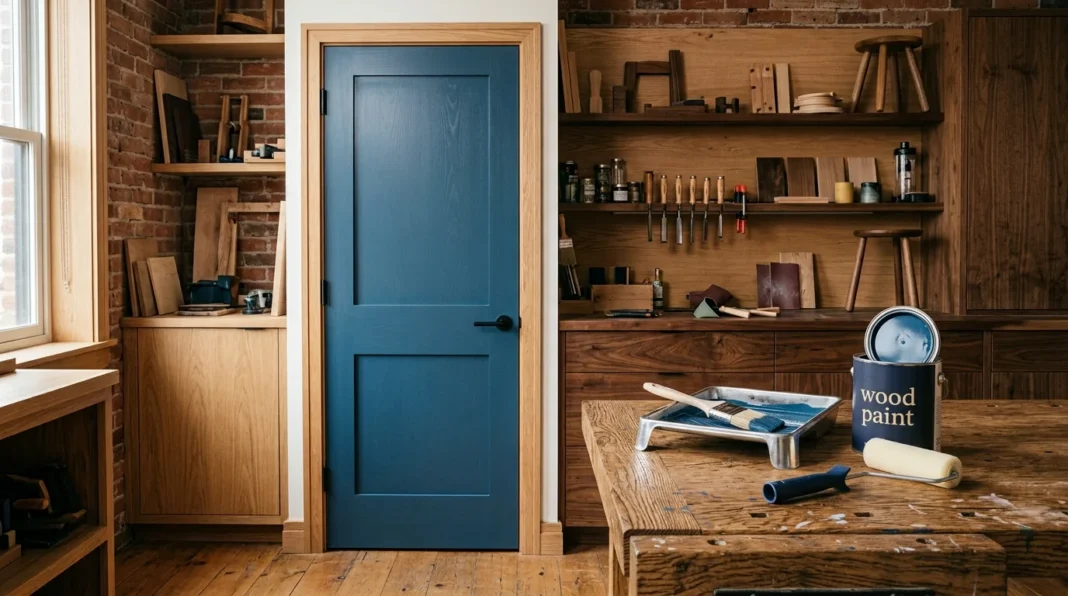

A tin of paint can completely transform tired doors, dated furniture, worn skirting boards, or weather-beaten garden timber, but choosing the wrong product can leave you with peeling, yellowing, or an uneven finish. The best wood paint isn’t simply the colour you like most; it needs to suit where the timber is located, how much wear it receives, and the finish you want. For UK homes, that usually means deciding between interior and exterior formulations, water-based and solvent-based options, and finishes ranging from low-sheen eggshell to traditional high gloss.
Quick answer: Paint made for timber is a durable coating formulated for surfaces such as doors, skirting boards, furniture, sheds and garden joinery. For most UK interiors, water-based satin or eggshell is practical; exterior wood needs a weather-resistant exterior formulation, while careful cleaning, sanding and priming usually matter as much as the paint itself.
Key Takeaways
- Use a dedicated interior timber coating for doors, skirting boards, trims and other indoor wood.
- Choose exterior-rated paint for sheds, fences, outdoor furniture, window frames and exterior doors.
- Satinwood gives a practical mid-sheen finish, while eggshell is softer and gloss is shinier and more traditional.
- Water-based formulas usually dry faster and produce less odour than traditional solvent-based paints.
- Clean, repair and lightly sand the surface before painting unless the product instructions specifically say otherwise.
- Bare timber, stained surfaces and difficult substrates often benefit from the correct primer.
- Take extra care when preparing old paint layers in older UK properties, as some historic coatings may contain lead.
What Is Wood Paint?
Paint formulated for timber adds colour while forming a protective decorative coating that can withstand more handling and movement than ordinary wall emulsion. Interior versions are commonly used on skirting boards, doors, architraves, bannisters and furniture, while exterior products are formulated for timber exposed to rain, sunlight and changing temperatures. UK retailers consequently separate interior wood coatings from products intended for outdoor timber, rather than treating one paint as suitable for every surface.
The term can also cover several different formulations, which is why two tins labelled for wood may behave very differently. Some are quick-drying water-based products, others use traditional solvent-based formulas, and specialist furniture paints may prioritise easy application or decorative finishes. Before buying, check the surface, location, sheen, preparation requirements, and whether a primer or undercoat is needed.
Water-Based or Solvent-Based Paint for Wood?
Water-based paint for wood has become a convenient choice for many indoor decorating projects because it tends to dry quickly, produces relatively little odour, and lets you clean brushes with water. Current UK ranges include water-based satinwood, eggshell and gloss products, so choosing a water-based formula no longer means being restricted to one appearance. Dulux, for example, describes its Quick Dry Satinwood as water-based, low-odour, and quick-drying, showing how mainstream this coating has become.
It is especially practical when painting several doors, skirting boards or pieces of furniture in an occupied home because shorter drying intervals can make the room easier to return to use. Water-based white paints are also commonly marketed as non-yellowing or “stays white”, which can be useful where a clean white finish is important. Always follow the individual product instructions because required coats, drying times and compatible primers vary.
Solvent-Based Paint
Traditional solvent-based wood coatings remain available and can provide a smooth, durable finish, particularly on heavily used joinery. They generally take longer to dry, create more noticeable odour and may require white spirit or another specified cleaner for brushes rather than ordinary water. Good ventilation and careful adherence to the manufacturer’s safety directions are therefore particularly important during application.
Solvent-based products can still make sense where you prefer their application characteristics or are matching an existing coating system. However, choose based on the exact job rather than assuming solvent-based automatically means stronger or water-based automatically means easier. Modern ranges vary considerably, so the product label and technical instructions should settle the decision.
Furniture and Multi-Surface Paints
Furniture paints are aimed at projects such as bedside tables, wardrobes, chairs, bookcases and dressers, and some are designed to minimise preparation on suitable surfaces. Chalk-style products are popular when you want a soft matt or deliberately aged appearance, while multi-surface formulas can be useful when a piece combines timber with MDF, melamine, or another material. These convenient products do not remove the need to inspect the surface for grease, loose coatings or damage before starting.
If upcycling furniture is part of a wider room refresh, Trendara’s room-by-room makeover guide shows how repainting existing furniture can change a space without the cost of replacing good pieces. Reusing furniture also gives you more freedom to coordinate colours with walls, textiles and accessories. The important point is to choose a coating designed for the actual surface rather than relying on leftover wall paint.
Eggshell, Satin or Gloss: Which Finish Is Best for Woodwork?
Sheen affects both appearance and practicality, so no single finish is best everywhere. Wickes identifies gloss, satin and eggshell as the principal choices for interior woodwork, with gloss at the shinier end and eggshell providing a much lower sheen. Satinwood sits between them and is widely used for contemporary doors, trims and skirting boards.
| Finish | Appearance | Good For | Main Consideration |
|---|---|---|---|
| Eggshell | Low sheen, understated | Furniture, doors, trim, traditional interiors | Softer appearance with little reflection |
| Satin / Satinwood | Mid sheen | Doors, skirting boards, bannisters, general woodwork | Balanced combination of durability and modern appearance |
| Gloss | High sheen | Doors, trims, frames and statement joinery | Reflective surface can make imperfections more visible |
| Matt / Chalky | Very low sheen | Decorative furniture and upcycling | Check durability and whether a protective topcoat is recommended |
A satin finish is often the easiest all-round choice when you want woodwork to look distinct from matt walls without creating the highly reflective appearance of gloss. Eggshell works well where you want painted timber to blend quietly into a softer interior scheme, while gloss can create sharp contrast around architectural details. The right choice ultimately depends on the room, the condition of the surface and how much visual emphasis you want the woodwork to have.
Best Wood Paint for Interior Woodwork
Doors and skirting boards take knocks, fingerprints, vacuum-cleaner bumps, and repeated cleaning, so they need a coating meant for wood rather than standard wall emulsion. Satinwood is particularly popular for these areas because its moderate sheen feels contemporary while still creating a clearly finished surface. Eggshell can produce a calmer effect, whereas gloss works when you deliberately want crisp, reflective trim.
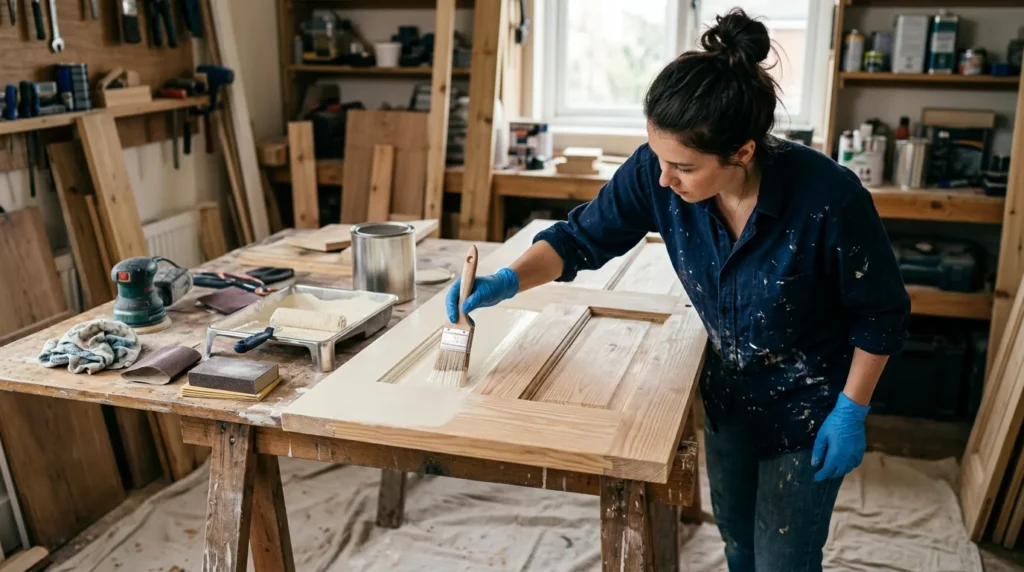
Preparation matters just as much as the finish, especially when repainting existing glossy joinery. The surface should normally be cleaned, loose paint removed, and the existing coating lightly abraded to create a sound key before applying the next system. Wickes similarly recommends cleaning, filling defects and sanding as part of preparing interior woodwork before painting.
For wooden furniture, consider how the piece will be used before choosing a decorative finish. A display cabinet experiences far less contact than a dining table, desk or chair, so a beautiful low-sheen coating that suits one project may not provide the durability expected from another. Always check whether the manufacturer recommends a separate protective finish for frequently handled furniture.
Best Exterior Wood Paint for UK Weather
Outdoor timber faces a different set of problems because it repeatedly becomes wet, dries out and sits in sunlight throughout the year. Interior coatings aren’t designed for those conditions, which is why you should use an exterior-rated formulation on garden furniture, sheds, fences, exterior doors, and timber window frames. Wickes specifically advises choosing paint intended for exterior use when protecting outdoor wood from water penetration and weather exposure.
The condition of the timber should influence the system you choose as much as the colour does. Bare or untreated timber may need preservative or primer depending on the product and project, while previously painted wood needs loose or flaking material removed before recoating. Rough-sawn softwood can also absorb significantly more coating than smooth, planed timber, so treat coverage figures as product-specific estimates rather than universal rules.
Paint, Stain or Oil?
Opaque exterior paint for wood is useful when you want a strong block of colour that substantially changes the timber’s appearance. A stain is a better fit when you want more of the grain and natural character to remain visible, while oils are commonly chosen when the intention is to penetrate and enhance rather than create an opaque painted film. The best option therefore depends on whether your priority is colour transformation, visible grain or a more natural-looking finish.
Consider maintenance before choosing, because exterior finishes weather differently. A painted surface may eventually require removing failed or peeling coating before repainting, whereas penetrating finishes are usually refreshed using a different maintenance process. Check the manufacturer’s recoat and maintenance instructions instead of choosing based on appearance alone.
How to Choose the Right Paint for Your Project
The simplest way to narrow the options is to start with the object rather than the colour chart. A front door, bedroom dresser, and garden fence are all timber, but they face completely different conditions and shouldn’t automatically receive the same coating. Use the table below as a starting point, then confirm suitability on the product label.
| Project | What to Look For | Suitable Finish Options |
|---|---|---|
| Interior doors | Durable interior wood coating | Satin, eggshell or gloss |
| Skirting boards and architraves | Wipeable, hard-wearing finish | Satin or gloss |
| Indoor furniture | Furniture or suitable interior timber coating | Matt, eggshell or satin |
| Exterior doors and windows | Exterior-rated weather-resistant coating | Satin or gloss |
| Sheds and fences | Product specifically suitable for garden timber | Opaque matt or specialist garden finish |
| Garden furniture | Exterior furniture/wood coating | Matt, satin or gloss depending on product |
| Bare timber | Compatible primer plus topcoat where required | Depends on final system |
Do not assume that “one coat”, “self-undercoating” or “no primer needed” applies to every surface simply because it appears on the front of a tin. Such claims usually depend on the existing colour, surface condition and substrate, and a dramatic colour change may still require additional coats. Read the complete application instructions before buying so you can plan primer, drying time, and total paint quantity together.
How to Prepare Wood Before Painting
Preparation is the stage most likely to determine whether the finished coating looks smooth and stays attached. Paint applied over dust, grease, loose varnish or flaking old coating may fail even if the topcoat itself is excellent. Give yourself enough time to prepare the surface rather than treating sanding and cleaning as optional extras.
A typical preparation sequence is:
- Remove handles, hinges or fittings where practical.
- Clean the timber to remove dirt, grease and residues.
- Scrape away loose, peeling or unstable coating.
- Fill dents, cracks or unwanted holes with a compatible filler.
- Sand or abrade the surface as required to smooth repairs and create a key.
- Remove sanding dust thoroughly.
- Apply knotting solution, primer or undercoat where the coating system requires it.
- Allow each preparation product to dry fully before applying the topcoat.
Bare wood often needs more attention than previously painted timber because knots, resin and uneven absorption can affect the finish. Previously painted wood may instead need only cleaning, repairs and careful abrasion when the old coating is sound and compatible. Whatever the surface, follow the primer and topcoat manufacturer’s directions because coating systems are designed to work as a sequence.
Be Careful With Old Paint in Older UK Homes
Old painted doors, frames and other timber deserve additional care because historic paint layers can contain lead. The Health and Safety Executive warns that removing old coatings in properties built before the 1980s can create exposure, and it specifically identifies dry sanding old paint as a risk. Where sound paint only needs a key, HSE recommends wet abrasive paper rather than unnecessarily stripping it back. If you are uncertain about an old coating, avoid creating dust and review current HSE guidance before beginning disruptive preparation.
This is particularly important when old paint is flaking, when several historic layers are visible or when children may use the area. Protective measures need to match the actual risk, and difficult or extensive removal may be better handled professionally. Never use aggressive stripping methods simply to save preparation time.
How to Paint Wood for a Smoother Finish
Once the surface is clean, stable and properly prepared, stir the paint thoroughly and use a brush or roller suited to both the coating and the object. Work systematically rather than applying a very thick coat, because heavy application can create runs, slow drying, and leave an uneven surface. On visible timber, consistent strokes and neat work along the shape of the joinery usually give a cleaner result.
A straightforward application process is:
- Protect surrounding floors, walls and fittings.
- Apply the specified primer or undercoat if required.
- Allow it to dry for the full stated period.
- Lightly de-nib between coats if the product system recommends it.
- Apply the first topcoat evenly.
- Respect the stated recoat time rather than painting again while the surface is still soft.
- Add the required additional coat or coats.
- Allow doors, windows and furniture to cure sufficiently before heavy use.
Drying conditions matter, particularly outdoors or in cold, damp rooms. A surface can feel dry while the coating underneath is still soft, so newly painted doors and windows should not be closed prematurely if there is a risk of surfaces sticking together. Manufacturer instructions should take priority over generic “touch dry” estimates because products cure at different rates.
Common Wood Painting Mistakes to Avoid
Several problems that look like paint failure actually begin during preparation or product selection.
- Using interior paint on exposed outdoor timber.
- Painting over grease, dust or loose old coating.
- Skipping primer when the chosen system requires one.
- Applying heavy coats in an attempt to finish faster.
- Ignoring the specified drying and recoat times.
- Using ordinary wall emulsion on high-wear woodwork.
- Painting damp exterior timber.
- Assuming every furniture paint works on varnish, laminate or previously waxed surfaces.
- Choosing gloss for badly damaged wood without first correcting visible defects.
- Dry sanding unidentified historic paint without considering possible lead exposure.
A successful decorating job is usually less about finding a secret product and more about matching the coating system to the surface. Spending an extra hour cleaning, filling and sanding can save far more time than repairing peeling or patchy paint afterwards. Treat preparation, primer and topcoat as one system rather than three unrelated purchases.
Choosing Woodwork Paint Colours for Your Home
Colour becomes more interesting on woodwork because it can either frame the room or disappear into the surrounding scheme. Painting doors and skirting in a colour close to the walls can create a calmer, more continuous look, while darker or contrasting joinery can turn architectural details into deliberate features. Furniture provides an even lower-risk place to experiment because one painted cabinet or side table can introduce colour without repainting an entire room.
Trendara’s guide to how texture and colour influence mood at home explains why you should choose colour based on the atmosphere you want, rather than simply copying a trend. A deep green may feel sophisticated in one room while making another space feel unnecessarily heavy, and pale neutrals can look very different under warm and cool lighting. Test the colour in the room and look at it at different times of day before committing to a large project.
The finish changes colour perception as well because gloss reflects more light than eggshell or matt paint. Two paints in a similar shade can therefore feel noticeably different when their sheen levels are not the same. Always assess colour and finish together rather than treating them as separate design decisions.
How Much Paint Do You Need?
Coverage varies by product, timber porosity, surface texture, and application method, so no single number applies to every tin. Smooth previously painted doors may use less coating than bare rough-sawn timber, while a dramatic colour change can increase the number of coats required. Check the manufacturer’s stated square-metre coverage and multiply it by the number of planned coats before buying.
It is sensible to allow a modest margin for edges, mouldings and uneven absorption rather than calculating to the final millilitre. At the same time, buying far more paint than necessary creates storage and disposal problems, so measuring the project first is worthwhile. If several doors or furniture pieces will use the same colour, calculate them together before choosing tin sizes.
Frequently Asked Questions
What Is the Best Wood Paint for Skirting Boards?
Satinwood is a strong all-round choice for skirting boards because it provides a noticeable but not highly reflective sheen and is widely available in durable interior formulas. Gloss offers a more traditional, shinier finish, while eggshell creates a quieter look when you want the trim to blend with the room. Whichever sheen you choose, use paint intended for interior woodwork and prepare the existing surface properly.
Can You Paint Wood Without Sanding?
Sometimes a specialist product can be applied with little abrasion, but “no sanding” should not be treated as a universal rule. Glossy, damaged, dirty, or poorly bonded surfaces may still need preparation to give the new coating a clean, stable base. Check the instructions for the exact paint, and test a small area when you’re unsure about the existing finish.
Can You Use Wall Paint on Wood?
Ordinary wall emulsion is generally not the best choice for doors, skirting boards and other frequently handled timber because it is formulated primarily for walls and ceilings rather than high-wear joinery. Dedicated wood coatings provide the finish and durability expected on trim, doors, and furniture. Using the correct product also gives you more appropriate choices of satin, eggshell and gloss sheen.
Do You Need Primer Before Painting Wood?
Primer is often needed on bare timber, difficult substrates, stained surfaces or when the chosen coating system specifically requires it. Some modern paints are self-undercoating or designed for direct application to suitable, previously painted surfaces, so an additional primer isn’t always necessary. Read the instructions for both the substrate and topcoat instead of applying or skipping primer by habit.
What Is the Best Paint for Wooden Furniture?
The best wood furniture paint depends on how you’ll use the item and the look you want. Chalky or matt products can suit decorative pieces, while harder-wearing eggshell or satin finishes may be more practical on furniture that is handled regularly. Check whether the chosen product needs primer, sanding or a protective topcoat before starting.
Can Interior Paint Be Used on Outdoor Timber?
Interior woodwork paint should not normally be used on exposed exterior timber because it is not formulated for prolonged rain, sunlight and changing outdoor conditions. Choose an exterior coating that specifically lists the timber surface you intend to paint. UK retailers, including Wickes, make the same distinction between interior and exterior wood products.
What Is the Difference Between Paint and Stain for Timber?
Paint normally creates a more opaque coloured coating that hides much of the timber’s original colour. Wood stain is chosen when you want greater visibility of the grain while adding colour and protection, although exact opacity varies considerably between products. Decide first whether you want the timber to look painted or whether retaining its natural character matters more.
The Bottom Line
Choosing the right wood paint starts with three questions: is the timber indoors or outdoors, how much wear will it receive, and what finish do you want to see every day? Once those answers are clear, deciding between satin, eggshell, gloss, furniture paint and an exterior system becomes far easier. Careful cleaning, repairs, sanding and priming where required will usually make a greater difference to the final result than rushing toward the most heavily advertised tin.
For a typical UK interior, a suitable water-based satinwood or eggshell provides a practical starting point for doors, skirting and general woodwork, while outdoor timber needs a coating specifically rated for exterior conditions. Older painted woodwork deserves extra caution during preparation because historic layers may contain lead, so avoid creating unnecessary dust. For more decorating and renovation ideas, explore Trendara’s Home Improvement section before planning your next project.