
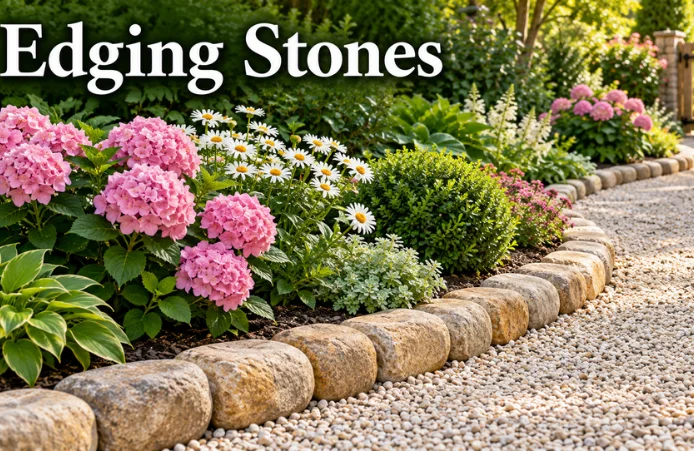

Edging stones create a clear boundary between lawns, paths, gravel, patios, and planted borders. They can also reduce spreading grass and help loose materials stay where they belong. For UK gardens, the right choice depends on appearance, ground conditions, budget, and how much support the edge needs.
Choosing well matters because different products perform very differently after installation. A decorative lawn border has lighter demands than a driveway or heavily used path. This guide compares the main options, current UK price signals, installation needs, and practical buying points.
Quick answer: Garden edging works best when its material matches the job. Concrete suits affordable, practical borders, while sandstone and granite offer a more natural finish. Setts work well beside paths and paving. For lasting results, prepare a stable base, set the correct height, and support heavier edges with mortar or concrete.
Edging Options at a Glance
| Type | Best suited to | Appearance | Typical cost level | Installation |
|---|---|---|---|---|
| Concrete edging | Lawns, paths, simple borders | Clean and practical | £ | Moderate |
| Sandstone | Traditional gardens and patios | Warm and natural | ££, £££ | Moderate |
| Granite | Modern borders and busy areas | Crisp and refined | £££ | Moderate |
| Stone setts | Paths, lawns and paving details | Textured and flexible | ££, £££ | Moderate |
| Decorative moulded stone | Cottage and traditional gardens | Ornamental | £, ££ | Easy to moderate |
| Large kerb-style units | Drives and structural edges | Strong and substantial | ££ | More demanding |
Key Takeaways
- Choose the material according to the load and surrounding surface.
- Concrete remains one of the most economical permanent options.
- Natural sandstone and granite usually cost more but offer distinctive finishes.
- Curves are easier with small setts than long rigid units.
- Stable bedding matters more than decorative appearance for long-term performance.
- Measure the full run before comparing pack prices or individual unit prices.
Why Use a Stone Border in the Garden?
A defined edge makes separate garden surfaces easier to manage. It can stop soil spilling onto paving and reduce grass creeping into a planted bed. The RHS also notes that well-maintained lawn edges and edging barriers help keep grass from entering borders. Stone also provides a visual line that can make a garden feel more organized. Straight borders tend to create a formal appearance, while broad curves feel softer.
The RHS recommends string for straight layouts and flexible hose for marking curved borders. Hard edging can be especially useful beside gravel or other loose landscaping materials. The barrier helps reduce migration onto lawns, paths, or paving. It can also provide support around paving where movement at an unsupported edge would otherwise become a problem.
How to Choose Edging Stones for Your Project
Start with the function rather than color or finish. A lawn edge mainly needs definition and enough depth to remain stable. A driveway border faces greater sideways pressure and usually needs a stronger foundation. Also consider the height visible above the surrounding ground. A nearly flush edge can make mowing easier beside a lawn. A raised edge provides stronger visual separation and can help retain soil or gravel.
Finally, match the border with materials already present in the garden. Grey granite can complement cool-toned paving and contemporary planting. Sandstone usually works naturally with warmer paving, brickwork, and traditional properties.
Concrete Garden Edging
Concrete is a practical choice for many UK gardens because standard units are widely available. Current retailer listings include common 600mm and 915mm profiles in several finishes. Wickes and Selco list examples around £7 to £8 per unit at current advertised prices. Its main strength is predictable shape and relatively straightforward installation. Flat-top and rounded profiles can suit paths, lawns, or uncomplicated planted borders.
Concrete can look less natural than quarried stone, although color and surface options vary considerably. Choose heavier concrete products when the edge has a structural job. Lighter decorative units suit areas carrying little pressure. Always check the manufacturer’s intended use before treating decorative edging like a driveway kerb.
Sandstone
Sandstone suits gardens where natural color variation is part of the design. Buff, brown, grey, and mixed tones can complement traditional paving particularly well. Matching the border to an existing sandstone patio creates a consistent finish. Natural stone generally costs more than basic concrete. London Stone currently lists 600mm sandstone and granite products from roughly £21 to £29.40 per piece.
Its stated dimensions mean the equivalent linear-meter cost can be considerably higher than standard concrete edging. The final appearance depends on the stone’s finish and color. Sawn products give cleaner lines, while textured faces suit more traditional schemes. Check actual samples where color matching matters because natural variation is part of the material.
Granite
Granite is a strong option for contemporary schemes and heavily defined borders. Grey and darker tones pair naturally with modern paving, gravel, and restrained planting. Its dense appearance can also produce a crisp contrast against lawns. Prices vary according to dimensions, finish, source, and whether the product is a plank or sett. Current UK listings show granite products across a broad price range.
That makes price per linear meter more useful than comparing pack prices alone. Granite often makes most sense where durability and appearance both matter. It may be unnecessary for a temporary border or low-budget garden update. For a long-term patio or path design, the extra material cost can be easier to justify.
Setts and Cobbles
Smaller stone units work particularly well around curves and detailed layouts. Individual setts can follow shapes that would require repeated cutting with long edging pieces. They also create a wider decorative strip rather than a thin boundary line. Setts are useful where you want a mowing strip beside grass. Laid close to lawn height, the stone surface can form a practical transition between planting and turf.
The installation still needs enough support to prevent individual blocks from settling unevenly. They can also repeat materials used elsewhere in the garden. A sett border around a patio can visually connect paths, steps, and planting areas. This often looks more deliberate than introducing another unrelated material.
How Much Do Garden Borders Cost in the UK?
There is no single UK price because material, dimensions, delivery, preparation, and labor vary widely. Standard concrete can cost around the low teens per linear meter based on current retailer examples. Premium natural stone can reach several times that amount before installation.
For example, current Wickes listings include common concrete pieces at about £11.67 per meter before delivery. London Stone says its natural products can cost around £35 to £49 per linear meter. These figures are useful planning references, not quotations for every project. Delivery can make a noticeable difference because stone is heavy.
Small orders sometimes have a high delivery cost relative to the materials themselves. Compare the complete delivered cost rather than choosing from the cheapest displayed unit price.
Planning the Border Before Installation
Measure the full length of every planned run first. Add a sensible allowance for cuts, corners, breakages, or pattern changes. Buying everything together also reduces the risk of color or batch differences. Mark straight sections with a taut string line. Use a hose or flexible rope for curves before digging. These simple guides make it easier to judge proportions before committing to excavation.
Think about adjoining surfaces at the same stage. A patio edge may need to coordinate with paving levels and drainage. Trendara’s patio cleaner guide also explains why drainage, shade, and retained moisture affect hard surfaces in British gardens.
A Simple Installation Method
The exact method depends on the chosen product and its intended use. Some light decorative products can sit in prepared ground. Heavier path and driveway borders normally need more support.
- Mark the line. Use string for straight runs and a flexible guide for curves.
- Excavate the trench. Allow enough depth for the chosen bedding and exposed height.
- Prepare the base. Make the bottom stable, even, and free from loose material.
- Set the units. Follow your line and check both height and alignment regularly.
- Support the edge. Add the specified mortar, concrete, or haunching where required.
- Allow the bedding to cure. Avoid disturbing newly installed structural edging prematurely.
DIY Doctor recommends a concrete bed and rear haunching for concrete units supporting paths or driveways. Its installation guidance also stresses checking alignment with a string line and spirit level. Lighter garden products may require a different method, so product instructions take priority.
Don’t assume more concrete always produces a better result. Drainage and surrounding soil levels still need consideration. The border should control materials without accidentally creating a place where water remains trapped.
Matching the Border to the Rest of Your Garden
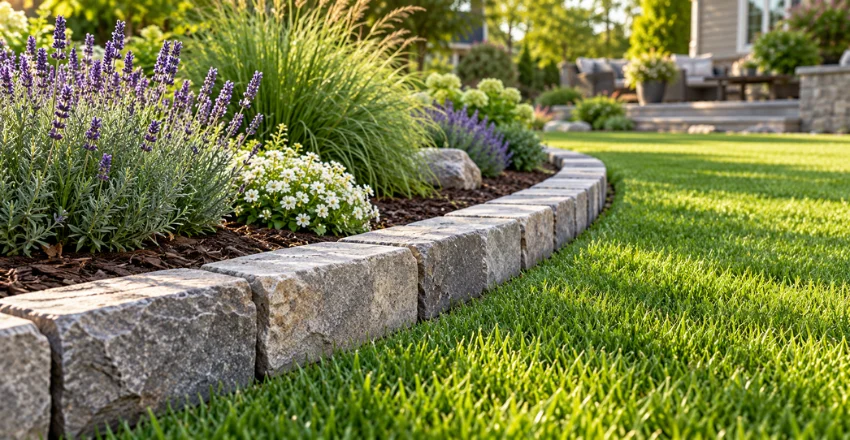
A border looks most convincing when it belongs to the wider design. Where possible, repeat an existing paving color, stone family, or architectural tone. Too many unrelated hard-landscaping finishes can make a compact garden look fragmented. This becomes especially important when several major features share the same space. Trendara’s guide to planning a plunge pool in a UK garden recommends treating features as part of the entire garden layout.
The same principle applies to borders, paths, patios, and planting. You should also think beyond summer appearance. Persistent dampness, fallen leaves, frost, and soil movement can affect exposed garden materials. Trendara’s weather-damage guide covers wider landscaping maintenance considerations around the home.
Common Buying Mistakes to Avoid
Buying by piece price alone can create a misleading comparison. One product may be 600mm long while another covers almost a full metre. Convert every option to a linear-metre cost before deciding. Another mistake is choosing a decorative unit for a structural location. A driveway edge needs different support from a flower bed boundary. Check the product description, dimensions, and installation instructions before ordering.
Finally, don’t forget corners and curves. Long rigid units work efficiently on straight runs but can become awkward around tight shapes. Smaller setts may cost more to lay, yet they can reduce difficult cutting.
Frequently Asked Questions
What are edging stones used for?
Edging stones are used to define lawns, flower beds, paths, patios, gravel areas, and other garden surfaces. They can restrict material movement and create a cleaner visual boundary. Structural products can also help support the outer edge of paving.
Should a stone lawn edge sit flush with the grass?
A near-flush finish can make mowing easier because wheels can pass close to the border. Some designs stand slightly higher to create stronger separation from planted beds. Choose the finished height before excavation so the entire run remains consistent.
Do stone borders need concrete underneath?
Not every decorative garden product needs a concrete bed. Structural borders beside paving, paths, and driveways often benefit from concrete bedding and haunching. Follow the product supplier’s instructions because dimensions and expected loads vary.
Which stone is best for a curved garden border?
Small setts and cobbles are usually easier to arrange around curves than long rigid pieces. Their short lengths allow the line to change gradually. Broad sweeping curves are also easier to maintain than complicated shapes.
How do I calculate how many pieces I need?
Measure the total border length in metres and divide it by the usable length of one unit. Round upward because suppliers sell complete pieces or packs. Add extra material when the design includes cuts, corners, or possible breakage.
Choosing a Border That Will Last
The best purchase fits both your garden and the job. Concrete suits many affordable borders, while sandstone and granite provide more distinctive natural finishes. Setts are particularly useful for curves, decorative bands, and transitions between surfaces. Measure first, compare costs by linear metre, and check how each product must be installed. Give structural areas enough bedding and lateral support.
With those decisions made before ordering, your new garden edge should look intentional and remain easier to maintain. For your next step, sketch the border and record its total length. Then shortlist two materials that suit the surrounding paving and property style. Compare their delivered cost, dimensions, and installation requirements before buying.