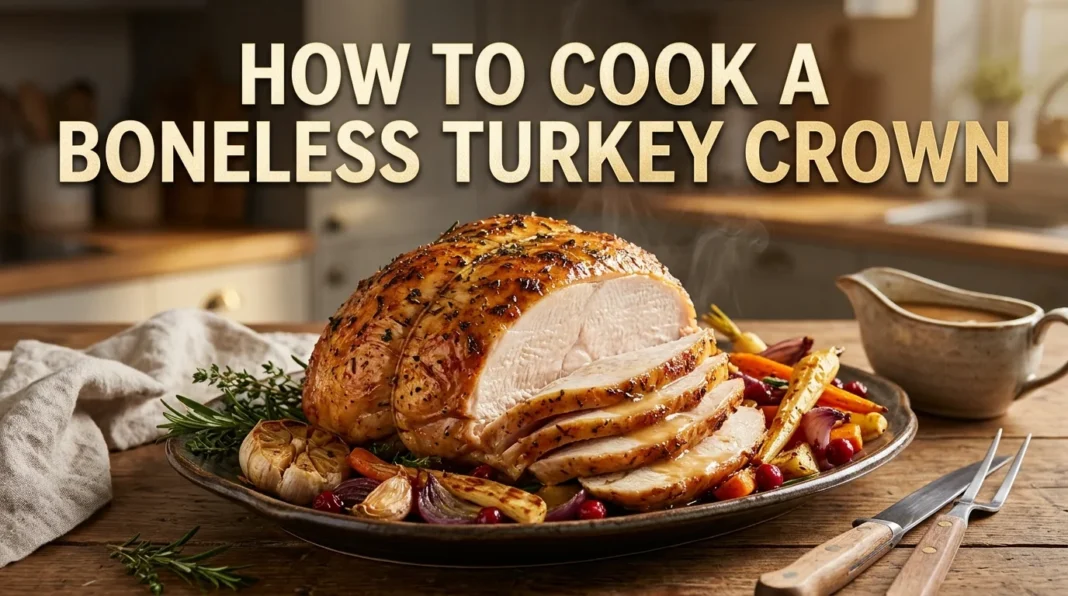

A boneless turkey crown is easier to roast than a whole bird, but breast meat can dry quickly. Learning how to cook a boneless turkey crown comes down to three things: sensible timing, added fat, and temperature checks. Follow the method below for tender slices, browned skin, and easier Christmas dinner planning.
Direct answer: Roast a fully thawed turkey crown at about 200°C conventional or 180°C fan, following its packaging instructions first. Protect the breast with butter and foil during most of the cooking. Remove the foil near the end, then check the thickest part with a thermometer before resting and carving.
Boneless Turkey Crown Cooking Guide at a Glance
| Detail | Practical UK guidance |
|---|---|
| Oven temperature | Around 200°C conventional / 180°C fan, unless packaging says otherwise |
| Preparation | Fully thaw, pat dry, season, and add butter or oil |
| Approximate timing | Depends on weight, shape, stuffing and manufacturer instructions |
| Safe temperature check | 70°C for 2 minutes or 75°C for 30 seconds |
| Browning | Remove foil during the final 20–30 minutes |
| Resting time | About 20 minutes before carving |
| Best tool | Digital meat thermometer |
| Key risk | Overcooking lean breast meat |
UK cooking guidance varies because rolled joints differ in thickness and preparation. Some retailers recommend different temperatures and cooking calculations for their products. Treat the label as your first timing guide and use temperature as the final test.
The Food Standards Agency says poultry must cook thoroughly through the centre. Safe combinations include 70°C for two minutes or 75°C for 30 seconds. A clean thermometer gives you a more reliable result than timing alone.
What You’ll Need
A simple roast does not require specialist equipment or complicated ingredients. A thermometer is the most useful addition because oven temperatures and joint shapes vary. Keep the seasoning simple if you plan to serve rich gravy and traditional sides.
- 1 boneless turkey crown or rolled turkey breast joint.
- 40–60g softened butter.
- Salt.
- Freshly ground black pepper.
- Fresh sage, thyme or rosemary.
- Optional lemon or orange zest.
- 1 onion, roughly sliced.
- 1 carrot, roughly sliced.
- 200ml chicken or turkey stock.
- Roasting tin.
- Kitchen foil.
- Digital meat thermometer.
- Carving knife.
Butter adds flavour and helps protect the lean breast while it roasts. You can use a neutral cooking oil instead when preferred. Trendara’s guide to rapeseed oil and its uses provides more background on this common UK cooking oil.
How to Cook a Boneless Turkey Crown in 7 Steps
The safest approach combines the manufacturer’s cooking directions with a thermometer check. Avoid relying on a fixed number of minutes without checking the centre. Rolled joints can vary significantly in thickness even if they weigh the same.
1. Defrost the Turkey Completely
Defrost a frozen joint in the fridge rather than leaving it on the kitchen worktop. UK guidance suggests roughly 10 to 12 hours per kilogram when no manufacturer instructions are supplied. Keep the meat covered on the lowest fridge shelf to catch any liquid.
Check that the centre no longer feels frozen before cooking. Ice inside the joint can cause uneven heating and extend the required roasting time. Never wash raw turkey, as splashing water can spread bacteria onto nearby surfaces.
2. Prepare the Joint
Remove the packaging while keeping any cooking netting specified by the butcher or manufacturer. Pat the surface dry using kitchen paper, then place it in a roasting tin. Dry skin browns more effectively than a wet surface.
Rub the meat with softened butter, salt, pepper and your chosen herbs. Sage and thyme work particularly well with turkey and traditional Christmas sides. Add citrus zest for a fresher flavour without complicating the seasoning.
3. Add Aromatics and Cover
Scatter chopped onion and carrot around the joint, then pour stock into the base. Keep most liquid beneath the meat rather than pouring it over the seasoned surface. The vegetables and roasting juices can later form the base of your gravy.
Cover the joint loosely with foil before putting it into the oven. This protects the surface during the longer part of roasting. Similar UK turkey guides recommend foil to help limit excessive browning and moisture loss.
4. Roast According to Weight and Packaging
Preheat your oven fully before putting the meat in. Around 200°C conventional or 180°C fan is a useful starting point for many boneless preparations. Always use the temperature stated on the packet when it differs from a general recipe.
Cooking estimates vary noticeably between UK recipes and retailers. That variation comes from joint thickness, preparation, stuffing, oven performance, and product design. Use the stated cooking time to plan dinner, but let the internal temperature decide when roasting finishes.
5. Remove the Foil for Browning
Take the foil away for roughly the final 20 to 30 minutes. This allows the skin or outer surface to colour while the centre finishes cooking. Spoon some pan juices over the joint if the surface appears dry.
Avoid repeatedly opening the oven during the earlier cooking period. Each opening releases heat and can make your estimated finish time less predictable. Check more frequently only when the joint approaches its expected finishing time.
6. Check the Centre Temperature
Insert a clean thermometer into the thickest part of the joint. Avoid placing the probe into a large pocket of stuffing or against metal skewers. The measurement should represent the centre of the meat.
The Food Standards Agency lists 70°C for two minutes as a safe cooking combination. Another recognised combination is 75°C for 30 seconds. The meat should also be steaming hot throughout, without raw pink areas.
7. Rest Before Carving
Transfer the cooked joint to a warm board or serving platter. Cover loosely with fresh foil and let rest for about 20 minutes. Resting gives the meat time to settle before you start slicing.
Use a sharp carving knife and cut across the rolled joint into even slices. Remove cooking netting or string before serving if it remains attached. Pour any resting juices back into your gravy rather than wasting them.
How Long Does a Boneless Turkey Crown Take to Cook?
There is no single accurate cooking time for every rolled turkey joint. UK recipes currently use different calculations, so package guidance is especially important. Thickness can matter as much as total weight when heat moves towards the centre.
For meal planning, allow a generous roasting window rather than working backwards from one exact minute. Start checking with a thermometer near the earliest expected finishing point. Keep roasting until the safe centre temperature is reached.
| Weight | Sensible planning range* |
|---|---|
| 1kg | About 1–1¼ hours |
| 1.5kg | About 1¼–1¾ hours |
| 2kg | About 1¾–2¼ hours |
| 2.5kg | About 2–2½ hours |
*These ranges are planning estimates rather than manufacturer instructions. Shape, stuffing, and oven performance can change the actual cooking time. Always follow your product label and verify doneness with a thermometer.
How to Keep Turkey Breast Moist
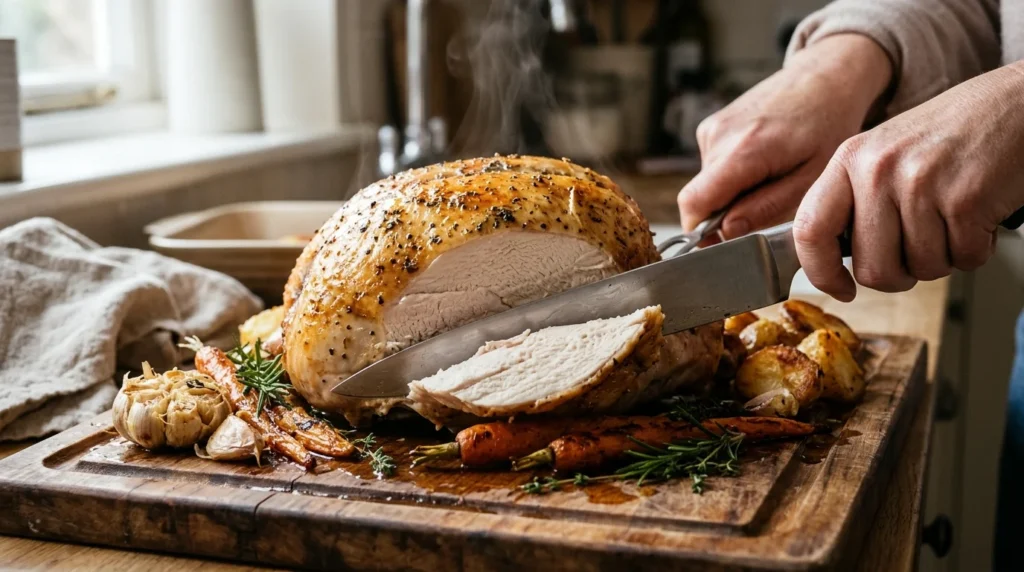
Lean turkey breast contains less fat than darker meat, making careful roasting especially useful. Butter, bacon or another layer of fat can reduce surface drying during cooking. Foil also protects the meat until the final browning stage.
The biggest improvement comes from avoiding unnecessary extra cooking after the centre is safe. A thermometer helps you stop at the right point instead of adding precautionary half-hours. Resting then makes carving cleaner and helps keep more moisture within each slice.
Do not carve the entire joint early unless everyone is ready to eat. Keeping the roast intact retains heat better than spreading thin slices across a cold platter. Warm plates and hot gravy also help the meal reach the table in good condition.
What to Serve With Turkey Crown
Traditional roast potatoes, stuffing, gravy and green vegetables all work naturally alongside turkey. A creamy vegetable side can add richness without requiring another meat dish. Trendara’s cheesy leeks recipe is specifically designed to accompany roast dinners and festive meals.
Balance richer dishes with something fresher, such as steamed greens or carrots. Cranberry sauce supplies sweetness and acidity against the savoury meat and gravy. You can browse Trendara’s wider Food section for more recipes and meal ideas.
Common Mistakes to Avoid
Most problems come from treating cooking time as an exact guarantee. Ovens differ, and two equal-weight rolled joints can have different thicknesses. Checking the centre removes much of that uncertainty.
- Cooking the joint while it is still partly frozen.
- Washing raw poultry before preparation.
- Ignoring the manufacturer’s cooking instructions.
- Roasting uncovered for the entire cooking time.
- Guessing doneness from colour alone.
- Placing the thermometer only near the outside.
- Carving immediately after roasting.
- Leaving leftovers at room temperature for too long.
Keep raw turkey separate from ready-to-eat foods during preparation. Clean utensils, chopping boards and work surfaces after they touch raw poultry. Wash your hands thoroughly before handling other food.
Storing and Reheating Leftover Turkey
Cool leftover meat promptly after the meal and refrigerate it in a covered container. Dividing a large quantity into smaller portions helps it cool more quickly. Food Standards Scotland advises cooling leftovers within one to two hours.
Reheat only the amount you intend to eat. The meat should be steaming hot throughout before serving. UK food-safety guidance also recommends reheating food only once.
Frequently Asked Questions
What temperature should a boneless turkey crown be cooked at?
Many UK recipes use roughly 180°C fan or 200°C conventional for boneless turkey preparations. Your specific product may give a different temperature, so follow its label first. Use a thermometer to confirm the centre has reached a safe time-temperature combination.
How do I know when a boneless turkey crown is cooked?
To cook a boneless turkey crown safely, check the centre rather than relying on appearance alone. Use a clean digital thermometer in the thickest section of meat. The FSA recognises 70°C for two minutes or 75°C for 30 seconds as safe combinations.
Should I cover turkey crown with foil?
Covering the roast for most of its cooking time helps protect the lean surface. Remove the foil near the end so the outside can brown. UK turkey guides commonly use this approach for roasting a crown.
Can I cook a frozen turkey crown without defrosting it?
Only cook from frozen when the manufacturer explicitly says the product is designed for that method. Otherwise, defrost it completely in the refrigerator before roasting. Partly frozen poultry can cook unevenly and may remain unsafe in the centre.
How long should turkey rest before carving?
Let it rest for about 20 minutes after removing the joint from the oven. Cover it loosely with foil while it rests, and use the time to prepare your gravy or vegetables. Resting also gives you a useful buffer when coordinating several Christmas dinner dishes.
The Simple Rule for Better Turkey
Good turkey does not depend on complicated techniques or constant basting. Protect the breast, follow the product instructions, and check the centre before removing it. Those three habits make the result more predictable and reduce the risk of dry meat.
Plan your side dishes before roasting so everything reaches the table together. Prepare make-ahead vegetables or sauces earlier when possible. After the meat rests, carve it into even slices and serve with hot gravy.