
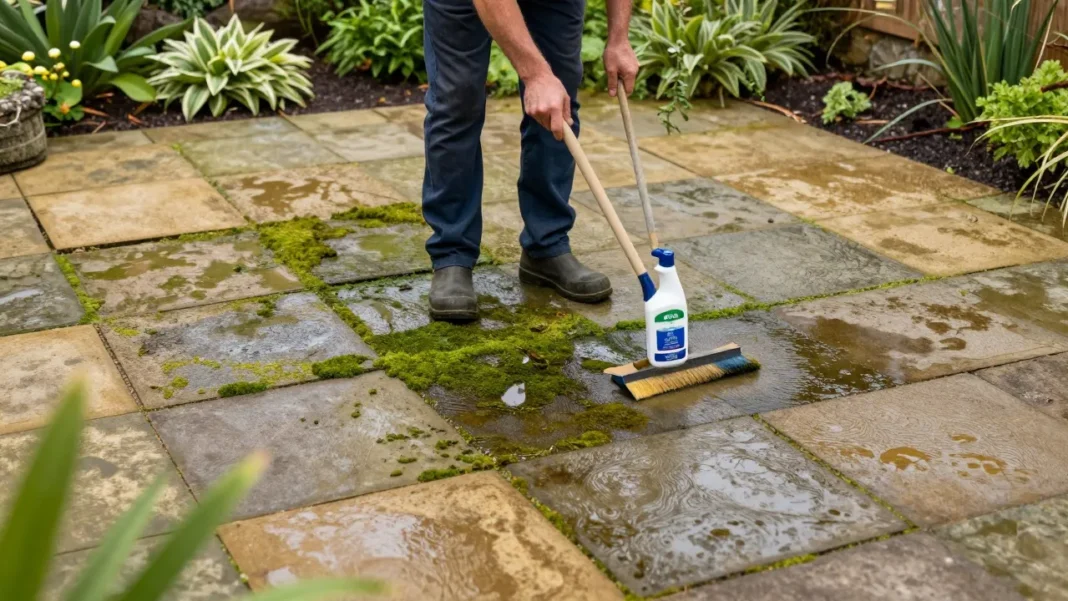

A good patio cleaner should do more than make paving look brighter for a few days. The right product needs to match the type of dirt or organic growth on the surface, while also being suitable for the paving material underneath. For UK homeowners dealing with damp winters, shaded gardens and persistent green growth, choosing the correct cleaner can save considerable scrubbing and reduce the risk of damaging slabs, joints or nearby planting.
Patios commonly collect algae, moss, lichen, soil, bird mess and general atmospheric grime. Some of these problems respond well to gentle cleaning, while stubborn black spots or established biological growth may need a specialist treatment. Understanding that difference is more useful than simply reaching for the strongest patio cleaning chemical on the shelf.
Quick answer: The best product is one that matches both the stain and the paving material. A general cleaner works for dirt and light grime, biocidal treatments target algae and moss, while established black spot may require a specialist product. Always check the label, test a hidden area and control runoff.
What Does a Patio Cleaner Actually Remove?
The term covers several different types of outdoor cleaning product. Some formulas are detergents designed to loosen dirt and grime, while others contain active ingredients intended to control algae, mould, moss or lichen. This is why two products both labelled for patios can produce very different results on the same paving.
The Royal Horticultural Society explains that algae, mosses and similar growths thrive particularly well in damp, shaded conditions and can make patios, paths and decking slippery. Regular brushing, better drainage and improved airflow can reduce the conditions that encourage them to return. Chemical treatment is therefore only one part of keeping outdoor paving clean over the long term.
| Patio problem | What it usually looks like | Cleaner type to consider |
|---|---|---|
| General dirt and grime | Grey or muddy surface film | General patio or paving cleaner |
| Green algae | Green, slippery coating | Algae or biocidal patio treatment |
| Moss | Soft green growth, often in joints | Moss treatment plus brushing |
| Black spot | Small, stubborn dark marks | Specialist black spot or lichen cleaner |
| Bird mess and organic staining | Localised marks | General cleaner or suitable deep cleaner |
| Oil or rust | Distinct coloured stains | Specialist stain remover |
Choosing the Right Patio Cleaner for the Job
The most effective choice starts with identifying what you are trying to remove. A product designed primarily for light algae may be convenient for annual maintenance but disappointing against established black lichen. Likewise, using an aggressive chemical on a patio that only needs a routine wash can create unnecessary risk to joints, metals, plants and surrounding surfaces.
Independent UK testing illustrates how widely these products can differ. Which? tested 12 patio cleaning products in 2026 and found substantial differences in cleaning speed, application method and effectiveness, with some products designed to work within minutes and others taking several days or longer. The testing also found that pressure-washer-compatible products were not automatically more effective than cleaners applied with simpler tools.
Treating Algae and Green Slime
Green staining is one of the most common reasons UK homeowners start looking for a patio cleaner. Algae thrives where paving stays damp for long periods, particularly in shaded areas beside fences, walls, trees or dense planting. Once established, it can turn the surface noticeably slippery after rain.
A patio cleaning solution intended for biological growth is usually more appropriate than a general detergent when algae is the main problem. Many slower-acting treatments are applied to the surface and left to work over several days rather than being scrubbed off immediately. Whatever the application method, the product label should confirm the appropriate surface, dilution, dwell time and any restrictions around children, pets, planting or water.
Cleaning alone will not permanently solve repeated algae growth if the paving remains constantly damp. Trimming back overhanging vegetation, improving airflow, removing leaves and keeping drainage routes clear can make the surface less favourable to regrowth. The RHS specifically recommends regular brushing, reducing shade where practical and improving drainage as ways to discourage growth on hard surfaces.
Dealing With Moss on Paving
Moss is particularly common around paving joints, shaded edges and areas that receive limited direct sunlight. It can often be removed mechanically with a stiff brush or suitable joint tool before a chemical cleaner is considered. Removing the thicker growth first also helps any treatment reach the underlying surface more evenly.
A moss-targeting product may be useful where growth repeatedly returns or covers a larger area. However, the strongest chemical available is not automatically the best choice, especially when the patio contains natural stone, delicate pointing or nearby plants. Always choose a product specifically labelled for the surface and intended for domestic use.
What Removes Black Spots From a Patio?
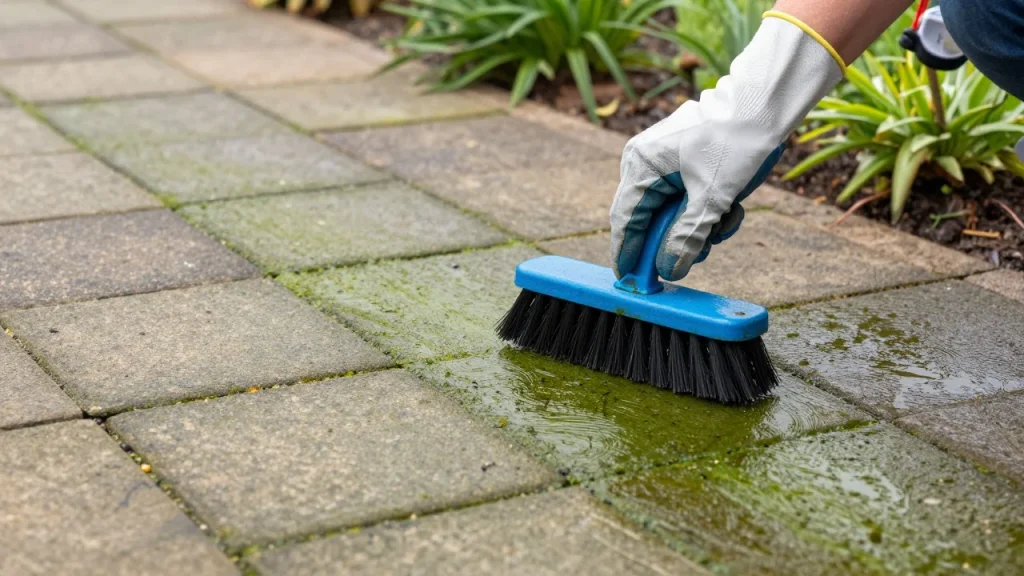
Black spots on paving are often associated with lichen and are usually harder to remove than fresh green algae. Established marks can penetrate or grip porous paving strongly enough that normal washing leaves much of the staining behind. That is why black spot removers are generally formulated as stronger or more specialised treatments.
Some products marketed for black spot contain sodium hypochlorite or other strong active ingredients. These products can work quickly, but safety information may include warnings about skin and eye damage, aquatic toxicity and reactions with incompatible chemicals. A current paving-cleaner technical sheet containing sodium hypochlorite, for example, warns users not to mix the product with acids and specifies protective clothing and eye protection.
Repeated applications may still be needed on heavily affected paving, and complete restoration is not guaranteed. Which? similarly notes that stubborn black spots can remain even after patio-cleaning treatments have been applied. Treat an improvement in appearance as a more realistic goal than assuming every old slab will return to an unused, factory-new finish.
Can You Use These Cleaners on Sandstone?
Sandstone requires more care than dense manufactured surfaces because it is naturally porous. A suitable sandstone cleaner should explicitly state that the formula can be used on natural stone, rather than relying on a generic claim that it cleans outdoor surfaces. Testing the solution on an inconspicuous section first is especially sensible where the paving has colour variation, sealant or delicate pointing.
Several UK paving manufacturers sell cleaners formulated for sandstone alongside limestone, concrete and porcelain. Pavestone, for example, states that its general paving cleaner is suitable for sandstone and several other mineral paving materials. This shows why checking the actual compatibility list in the manufacturer’s instructions is more reliable than assuming all such products are interchangeable.
Avoid improvising with strong acidic cleaners on unknown natural stone. Limestone and some other materials are particularly vulnerable to acids, and even sandstone can respond differently depending on its mineral composition, treatment and condition. When the material is uncertain or expensive, using the paving manufacturer’s recommended cleaner is the safer approach.
What About Limestone and Other Natural Stone?
Limestone needs particular caution because acidic products can react with calcium-rich stone and damage its finish. Marble and some other natural stones can also be sensitive to inappropriate chemicals. A cleaner labelled for concrete or brick should therefore not automatically be assumed safe for a limestone patio.
The safest buying decision is to check the cleaner against the exact paving material before purchase. If the patio has previously been sealed, the cleaner also needs to be compatible with that sealer because some aggressive products may weaken or alter surface treatments. Where the stone is valuable, old or already damaged, professional stone-cleaning advice can be more economical than experimenting with increasingly powerful chemicals.
Cleaning Porcelain Paving
Porcelain is generally less porous than sandstone and many traditional paving stones, which makes routine maintenance relatively straightforward. Dirt often sits closer to the surface instead of penetrating deeply, so regular sweeping and washing can prevent much of the heavy build-up seen on porous paving. Biological growth can still appear in shaded areas, joints and surface texture, however.
A suitable general cleaner or biological treatment can be used when ordinary washing is not enough. The surrounding grout, jointing compound, metal fittings and planting may be more chemically sensitive than the porcelain slab itself, so the whole patio assembly needs to be considered. Manufacturers’ instructions remain important even where the paving material is highly resistant.
Do You Need a Pressure Washer?
A pressure washer can remove loose dirt, algae and organic material quickly, but it is not essential for every patio-cleaning job. Some cleaners are specifically designed to be brushed on, sprayed at low pressure or applied and left to work. Which?’s 2026 testing found that using a cleaner through a pressure washer did not automatically produce the strongest cleaning result.
Pressure washing also needs controlled technique because aggressive cleaning can disturb weak pointing, blast material from joints or create an uneven appearance on some surfaces. Keep the nozzle moving, use an appropriate distance and follow the paving manufacturer’s cleaning guidance instead of starting with maximum pressure. The RHS also recommends eye protection when pressure washing and notes that the additional water can worsen problems where drainage is already poor.
If you enjoy tackling other maintenance projects yourself, Trendara’s broader Home Improvement section covers further household upkeep and improvement topics. Looking at maintenance as a connected routine rather than isolated emergencies can make larger jobs easier to manage throughout the year. It also helps prevent small cleaning and repair tasks from building into more expensive work.
How to Use Paving Cleaners Safely
Read the Product Label First
Start with the label before opening or diluting any paving cleaner. The UK Health and Safety Executive states that users of biocidal products are responsible for using them correctly and should follow instructions covering application, protective equipment, access restrictions, storage and environmental precautions. HSE also advises members of the public not to use products that are restricted to professional users.
Test a Small Area
Apply the cleaner to a discreet section before treating the whole patio. This check can reveal unexpected colour changes, effects on jointing or reactions with a previous sealant. Allow the test section to complete the full recommended cleaning and drying process before deciding whether to continue.
Wear the Recommended Protection
Gloves and eye protection are sensible minimum precautions for many patio-cleaning chemicals, although the label may specify additional equipment. Stronger products can cause skin or eye injury, and splashes are easy to create when brushing or rinsing paving. Wear old protective clothing and closed footwear rather than treating outdoor cleaner as if it were ordinary washing-up liquid.
Never Mix Cleaning Chemicals
Do not combine a paving cleaner with bleach, acids, ammonia or another cleaning product unless the manufacturer explicitly instructs you to do so. Sodium-hypochlorite products can release hazardous gases when mixed with incompatible chemicals, which is why manufacturers commonly include prominent mixing warnings. More chemical does not necessarily mean better cleaning, so use the stated dilution rather than creating a stronger homemade mixture.
Protect Plants, Ponds and Drainage
Think about where the cleaning liquid will travel when you rinse the patio. HSE guidance says biocidal-product labels can include specific instructions designed to prevent harm to wildlife, pets and bodies of water, including fishponds. Follow those restrictions carefully and avoid allowing concentrated runoff to flow into planted borders or surface water.
Keep Children and Pets Away
Do not assume that a product described casually online as pet-friendly is automatically safe during application. HSE specifically warns that misleading descriptions such as “harmless”, “non-toxic”, “environmentally friendly” and “animal friendly” must not be used for authorised biocidal products in ways that understate their risks. Follow the label’s stated re-entry time and wait until the surface is properly rinsed or dry where instructed.
How Long Should the Cleaner Be Left to Work?
There is no universal waiting time because these products use different active ingredients and cleaning mechanisms. Fast-acting deep cleaners may specify a dwell time of only several minutes, while spray-and-leave treatments can take days before the full visual improvement appears. Using the timing printed on another brand’s bottle is therefore not a reliable substitute for the instructions on your own product.
Longer is not automatically better. Allowing a chemical to dry when the instructions require rinsing can increase residue or surface risk, while washing away a slow-action treatment too early may prevent it from working effectively. Treat dwell time as part of the product specification rather than an approximate suggestion.
When Is the Best Time to Clean a Patio in the UK?
Spring is a popular time for a deeper patio clean because winter moisture, fallen leaves and limited sunlight can leave paving green or slippery. An additional clean in autumn can be useful before darker, wetter weather returns, particularly in shaded gardens. Light sweeping and removal of organic debris throughout the year will reduce how much work is required during either seasonal clean.
Weather conditions matter as much as the month. Choose a period that fits the product instructions, particularly where rain could wash a treatment away prematurely or carry chemicals into surrounding areas. Avoid beginning a large treatment if heavy rain is expected before the required dwell or drying period has finished.
How to Keep a Patio Clean for Longer
Preventing grime and biological growth is usually easier than repeatedly restoring a heavily neglected surface. Sweep leaves and soil before they remain wet against the paving, keep gullies and drains open, and deal with standing water rather than treating the symptoms alone. Shaded patios may also benefit from carefully pruning nearby planting to increase light and airflow.
Regular maintenance can reduce dependence on aggressive cleaning products. The RHS recommends simple measures including routine brushing, reducing shade, improving drainage and clearing drains to make conditions less favourable for algae and moss. These actions will not stop every mark from appearing, but they can lengthen the time between major cleans.
For homeowners considering whether larger cleaning jobs are still worth handling personally, Trendara also looks at the trade-offs between DIY work and professional house cleaning. Outdoor cleaning involves different equipment and techniques, but the same principle applies when a job becomes too large, specialised or time-consuming. Professional help can be particularly sensible for valuable natural stone, severe staining or surfaces that have already suffered chemical or pressure-washing damage.
Paving Cleaner Buying Checklist
| Check before buying | Why it matters |
|---|---|
| Paving compatibility | Prevents avoidable staining, etching or surface damage |
| Target problem | Algae, moss, grime and black spot may require different formulas |
| Dilution rate | Determines coverage and actual cost per square metre |
| Dwell time | Helps you choose between rapid and slow-action cleaning |
| Pressure washer requirement | Some cleaners need one; many do not |
| PPE requirements | Indicates the precautions required during application |
| Pet and child restrictions | Tells you when the treated area can be used again |
| Runoff warnings | Important near lawns, borders, drains and ponds |
| Ready-to-use or concentrate | Affects convenience, storage and total coverage |
Price should not be the only comparison point. A concentrated cleaner that covers a large area can cost less per square metre than a cheaper ready-to-use bottle, while a specialist product may prevent the need to buy several ineffective alternatives. Compare coverage, intended use and paving compatibility before comparing the price printed on the front of the container.
Frequently Asked Questions
What Is the Best Patio Cleaner?
The best patio cleaner depends on the surface and the type of contamination. General grime, green algae and established black spot can require different formulations, so no single product is automatically best for every patio. Choose one labelled for both your paving material and the specific problem you want to remove.
Can I Clean a Patio Without a Pressure Washer?
Yes, many cleaners are designed to work without pressure washing. Depending on the formula, they may be brushed onto the paving, applied with a watering can or low-pressure sprayer, or left to act over several days. A stiff outdoor brush and suitable cleaner can therefore be enough for many routine jobs.
Will a Paving Cleaner Remove Black Spots?
A specialist product can reduce or remove many black spot and lichen marks, but established growth can be difficult to eliminate completely. Deep staining may require repeat treatment, particularly on porous natural stone. Follow the product instructions closely rather than extending the dwell time or increasing concentration without approval.
Are These Cleaners Safe for Pets?
Do not assume every cleaner is safe for pets during or immediately after treatment. Different products specify different exclusion periods, rinsing requirements and precautions, so the label is the correct source of instructions. Keep pets away while applying the cleaner and until the manufacturer says the treated area can be accessed again.
Can I Use Bleach Instead?
Some specialist cleaners contain sodium hypochlorite, which is also the active ingredient associated with bleach, but this does not make household bleach a universal substitute. Concentration, additives, surface suitability and instructions can differ significantly between products. Purpose-made products with clear paving and safety directions are easier to use correctly than improvised chemical mixtures.
How Often Should You Clean a Patio?
Many patios benefit from one thorough clean each year combined with lighter maintenance whenever debris or green growth starts to build up. Shady or poorly drained patios may need attention more often than sunny, free-draining areas. Improving drainage, airflow and regular sweeping can reduce how frequently chemical treatment becomes necessary.
Final Thoughts
Choosing a cleaner is less about finding the strongest bottle and more about matching the treatment to the paving and the problem. Identify whether you are dealing with ordinary grime, algae, moss or established black spot, then check that the product is suitable for sandstone, limestone, concrete, porcelain or whichever material you have. That simple process prevents many of the mistakes caused by treating every patio stain in the same way.
For routine maintenance, brushing, good drainage and prompt removal of leaves can reduce the need for strong chemicals. When a specialist cleaner is necessary, follow the dilution, dwell time, protective-equipment and runoff instructions exactly rather than improvising. A carefully chosen patio cleaner should leave the outdoor space safer and more attractive without creating a new problem for the paving, plants or people using the garden.