
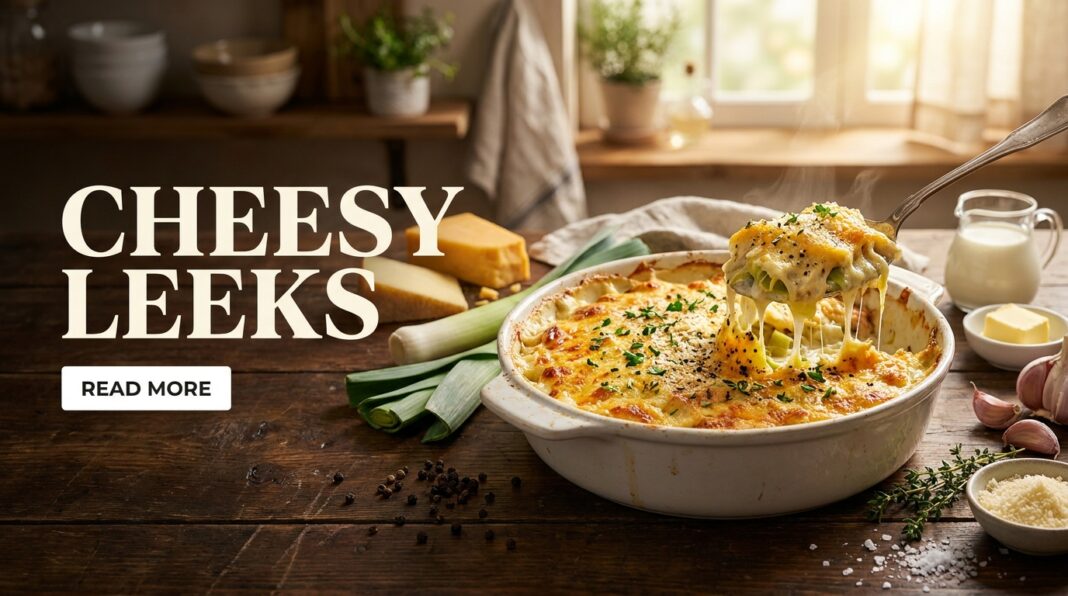

Cheesy Leeks combine tender, buttery vegetables with a smooth Cheddar sauce and a bubbling golden topping. This comforting British-style side dish takes about 40 minutes and pairs beautifully with roast chicken, beef, lamb, ham, or a vegetarian main course. The secret is to soften the vegetables before adding the sauce. That step removes excess moisture, develops their mild sweetness, and prevents the finished dish from becoming watery.
Direct answer: Slice and wash the vegetables, then cook them gently in butter until soft and most of their moisture has evaporated. Make a simple flour-and-milk sauce, melt in mature Cheddar, combine everything in a baking dish and bake until the top is browned and the sauce bubbles around the edges.
| Recipe Overview | Details |
|---|---|
| Recipe Name | Cheesy Leeks |
| Dish Type | Creamy Baked Side Dish |
| Cuisine | British |
| Prep Time | 15 Minutes |
| Cook Time | 25 Minutes |
| Total Time | 40 Minutes |
| Servings | 6 Servings |
| Difficulty | Easy |
| Main Ingredients | Leeks, Cheddar Cheese, Milk, Butter, Flour |
| Cooking Method | Pan-Fried & Oven-Baked |
| Best Cheese | Mature Cheddar |
| Best Served With | Roast Chicken, Beef, Lamb, Ham, or Vegetarian Mains |
| Make Ahead | Yes, up to 24 Hours |
| Storage | Refrigerate for up to 2 Days |
| Freezer Friendly | Yes, up to 1 Month |
Why This Recipe Works
Leeks have a mild onion flavour that becomes sweeter as they cook. Their soft texture suits a rich cheese sauce without competing with it. Cooking them in a frying pan first makes a noticeable difference. Raw slices release water in the oven, which can thin the sauce. Gentle frying lets that moisture escape before the dish is assembled.
A mature Cheddar provides enough flavour without needing several expensive cheeses. A small amount of mustard sharpens the sauce, while nutmeg adds warmth. Neither should dominate. The final layer of cheese and breadcrumbs creates contrast. Underneath, the filling stays soft and creamy. On top, you get a crisp, savoury crust.
Ingredients
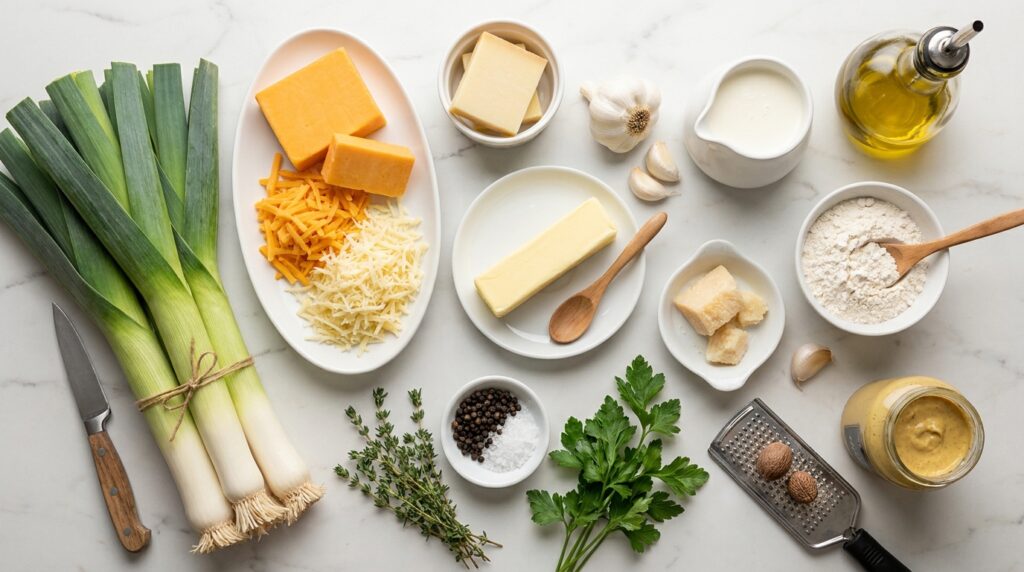
For six side-dish portions, you’ll need:
- 750g leeks, usually four to six medium ones
- 40g unsalted butter
- 40g plain flour
- 500ml whole milk
- 175g mature Cheddar, grated
- 1 teaspoon Dijon or English mustard
- A small pinch of ground nutmeg
- 30g fresh or dried breadcrumbs
- Salt, to taste
- Freshly ground black pepper, to taste
- Butter or oil for greasing the baking dish
Whole milk gives the sauce a creamy texture without requiring double cream. Semi-skimmed milk also works, though the result will be slightly lighter.
How to Make Cheesy Leeks
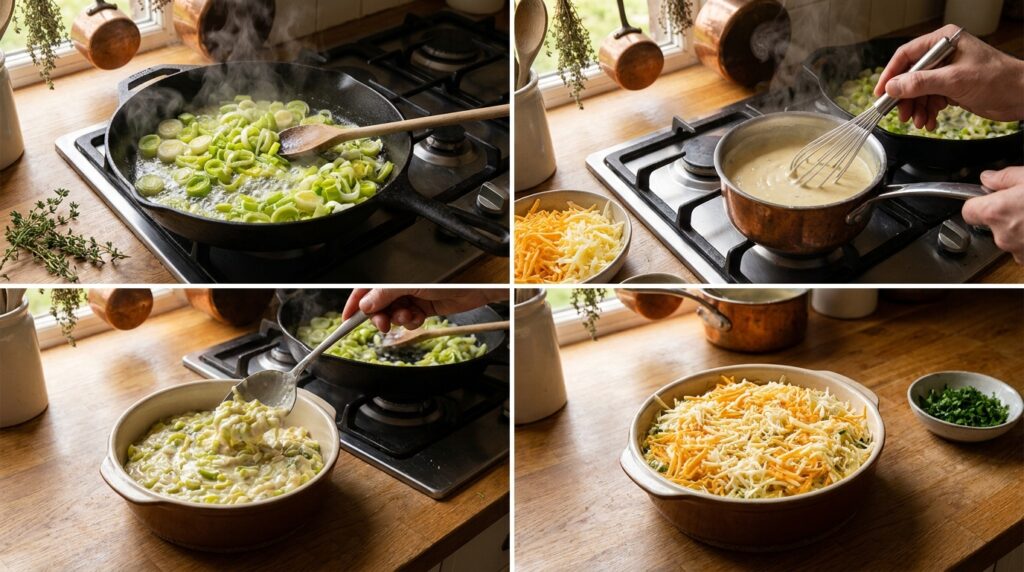
Cheesy Leeks is a simple and comforting side dish that combines tender leeks with a rich, creamy cheese sauce and a golden, bubbly topping. Start by cleaning and slicing the leeks, then gently cook them until soft. Prepare a smooth cheese sauce using butter, flour, milk, and your favorite cheese, such as Cheddar or Gruyère, before folding in the cooked leeks.
Transfer the mixture to a baking dish, sprinkle with extra cheese or breadcrumbs if desired, and bake until the top is crisp and lightly browned. Perfect alongside roast chicken, beef, or holiday meals, cheesy leeks are an easy recipe that delivers delicious flavor with minimal effort.
How to Stop the Sauce Becoming Watery
Excess moisture is the most common problem with this dish. It usually comes from the vegetables rather than the sauce. After washing, shake off as much water as possible. A salad spinner can help, but it isn’t essential.
Use a wide frying pan so steam can escape. A crowded saucepan traps moisture and encourages the vegetables to simmer in their own liquid. Don’t rush the softening stage. They are ready when they feel tender, and the base of the pan looks almost dry. The sauce should also be reasonably thick before the cheese goes in. When you draw a spoon across the saucepan, it should leave a visible trail for a moment.
The Best Cheese to Use
Mature Cheddar is the easiest choice for a balanced sauce. It melts well and has enough sharpness to season the mild vegetables.
For a stronger or more complex flavour, replace part of the Cheddar with:
- Gruyère for a nutty finish
- Red Leicester for a deeper colour
- Parmesan for a saltier topping
- Caerphilly for a crumbly Welsh-inspired variation
- Smoked Cheddar for a subtle smoky note
Avoid using only mild cheese. The sauce may taste flat once combined with the milk and vegetables. Pre-grated cheese can contain anti-caking starch, which sometimes affects melting. Grating a block usually creates a smoother sauce.
Useful Variations
Add bacon
Fry 100g of chopped smoked bacon until crisp. Remove it from the pan, soften the vegetables in the rendered fat and stir the bacon into the finished sauce.
Add ham
Fold in 150g of diced cooked ham before baking. This turns the side dish into a simple lunch when served with bread or salad.
Make it gluten-free
Use a gluten-free flour blend in the sauce and gluten-free breadcrumbs on top. Check the mustard and packaged cheese labels when cooking for someone with coeliac disease.
Make it without breadcrumbs
Leave off the crumbs and cover the surface with the reserved cheese. The top will be softer but still browned and appetising.
Add potatoes
Layer thin slices of parboiled potato beneath the filling. Allow extra baking time and check that the potatoes are completely tender before serving.
What to Serve with Cheesy Leeks
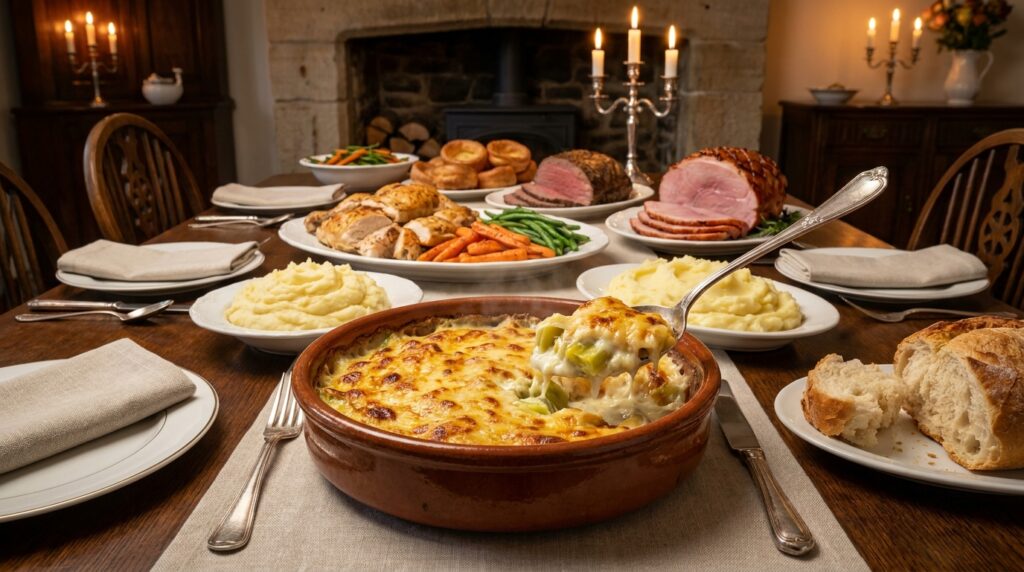
This creamy side dish works especially well with roasted or grilled food. The mild sweetness balances salty meat, crisp roast potatoes and deeply flavoured gravy.
Try serving it with:
- Roast chicken and crispy potatoes
- Roast beef and Yorkshire puddings
- Baked ham or gammon
- Lamb chops or a roast leg of lamb
- Sausages and onion gravy
- Nut roast or mushroom Wellington
- Baked potatoes and steamed greens
It also suits festive meals. You can serve it alongside turkey at Christmas or use it as a warming vegetable dish for Boxing Day leftovers.
Because the sauce is rich, pair it with at least one fresher vegetable. Green beans, peas, cabbage or a sharp salad all work well.
Can You Prepare It in Advance?
Yes. Assemble the dish without baking it, allow it to cool, then cover and refrigerate it for up to 24 hours. Take it out of the fridge while the oven heats. Add five to ten minutes to the baking time because the centre will be cold.
For the crispest result, keep the breadcrumb topping in a separate container. Scatter it over the dish immediately before baking. You can also prepare the sauce and vegetables separately. Combine them once both have cooled, then refrigerate.
Storage and Reheating
Cool leftovers promptly and store them in a covered container in the fridge. Eat them within two days. For the best texture, reheat the dish in an ovenproof container at 180°C or 160°C fan. Cover it loosely with foil for the first ten minutes, then uncover it so the top can crisp.
Individual portions can be reheated in a microwave. The topping will soften, but the filling should remain creamy. Freezing is possible, although dairy sauces may become slightly grainy after thawing. Freeze cooled portions for up to one month and defrost them overnight in the fridge before reheating.
Common Mistakes to Avoid
- Leaving grit between the layers: Always split or slice the stalks before washing them. Dirt often hides deep inside.
- Boiling instead of frying: Waterlogged vegetables dilute the cheese sauce and weaken its flavour.
- Adding milk too quickly: Gradual additions make it easier to produce a smooth, lump-free sauce.
- Boiling the sauce after adding cheese: High heat may cause the cheese to separate. Remove the pan from the heat before stirring it in.
- Using a dish that is too deep: A wide, shallow dish creates more browned topping and helps the filling heat evenly.
- Serving immediately: A five-minute rest lets the sauce thicken slightly.
A Comforting Side Worth Adding to Your Rotation
This recipe turns an affordable vegetable into a rich, warming dish with crisp edges and a creamy centre. Careful washing, slow softening and a properly thickened sauce solve the problems that often make baked vegetable dishes watery.
Prepare it for a Sunday roast, a festive dinner, or a cold weeknight meal. Once you’ve mastered the basic method, change the cheese, add herbs or include leftover ham to suit what you have available.
Conclusion
Cheesy Leeks are a simple yet satisfying side dish that brings together tender leeks, a rich homemade Cheddar sauce, and a crisp, golden topping. With just a handful of everyday ingredients and the right cooking method, you can create a creamy, flavorful dish that’s perfect for everything from Sunday roasts to quick weeknight dinners.
The key to success is removing excess moisture from the leeks, making a smooth cheese sauce, and baking until the top is beautifully browned and bubbling. Whether you stick to the classic recipe or customize it with bacon, ham, different cheeses, or herbs, Cheesy Leeks are easy to adapt to your taste. Serve them alongside your favorite roast, grilled meat, or vegetarian main, and you’ll have a comforting side dish that’s sure to become a regular favorite on your table.
Want to know about Is Rapeseed Oil Bad for You? Check out our Food category.
Frequently Asked Questions
Cheesy Leeks are a baked vegetable side dish made with softened leek slices, a creamy cheese sauce and a browned topping. The dish is common in British-style home cooking and is often served with a roast dinner.
No. Gently frying them in butter gives better control over moisture and flavour. Boiling can make them waterlogged unless they are drained and dried thoroughly.
Yes, but cook them for longer in a wide pan. Frozen pieces release more water, so wait until the pan looks dry before adding the sauce.
You can simmer the vegetables with cream and add grated cheese, but the result will be richer and may remain looser. A roux-based sauce holds its shape better when served.
The heat was probably too high after the cheese was added. Take the white sauce off the heat, add the grated cheese, and stir gently until melted.
Yes. Add cooked ham, bacon, beans or sliced potatoes, then serve it with bread and a green salad. Allow a larger portion per person.