
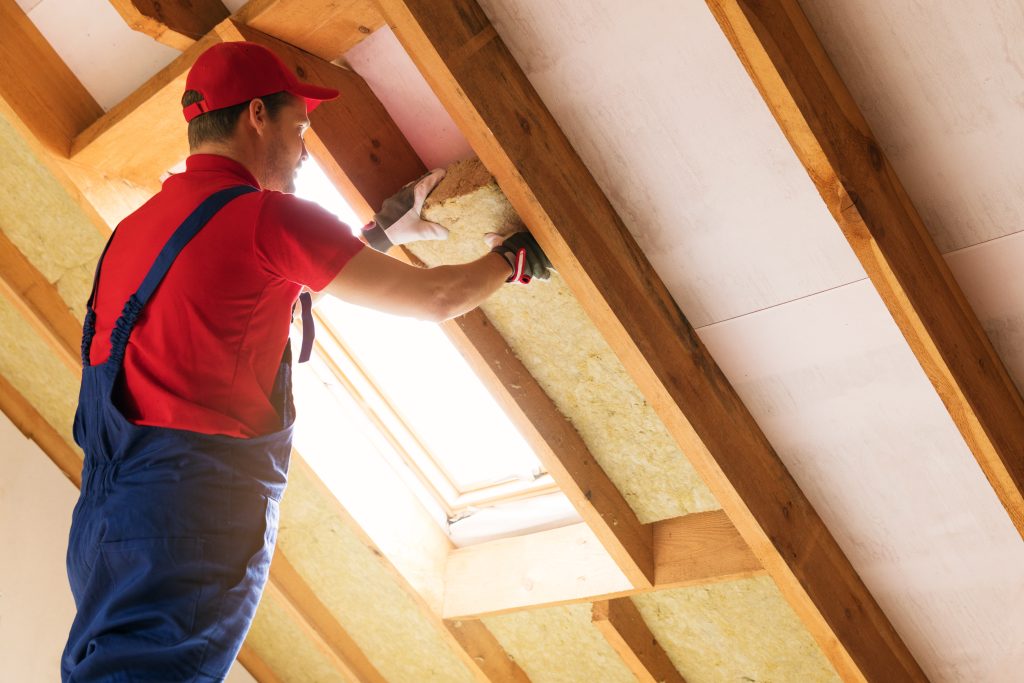

Insulation rarely makes headlines, but it quietly defines how livable, efficient, and comfortable a home really is. Whether you’re bracing for icy winters or sweltering summers, how you insulate your space affects everything from energy bills to indoor air quality.
That brings us to a deceptively simple question: should you go all in with full insulation coverage, or can partial coverage deliver similar benefits at a lower cost?
What “Coverage” Actually Means
When insulation experts talk about full vs. partial coverage, they’re not making moral judgments. It’s purely technical: full coverage means insulating all viable surfaces—attic floor, roof decking, gables, walls—while partial coverage usually targets specific zones, like just the roofline or just the attic floor. The right approach depends on the structure, the climate, and your goals.
The decision often comes down to whether full or partial coverage is better for your specific home. In many cases, both options have merit—but the trade-offs are worth exploring in detail.
The Argument for Partial Coverage
There’s an appealing logic to only insulating the roof, especially in hot climates. Radiant barriers placed along the roof decking can reflect a significant portion of incoming heat, preventing attic temperatures from soaring. That, in turn, reduces the strain on your air conditioning system—without the need to insulate every nook and cranny.
In retrofit scenarios, partial coverage is often more accessible. You don’t have to tear up floors or climb into tight crawl spaces. The installation is quicker, cleaner, and less disruptive. If your attic floor already has traditional insulation, adding a radiant barrier to the roof might be the only piece missing from your energy-efficiency puzzle.
Then there’s the budget. Materials and labor costs rise with square footage, so insulating just the most heat-exposed surfaces can be a financially savvy move. It’s not perfect, but it’s better than nothing—and often good enough to noticeably improve comfort.
Read more: ABS Edging for Furniture
Why Full Coverage Still Wins (Sometimes)
But partial coverage isn’t a silver bullet. Homes are interconnected systems, and temperature differentials can sneak in through uninsulated gaps. If one surface is left exposed, it can become a thermal weak point. That means the rest of your insulation has to work harder to maintain consistent conditions.
Full coverage eliminates those weak points. It allows for better temperature regulation, improved humidity control, and more stable comfort across seasons. It’s especially valuable in colder regions, where heat loss through even small areas can spike energy bills.
Full coverage also reduces the risk of moisture condensation—something that can become a long-term issue if insulation is piecemeal or patchy. And while the upfront cost is higher, the payoff in energy savings tends to be more significant and more consistent over time.
Practical Considerations (And a Few Exceptions)
Of course, not every structure needs blanket insulation. Detached garages, workshops, or seasonal-use cabins may only warrant partial treatment. And if you’re planning renovations later, it may make sense to insulate certain areas now and revisit the rest down the road.
Local climate also plays a role. In hot, dry environments, radiant barriers on the roof might deliver 80% of the benefit for 50% of the investment. In damp or frigid climates, cutting corners could lead to mildew, drafts, or ice dams.
And yes, there’s a middle ground. Some homeowners opt for a phased approach—starting with high-impact zones (like attic roofs) and upgrading other areas as time or budget allows. This piecemeal strategy can work well as long as it’s part of a larger, cohesive plan.
Making the Right Call for Your Home
There’s no single “correct” answer to the full vs. partial question—only what’s right for your home, your budget, and your comfort priorities. A well-insulated roof might be a game-changer in one case, while another property might need full coverage to move the needle at all.
Start with an energy audit if possible. Assess what’s already in place, where your home is leaking heat or cool air, and what kinds of materials make sense for your structure. Informed decisions tend to pay off—not just in lower energy bills, but in comfort that lasts season after season.
Insulation isn’t glamorous, but it’s one of those behind-the-scenes choices that quietly shape your quality of life. Whether you go all in or start small, make it count.
Apart from that if you want to know about The Easiest Bath Panel Materials to Install Fast then please visit our Home Improvement Category.