
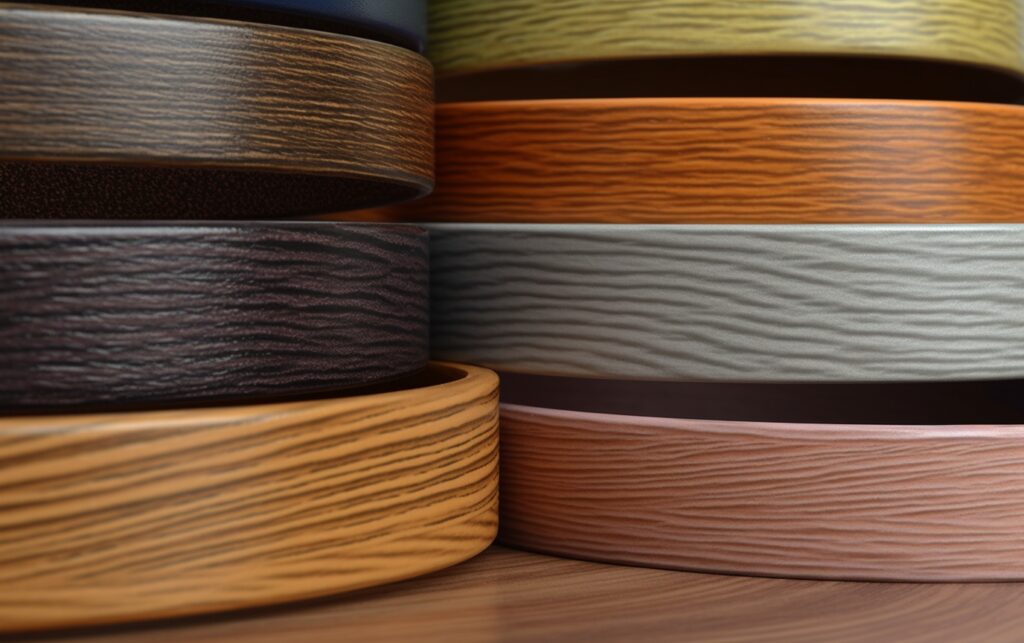

ABS edging is a thin strip of acrylonitrile butadiene styrene plastic applied to the exposed edges of furniture boards such as MDF, chipboard and plywood. It seals and protects the raw core, resists knocks and moisture, and gives panels a clean, finished look. It is chlorine-free and recyclable, which is why many manufacturers now choose it over PVC.
In furniture making and interior fit-outs, small details separate decent work from excellent work, and edges are one of the first places a piece shows wear. Quality ABS edging keeps cabinets, desks and shelving looking sharp for years. This guide covers what ABS edging is, how it compares with the alternatives, how to choose the right type and how to apply it properly.
What Is ABS Edging?
ABS (acrylonitrile butadiene styrene) is a thermoplastic known for being tough, impact-resistant and easy to form. As an edge banding material, it is supplied in rolls of tape that are glued to the edge of a cut panel. Once trimmed and finished, the edge matches or deliberately contrasts with the board’s face, whether that is laminate, melamine or veneer.
Raw board edges are porous and fragile. Left exposed, chipboard and MDF soak up moisture, swell and crumble at the corners. ABS edging seals that core, protects it from impact and hides the unfinished look of cut board.
Why Choose ABS Edging?
1. A more sustainable plastic
Unlike PVC, ABS contains no chlorine, so it does not release hydrochloric acid or chlorinated compounds when burned or recycled. It can be recycled as a thermoplastic, and offcuts from production can be reprocessed. For businesses with environmental targets, or homeowners who want to avoid PVC, it is an easy switch.
2. Strong and impact-resistant
ABS absorbs knocks well, which is why it is also used for items like protective housings and luggage. On furniture, that means fewer chips from hoovers, chairs and trolleys. It also holds up well to moisture and everyday heat, making it a sensible choice for kitchens, bathrooms and offices where furniture sees heavy use.
3. Huge design choice
ABS edging comes in plain colours, wood grains, stone effects, high gloss, matt, textured and metallic finishes. Most suppliers match their edging to popular board decors, so it is straightforward to achieve a near-invisible edge or a deliberate contrast.
4. Easy to work with
ABS is flexible and trims cleanly, so it suits curved and shaped panels as well as straight edges. It bonds well with standard hot-melt adhesives and can be scraped and buffed to a smooth finish without whitening as easily as some other plastics.
5. Suitable for indoor spaces
Because it is chlorine-free, ABS is widely chosen for furniture in homes, schools and healthcare settings where people spend long periods indoors.
ABS vs PVC vs Melamine Edging
| Feature | ABS edging | PVC edging | Melamine edging |
|---|---|---|---|
| Material | Chlorine-free thermoplastic | Chlorinated thermoplastic | Resin-impregnated paper |
| Eco-friendliness | High; recyclable | Lower; contains chlorine | Medium |
| Impact resistance | Excellent | Good | Fair; can crack and chip |
| Heat resistance | Good | Moderate | Lower |
| Design variety | Wide range | Wide range | More limited |
| Thickness options | Thin to thick (around 0.4mm to 3mm) | Thin to thick | Usually very thin |
| Ease of application | Easy | Easy | Very easy (often iron-on) |
| Best for | Quality furniture, kitchens, offices, public spaces | General furniture | Budget DIY and low-wear shelving |
In short, melamine is the cheapest and simplest for light-duty jobs, PVC is a long-standing all-rounder, and ABS offers the best balance of durability, finish and sustainability.
Where ABS Edging Is Used
- Kitchen cabinets: Doors, drawer fronts and carcasses that face steam, spills and constant handling.
- Office furniture: Desks, pedestals, filing cabinets and shelving that take knocks from chairs and bags.
- Retail fixtures: Shop displays and shelving that must look good despite heavy footfall.
- Residential furniture: Wardrobes, chests of drawers, bookcases and media units.
- Schools and healthcare: Furniture that needs to be tough, easy to clean and suitable for indoor use.
How to Choose the Right ABS Edging
Picking the wrong edging is one of the most common reasons edges look cheap or fail early. Check these points before you buy:
- Width: Choose a tape slightly wider than your board (for example, 22mm tape for 18mm board) so you can trim it flush.
- Thickness: Thin edging (around 0.4–0.8mm) suits low-wear areas like shelves and carcass edges. Thicker edging (1–2mm or more) suits doors, worktop-style edges and anything that gets knocked.
- Pre-glued or unglued: Pre-glued tape can be applied with an iron or hot-air tool for small jobs. Unglued tape is used with hot-melt adhesive and edge banding machines.
- Colour and finish match: Ask for samples and compare them with your board in natural light.
- Primer on the back: Good-quality ABS tape has a primed reverse for a strong bond with adhesive.
How ABS Edging Is Applied
Edge banding can be done by hand for small projects or with an edge banding machine in production. The basic steps are the same:
- Prepare the edge. Make sure the panel edge is cleanly cut, square, dry and free of dust. Chipped or rough cuts show through the tape.
- Apply adhesive. Use hot-melt glue (or EVA or PUR adhesive in a machine), or heat pre-glued tape to activate the glue.
- Press the edging on. Apply firm, even pressure along the full length so there are no gaps or air pockets.
- Trim the ends and edges. Cut off overhangs with an end trimmer and flush-trim the top and bottom with a hand trimmer or router.
- Scrape and finish. Use a radius scraper to round the edge slightly, then buff to remove any glue line or whitening.
Automated edge banders handle gluing, pressing, trimming, corner rounding and buffing in one pass, giving consistent results across large batches.
Common mistakes to avoid
- Applying edging to a cold or damp board, which weakens the bond
- Using too little pressure, leaving gaps where moisture can get in
- Trimming with a blunt tool, which tears or whitens the plastic
- Choosing tape that is too narrow to trim flush on both faces
- Leaving a visible glue line by using the wrong adhesive colour
Trends in ABS Edging
Design trends shape edging just as much as board finishes. Popular choices include:
- High-gloss finishes for modern handleless kitchens and bathrooms
- Realistic wood-grain textures that match synchronised-texture boards
- Metallic and brushed effects for a contemporary accent
- Thin, minimal edges for a seamless, almost invisible joint
- Zero-joint or laser edging in high-end production, where the joint line is almost undetectable
Some manufacturers also offer edging with antibacterial additives for healthcare and food service environments.
Bottom Line
ABS edging is more than a finishing touch; it protects the board core, strengthens the most vulnerable part of a panel and gives furniture a professional look. If you want durable, good-looking edges without PVC, choose ABS in a thickness that suits the amount of wear the piece will get, match it carefully to your board and take care over preparation and trimming. For more ideas on creating a home that looks and feels right, read our guide on how texture and colour influence mood at home or browse our Home Improvement category.
FAQs
What is ABS edging made from?
ABS edging is made from acrylonitrile butadiene styrene, a tough thermoplastic. It is supplied as rolls of tape in different widths, thicknesses and finishes, and is glued to the cut edges of furniture panels to seal and protect them.
Is ABS edging better than PVC?
For most furniture, ABS performs at least as well as PVC in strength and finish, with the added advantage of being chlorine-free and easier to recycle. PVC remains widely used, but many manufacturers have switched to ABS for environmental reasons.
Can I apply ABS edging without a machine?
Yes. For small DIY jobs you can use pre-glued ABS tape activated with a household iron or hot-air gun, then trim it with a hand edge trimmer. Thicker edging generally needs hot-melt glue and a proper edge bander for the best bond.
What thickness of ABS edging should I use?
Use thin edging, around 0.4–0.8mm, for shelves and internal carcass edges that rarely get knocked. Choose 1–2mm or thicker for doors, desktops and exposed edges that take impact, as it allows a rounded profile and better protection.
Is ABS edging waterproof?
ABS itself is highly resistant to moisture, and a well-applied edge seals the board core well. The joint between edge and board is the weak point, so a strong, gap-free bond is essential in kitchens and bathrooms.