
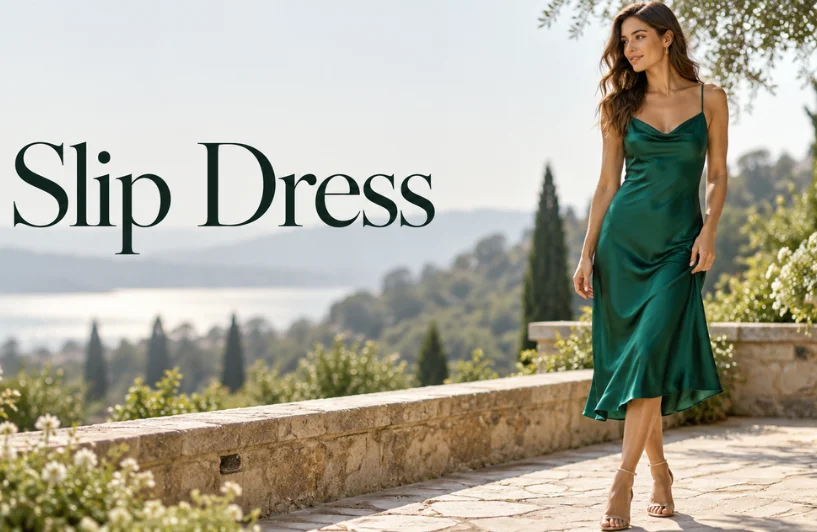

A slip dress combines a simple shape with more styling possibilities than its minimal design suggests. Thin straps, fluid fabric, and a clean silhouette give it a distinctive look. The right version can work for daytime, evenings, weddings, and changing British weather. The style became closely linked with 1990s minimalism, yet it still appears throughout current fashion collections.
Modern versions range from understated satin midis to lace-trimmed maxis and printed designs. Knowing how fabric, length, and fit work makes choosing one much easier.
Quick answer: A good slip-style dress should skim rather than pull across the body. Choose the length and fabric around your main occasion, then add structured layers, practical footwear, or refined accessories. In the UK, knitwear, blazers, coats, and boots can make the same dress useful beyond summer.
Key Facts at a Glance
| Feature | What to Look For | Best For |
|---|---|---|
| Cut | Bias or softly straight shape | Fluid movement and easier fit |
| Length | Mini, midi, or maxi | Different occasions and proportions |
| Fabric | Satin, silk, viscose, or blends | Changing budgets and care needs |
| Straps | Adjustable where possible | Better neckline and bust positioning |
| Neckline | Cowl, V-neck, or straight | Different styling preferences |
| Color | Black, navy, brown, and jewel tones or prints | Wardrobe versatility |
| Layering | Blazers, knits, coats, and T-shirts | UK weather |
| Footwear | Flats, boots, sandals, or heels | Casual through formal outfits |
Key Takeaways
- Bias cuts usually create a softer drape around the body.
- Satin describes a weave, rather than one specific fiber.
- Midi lengths are often the easiest option for varied occasions.
- Adjustable straps can improve comfort and neckline placement.
- Blazers and knitwear make lightweight dresses useful in cooler weather.
- Shoes and accessories can change the dress from casual to formal.
- Fit should be checked while sitting, walking, and moving.
- Care instructions matter because delicate fabrics can need extra attention.
What Is a Slip Dress?
A slip dress is a lightweight dress inspired by traditional lingerie and undergarments. It usually has narrow straps, an uncomplicated neckline, and a fluid silhouette. Many designs use satin, silk, viscose, or other fabrics with noticeable drape. Bias-cut versions are cut diagonally across the fabric rather than directly along its grain. This method allows the material to move more freely around the body.
It can create shape without requiring darts, heavy seams, or rigid construction. The classic style became strongly associated with minimalist fashion during the 1990s. British Vogue continues to present the shape as a versatile wardrobe staple in 2026. Contemporary versions now include lace, prints, draping, and more varied necklines.
Which Length Should You Choose?
Mini versions create the strongest connection with the style’s lingerie-inspired roots. They work well for nights out, holidays, and warmer casual outfits. Pairing one with a jacket or heavier footwear can add visual balance. Midi lengths usually offer the greatest flexibility for everyday wardrobes. They can work with trainers, ballet flats, boots, sandals, or heels. That flexibility makes them useful for dinners, workwear, and less formal celebrations.
Maxi versions create more visual drama and often suit evening events or weddings. Longer hems also give lightweight fabrics more movement while walking. Check the hem carefully if you expect to wear flat footwear.
How Should the Fit Feel?
The dress should normally skim your shape rather than stretch tightly across it. Horizontal pulling around the hips often indicates insufficient room. A fabric that hangs smoothly usually looks more polished and feels easier to move in. Check the neckline while standing, sitting, and leaning slightly forward. Adjustable straps can help control where the neckline sits on your body. They also make small fit changes easier when switching bras or layering.
Bias-cut fabrics can behave differently from structured woven dresses. They may relax slightly while hanging because the fabric sits diagonally. Trying your normal size and one nearby size can make the comparison clearer.
Satin, Silk, or Viscose: Which Fabric Works Best?
Satin is a weave and can be produced from several fibers. Polyester satin is common because it can provide shine at lower prices. Quality still varies, so assess softness, opacity, stitching, and movement rather than the label alone. Silk can provide excellent drape and a soft feel against the skin. It usually costs more and may require specialist cleaning or careful washing. Always check the care label before buying an expensive version.
Viscose and similar blends can offer fluid movement with a softer matte finish. They may suit buyers who dislike highly reflective satin. Some blends also provide easier everyday care, although washing instructions still vary.
How to Style a Slip Dress During the Day
Daytime styling works best when you reduce the dressier effect of shiny fabric. Add a cardigan, oversized shirt, denim jacket, or relaxed blazer. These layers create contrast and make the outfit feel less like eveningwear. Footwear can change the mood quickly. Ballet pumps, loafers, and simple trainers make the dress more casual. Trendara’s guide to flat shoes women can wear everywhere offers more footwear ideas for dresses.
A crossbody or practical shoulder bag also pulls the outfit towards everyday dressing. Keep jewelry simple if the material already has a strong sheen. The aim is balance rather than adding another statement piece.
How to Wear One for Work
Office styling depends heavily on your workplace dress code. A blazer can add structure and coverage to the soft silhouette. A fine knit worn underneath can also make narrow straps more suitable for conservative settings. Choose a midi length if you want the easiest professional option. Black, navy, chocolate, and darker prints can pair smoothly with neutral tailoring. Closed shoes can make the finished outfit appear more formal.
Avoid overly sheer fabric for professional settings. Check the dress in daylight before deciding whether it needs an extra layer. A longer blazer or lightweight knit can solve many coverage concerns without changing the outfit completely.
What to Wear for Dinner or an Evening Event
Evening styling lets the fabric and silhouette become the focus. Fine jewelry, a compact bag, and refined shoes can create a polished look. A cowl neckline often needs fewer accessories because the draping already adds detail. Black remains easy to style, although jewel tones can create stronger color. Burgundy, emerald, navy, and deep brown work particularly well during cooler months.
Metallic accessories can add contrast without overwhelming the clean silhouette. If you prefer low footwear, heels are not essential. Pointed flats and slingbacks can still appear polished for dinners or parties. Trendara’s footwear guide includes several dressier flat shoe options for this purpose.
Can You Wear It to a Wedding?
This shape can work well for many wedding guest dress codes. Midi and maxi lengths usually look more formal than short versions. Fabric quality, color, and accessories also influence whether the outfit feels event-appropriate. Check the invitation before building your outfit. A garden wedding may suit lighter colors and softer shoes. An evening celebration may call for darker shades, stronger jewelry, or a tailored outer layer.
Avoid white, ivory, or bridal-looking champagne unless the couple specifically approves it. This matters even when the dress itself is simple. Your accessories should support the event’s dress code rather than compete with it.
How to Layer One for UK Weather
British weather makes layering especially useful with lightweight dresses. During autumn, try a chunky cardigan, leather jacket, or tailored blazer. An ankle boot can add enough weight to balance the fluid fabric. During winter, a fine roll-neck can work underneath some designs. A longer wool coat provides warmth without hiding the shape indoors. Tights can also make shorter lengths easier to wear during colder months.
Spring outfits can use lighter knits and cropped jackets instead. Denim creates a useful texture contrast against satin or silk. Denim-coordinated styling offers more inspiration for pairing denim with softer fabrics.
What Should You Wear Underneath?
The right underwear depends on the neckline, back, and fabric thickness. Seam-free briefs can reduce visible lines beneath close-fitting materials. A lightly structured bra may work when the back and straps provide enough coverage. Some dresses work better with strapless bras or adhesive solutions. Comfort should matter more than creating a perfectly invisible finish.
Test your chosen underwear with the dress before wearing it for a long event. Slips and lightweight shapewear can also change how thin materials fall. They are optional rather than essential. Choose them only when they make the outfit more comfortable or improve the finish you prefer.
Shoes and Accessories That Work Well
Simple dresses create space for different footwear personalities. Ballet pumps offer a softer finish, while loafers add structure. Boots add weight during autumn, while sandals work naturally during warmer weather. Your bag should match the setting rather than the dress alone. A compact shoulder bag suits evenings, while crossbody styles work better for daytime.
Browse Trendara’s broader fashion coverage for more seasonal accessory ideas. Jewelry can stay restrained because satin already reflects light. A slim chain, small earrings, or one bracelet may be enough. Statement jewelry works better when the dress itself has minimal lace, print, or embellishment.
Common Buying Mistakes to Avoid
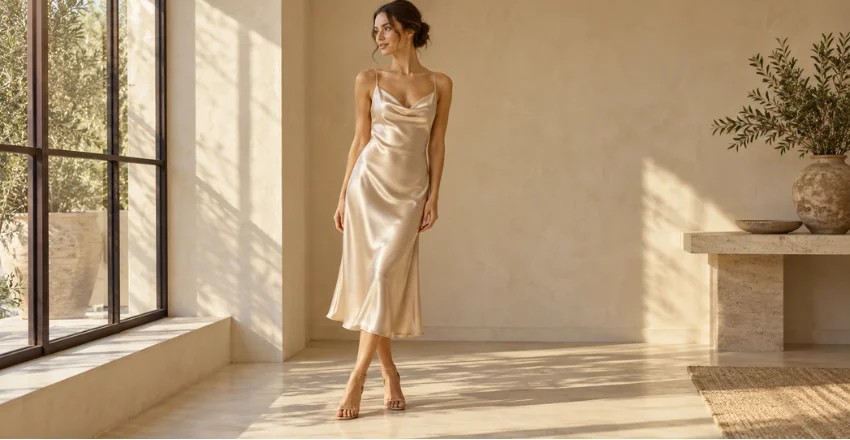
Buying only for appearance can cause problems once you start moving. Check whether the dress rides upwards, pulls at the hips, or gaps around the neckline. Those issues often matter more than how it looks while standing still. Don’t assume every satin garment contains silk. Read the fiber composition before comparing prices between retailers. Polyester, viscose, and silk can all produce different versions of the same glossy appearance.
Care requirements deserve attention before checkout. A beautiful dress may become impractical if it needs cleaning you won’t maintain. Your most useful choice should suit both your wardrobe and your normal laundry routine.
Choosing a Colour You’ll Wear More Often
Black remains a practical option for repeated evening and daytime wear. It also combines easily with colourful shoes, bags and jewellery. Dark brown and navy provide similar flexibility with a softer effect. Jewel tones can work well when you want more colour without choosing a bright print. Emerald, burgundy and deep blue also transition naturally between seasons. Lighter shades usually feel strongest during spring and summer.
Prints can reduce the lingerie effect of the silhouette. Florals, spots, and abstract patterns make the piece feel more like conventional daywear. They can also hide minor creasing better than plain reflective fabrics.
Is a Slip Dress Worth Adding to Your Wardrobe?
The answer depends on how many ways you can realistically wear it. A versatile midi can cover casual lunches, dinners, weddings, and layered autumn outfits. That makes it more useful than a dress for a single occasion. Before buying, picture at least three outfits using clothes you already own. Consider your shoes, jackets, knitwear and bags rather than planning an entirely new wardrobe.
This simple check can prevent a striking purchase from remaining unworn. Choose fit and comfort before chasing a particular trend. Current collections may change their necklines, fabrics and trims each season. The basic fluid silhouette remains useful because styling determines much of its character.
Frequently Asked Questions
Is a slip dress still fashionable in 2026?
Yes, the slip dress remains visible across UK fashion coverage and retailer collections in 2026. Current versions include satin, lace, prints, midi shapes and maxi lengths. Its flexibility keeps it relevant beyond any single seasonal trend.
Can you wear one casually?
Yes, relaxed layers can make the shape suitable for daytime. Try a cardigan, denim jacket, flat shoes or simple trainers. Less formal accessories also reduce the eveningwear effect of satin.
What body shape suits this style?
There is no single body shape required for this silhouette. Different cuts, necklines and lengths change how the garment sits. Focus on comfortable drape around your bust, hips and waist instead.
Should the dress be tight or loose?
It should usually skim your body without obvious pulling. You should be able to sit and walk comfortably without constant adjustment. A slightly looser fit often lets fluid fabric move more naturally.
Can you wear a bra underneath?
Yes, depending on the straps, neckline and back. Conventional bras work with some designs, while others suit strapless options. Choose the solution that provides enough comfort and support for your needs.
What jacket works best with it?
Blazers, leather jackets and denim jackets all create useful contrast. A cropped jacket highlights the waist, while a longer blazer creates a straighter line. Your choice should reflect the occasion and outside temperature.
Final Styling Check
A useful slip-style dress should work with your existing wardrobe rather than demand several new purchases. Start with fit, fabric and length before thinking about accessories. Then test how the piece works with different layers and shoes. For UK wardrobes, versatility matters because temperatures can change quickly.
A design that works beneath knitwear and jackets will often earn more wear. Shoes from Trendara’s flat footwear guide can help extend the same outfit across different occasions. Choose a version you can comfortably move, sit and spend time in. Then use layers, footwear and accessories to change its character. That approach turns a simple silhouette into a practical year-round wardrobe option.
—–