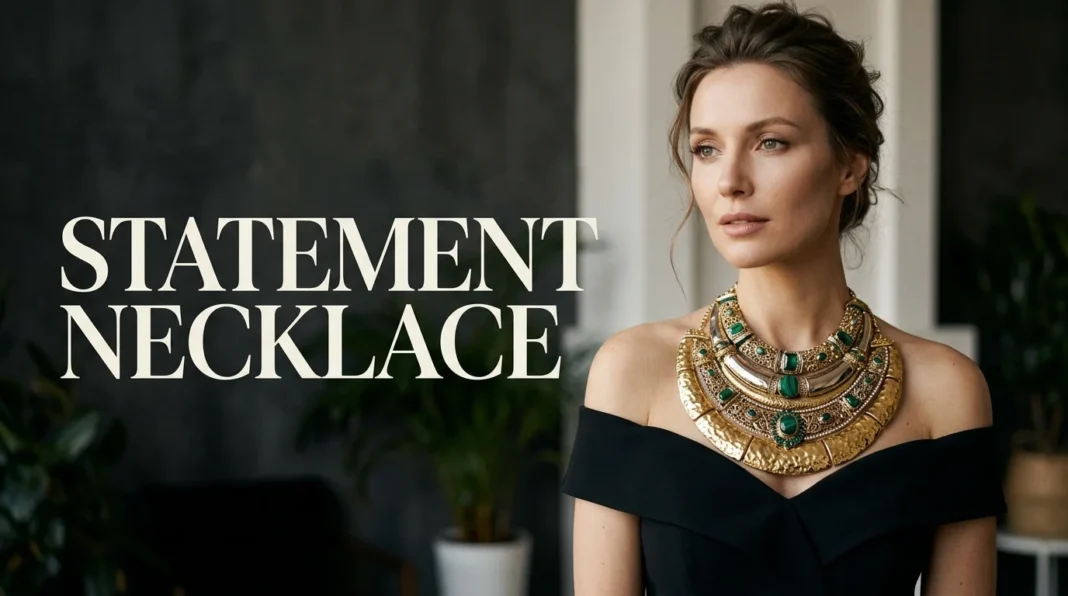

A statement necklace can turn a simple outfit into a clear, intentional look. Modern versions feel more refined than the colourful bib necklaces of the early 2010s. In 2026, sculptural pendants, chunky chains, polished metals, beads, and bold cords offer plenty of wearable options.
The easiest approach is to make the necklace your main focal point. Keep the neckline, earrings, and nearby prints relatively simple so the jewellery can stand out. Choose a shape and length that work with your clothing, rather than using size alone to define bold style.
| Key consideration | What to look for | Best use |
|---|---|---|
| Scale | A noticeable pendant, chain, collar, or cluster | Creating one strong focal point |
| Length | Short collar, mid-length pendant, or longer drop | Matching different necklines |
| Material | Metal, beads, stones, resin, cord, or mixed materials | Changing the mood of an outfit |
| Colour | Neutral metallics or stronger accent shades | Coordinating with your wardrobe |
| Weight | Comfortable construction for the time worn | Work, travel, dinners, and events |
| Neckline | Enough clear space around the jewellery | Keeping the outfit visually balanced |
Direct answer: A modern statement piece should attract attention without crowding the whole outfit. Choose a necklace that sits cleanly against your neckline, then keep nearby accessories quieter. Sculptural pendants, chunky chains, beads, and polished metallic designs work especially well with simple tops, tailoring, denim, and block-colour dresses.
Why Bold Necklaces Are Back in 2026
Bold jewellery has returned after several years when delicate chains and understated accessories dominated many wardrobes. Current fashion coverage shows a renewed interest in sculptural pendants, chunky cords, larger chains, and artistic shapes. The difference is that current styling usually feels cleaner and more deliberate than earlier versions of the trend.
Glamour’s 2026 coverage describes the revival as more refined than the familiar 2010s approach. Who What Wear UK has also highlighted organic shapes, larger pendants, and substantial cords among current styles. This shift makes bold jewellery easier to combine with modern tailoring, knitwear, denim, and simple dresses.
The trend also fits a wider move towards clothing that feels more personal. A noticeable necklace gives a basic outfit character without requiring several competing accessories. That makes it useful for anyone who prefers a small wardrobe but still wants variety.
Key Takeaways
- Let one necklace act as the main focal point.
- Match the necklace shape to the space your neckline creates.
- Use plain clothing when the jewellery has strong colour or texture.
- Choose comfortable weight and construction for longer wear.
- Try sculptural metals, pendant cords, beads, or chunky chains for a current look.
- Keep earrings restrained when the necklace already makes a strong statement.
What Makes a Statement Necklace Different?
A bold necklace is defined more by visual impact than by one specific size or material. It might use a large pendant, thick chain, unusual shape, several strands, oversized beads, or strong colour. The important point is that your eye notices it before smaller accessories.
This also means a large necklace is not automatically successful. Proportion, placement, and comfort matter as much as scale. A piece that sits neatly at your neckline often looks stronger than a larger design that overlaps awkwardly with your clothing.
Minimal jewellery works differently because it supports an outfit without dominating it. If that softer approach suits a particular day, Trendara’s guide to styling crisscross pendants offers ideas for more understated necklace combinations. Moving between bold and delicate pieces can make the same wardrobe feel more flexible.
How to Choose a Statement Necklace That Suits Your Wardrobe
Start with the clothing you wear most often rather than buying around one imagined occasion. Look at your usual necklines, colours, fabrics, and dress codes. A necklace earns more wear when it works with several outfits you already own.
A sculptural gold or silver design can suit wardrobes built around tailoring and neutral colours. Coloured beads, resin, or stones can work well when your clothes are mostly plain. Longer pendants can also add structure to simple knitwear without crowding the collar area.
Comfort deserves equal attention. Heavy necklaces can feel fine for dinner but become tiring during a full workday. Check the clasp, chain edges, pendant movement, and total weight before deciding where you would realistically wear the piece.
Match the Necklace to Your Neckline
Neckline shape changes how jewellery sits and where the eye naturally moves. A V-neck often works with a pendant that follows the same downward direction. Scoop and open necklines leave more space for rounded collars, clusters, or shorter chains.
Crew-neck tops create a different effect because the jewellery may sit over fabric rather than bare skin. Chunkier chains and sculptural pendants can work especially well against plain knits or T-shirts. Make sure the necklace sits clearly above or below the neckline, not directly on the edge.
Shirts give you several options. Wear a shorter design under an open collar, or place a more substantial piece over a fully buttoned shirt. The cleaner the shirt, the easier it becomes to use stronger jewellery without visual competition.
How to Style a Statement Necklace Without Looking Overdone
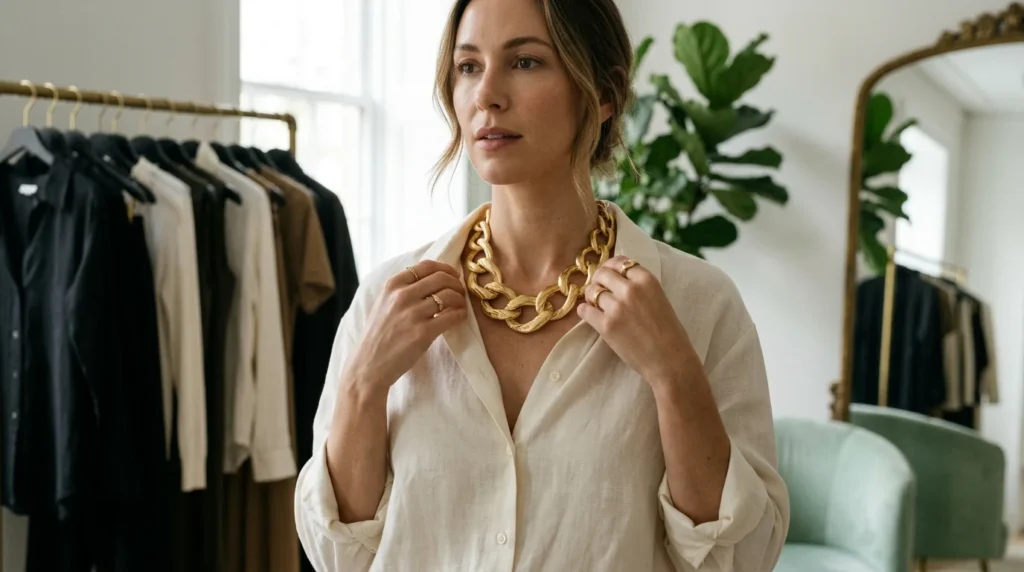
The simplest styling rule is to create one clear focal point. If the necklace is large, colourful, or highly textured, choose smaller earrings and restrained hair accessories. This keeps the upper half of the outfit from becoming crowded.
Colour balance helps too. A bright design usually looks strongest against black, navy, cream, grey, denim, or another calm background. Then repeat one small colour from the necklace elsewhere through shoes, a bag, or another subtle detail.
Trendara’s guide to a denim co ord shows how matching denim creates a strong but relatively consistent base. Adding one bold jewellery piece to that kind of outfit can provide contrast without introducing another major clothing pattern. The result feels intentional rather than overly coordinated.
Styling With Casual Outfits
Jeans and a plain T-shirt provide one of the easiest settings for strong jewellery. The clothes already feel familiar, so an interesting necklace adds personality without making the outfit impractical. A blazer or cardigan can then add structure while leaving the jewellery visible.
Flat footwear can keep this combination comfortable for shopping, travel, or informal days. Trendara’s guide to flat shoes women can wear covers ballet flats, loafers, Mary Janes, and other practical choices. Pair relaxed shoes with striking jewellery to balance comfort and polish.
Avoid adding several large accessories at once. Oversized earrings, an elaborate scarf, and a strong necklace can compete for the same visual space. Choose one main feature and let the other elements support it.
Styling for Work
Workplace jewellery depends on your environment, but structure usually matters more than sparkle. Geometric metal designs, moderate chains, and simple pendants can add interest to tailoring without looking distracting. Plain shirts, crew-neck knits, and blazers provide reliable backgrounds.
Scale should also reflect how much movement your day involves. A shorter necklace may stay in place better during meetings, commuting, or desk work. Long pendants can still work, but check whether they catch on lanyards, buttons, or bag straps.
Choose a finish that relates to other small details in the outfit. Repeating a silver or gold tone through a watch, belt buckle, or understated earrings can help the look feel connected. You do not need every metal to match perfectly.
Styling for Weddings and Evening Events
Evening clothes can support more dramatic designs because simpler dress shapes leave room for jewellery. Strapless, off-the-shoulder, scoop-neck, and V-neck dresses often create useful space around the collarbone. A necklace can then provide the main decoration instead of extra embellishment on the dress.
Consider fabric before adding sparkle. Satin, velvet, and smooth crepe already reflect light differently, so jewellery should complement that texture rather than compete with it. A plain dress can usually take a more detailed necklace than a heavily sequinned or embroidered one.
Try the whole outfit before the event. Sit down, walk, add your coat, and carry your chosen bag to see whether the piece moves comfortably. This small test often reveals problems that are hard to notice in front of a mirror.
Popular Styles Worth Considering
Chunky chain necklaces remain an easy choice for people who prefer clean shapes. They pair well with tailoring, knitwear, T-shirts, and dresses because the metal adds texture without needing extra colour. Different link shapes can make the same basic idea feel classic or contemporary.
Sculptural pendants offer another flexible option. Organic circles, irregular metal forms, discs, and abstract shapes can create impact without covering much of the chest. A thick cord can make even a simple pendant feel stronger and more current.
Beaded and stone designs suit anyone who wants more colour or texture. They can range from polished monochrome beads to mixed natural-looking forms. If your wardrobe already has several prints, choose colours that repeat shades you wear often.
Multi-strand designs add volume without relying on one oversized piece. They can work particularly well with open necklines and simple dresses. Check that the strands sit cleanly and don’t twist together while you wear them.
Common Styling Mistakes to Avoid
The first mistake is choosing jewellery before considering the neckline. If the clothing and necklace occupy the same visual line, both can lose their shape. Put the outfit on first, then test different necklace lengths against it.
Another problem is treating every accessory as a focal point. Strong earrings, a decorative collar, large sunglasses, and a dramatic necklace can quickly overwhelm each other. Removing one element often makes the pieces you keep look stronger.
Buying only for trends can also lead to poor value. Current fashion can help you discover new shapes, but the piece still needs to suit your wardrobe. Choose something you can imagine wearing with at least three existing outfits.
How to Care for Bold Jewellery
Store larger necklaces with enough space to avoid tangles and surface scratches. Lay substantial chains or beaded pieces flat when their weight could stretch a fine cord. Separate delicate finishes from harder jewellery that may rub against them.
Keep perfume, hairspray, moisturiser, and household cleaners away from jewellery where possible. Different metals, coatings, stones, and synthetic materials react differently to chemicals. Follow the maker’s specific cleaning instructions when they are available.
Check clasps and connection points regularly. Larger pieces can put more strain on these areas than delicate chains. Early repairs may prevent a favourite design from breaking or losing components.
Frequently Asked Questions About Statement Necklace Styling
Are statement necklaces fashionable in 2026?
Yes, bold necklaces have returned in a more refined form during 2026. Current styles favour sculptural shapes, substantial pendants, cords, polished chains, and considered colour rather than crowded decoration. The easiest way to keep them current is to pair them with clean clothing and limit competing accessories.
Can I wear a bold necklace with patterned clothes?
You can, but the necklace and pattern need enough contrast to remain readable. A simple metal piece can work with stripes or controlled prints more easily than a highly coloured multi-strand design. If both elements feel equally dominant, choose a quieter necklace or a plainer top.
Should my earrings match my necklace?
They do not need to match exactly. Repeating a metal tone or related shape can help the outfit feel connected, but smaller earrings often work better with a strong necklace. This keeps attention centred on one part of the look.
What necklace works best with a V-neck?
A pendant or necklace with a downward shape usually follows a V-neck naturally. Leave a small gap between the clothing edge and the jewellery, where possible. This keeps the two lines distinct and avoids a cramped appearance.
Can I wear statement jewellery every day?
Yes, provided the piece feels comfortable and suits your normal routine. Choose manageable weight, secure fastenings, and materials that tolerate regular use. Everyday bold jewellery often works best when the rest of your outfit remains straightforward.
Make Bold Jewellery Work for Your Style
A striking necklace works best when it feels connected to the clothes you already enjoy wearing. Start with proportion, neckline, comfort, and colour before thinking about trend labels. Those checks make it easier to choose jewellery that leaves the drawer and becomes part of your regular wardrobe.
For 2026, the strongest approach is simpler than the heavily layered looks of earlier statement-jewellery cycles. Use one expressive piece, give it enough visual space, and keep the rest of the outfit purposeful. Browse Trendara’s Fashion section for more practical ideas on building complete UK outfits around accessories, clothing, and footwear.