
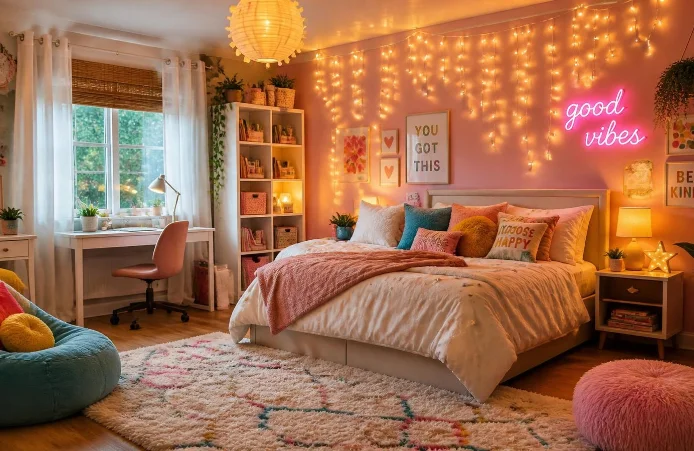

The best girls bedroom ideas balance personality, comfort, storage, and room to grow. Start with practical furniture and flexible colours before adding interests through smaller accessories. This approach makes future updates easier and usually keeps decorating costs under control.
Current UK interiors advice also favours rooms that reflect the child rather than traditional gender stereotypes. Adaptable furniture, creative storage, reading corners, and personal displays appear repeatedly across leading inspiration guides.
Quick answer: Create a flexible bedroom by choosing practical furniture, useful storage, layered lighting, and an adaptable base colour. Add personality through bedding, artwork, rugs, cushions, and removable decorations. These smaller details can change as interests develop, without requiring another full bedroom makeover.
| Design decision | Practical approach |
|---|---|
| Colour | Choose one main shade plus two supporting colours |
| Bed | Prioritise comfort, storage, or future flexibility |
| Storage | Use walls, under-bed space, baskets, and drawers |
| Lighting | Combine ceiling, bedside, and task lighting |
| Study space | Add a compact desk when age and room size allow |
| Personality | Use art, textiles, books, and changeable accessories |
| Small rooms | Choose furniture with more than one purpose |
| Future updates | Keep costly items neutral and flexible |
Key Takeaways
- Design around the child’s interests instead of relying on one stereotypical theme.
- Keep expensive furniture simple so it can work through several age stages.
- Use paint, bedding, prints, and accessories for easier style changes.
- Plan storage before decorative details to prevent the room feeling crowded.
- Give sleep, reading, play, dressing, and homework defined areas where possible.
- Treat window coverings and furniture placement as safety decisions, not decoration alone.
17 Girls Bedroom Ideas That Work in Real UK Homes
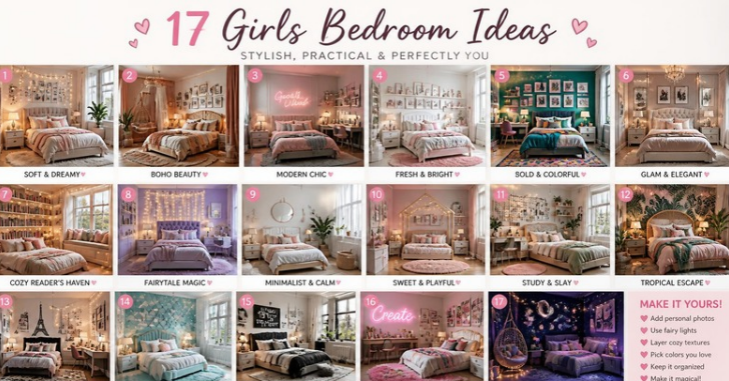
1. Start With a Flexible Colour Palette
Girls Bedroom Ideas Choose a base colour that works with several accent shades. Warm whites, muted greens, pale blues, soft taupes, and gentle pinks are adaptable choices. A flexible backdrop lets bedding and accessories change without repainting everything.
Colour can also affect how a room feels throughout the day. Trendara’s guide to colour and texture explores ways different finishes can change the mood of an interior. Explore Trendara’s colour and texture guide
2. Try Pink Without Making Everything Pink
Pink can still work beautifully without covering every surface. Pair dusty rose with cream, warm wood, sage, navy, or muted lilac for more balance. Dulux also suggests pairing pink and purple while using contrasting accents for greater depth.
Choose pink for pieces that are simple to replace later. Bedding, lampshades, prints, cushions, and small rugs are good candidates. This keeps the room adaptable if favourite colours change.
3. Create a Calm Neutral Bedroom
Neutral rooms need texture to stop them feeling flat. Layer cotton bedding, woven baskets, a soft rug, wooden furniture, and patterned cushions. Small colour accents can then add personality without dominating the space.
A warm greige can work especially well in bedrooms with changing accessories. Trendara’s Skimming Stone guide offers one example of using warm neutral walls with softer bedroom textiles.
4. Build the Scheme Around Her Favourite Colour
Ask which colours she genuinely enjoys before choosing paint. Children often have stronger preferences than adults expect, and those choices help the room feel personal. Offer several coordinated options rather than making every decision alone.
A favourite colour does not need to fill every wall. Use it on a feature area, bedding, painted furniture, or artwork instead. Supporting neutrals will keep stronger shades easier to live with.
5. Make a Small Bedroom Work Harder
Small bedrooms benefit from furniture that performs more than one job. Consider an ottoman bed, drawers beneath the frame, wall shelves, or a narrow desk with storage. Keeping more floor visible can also make daily movement easier.
Use the room’s height before adding another large cabinet. Shelving above a desk can hold books, collections, and stationery without using extra floor space. Closed boxes can hide smaller items and reduce visual clutter.
6. Create a Proper Reading Corner
A reading area does not require much space. A comfortable cushion, wall-mounted book ledge, small lamp, and basket can define one quiet corner. Younger children may prefer a canopy or fabric tent if enough safe space exists.
Keep frequently read books where they are easy to reach. Displaying several covers can also add colour to an otherwise simple wall. The collection can change naturally as reading interests develop.
7. Add a Homework Zone That Can Grow
Older children benefit from a defined place for drawing, homework, and projects. Choose a desk with enough clear surface space and add accessible stationery storage. A supportive chair matters more than decorative desk accessories.
For smaller rooms, consider a compact desk or wall-mounted option. Trendara’s home-office guide also recommends using storage and visual zones to organise work areas in shared rooms. Read Trendara’s workspace planning tips
8. Use Wall Space for Storage
Walls can provide storage without consuming valuable floor area. Picture ledges, peg rails, shallow shelves, and hooks can hold books, accessories, or lightweight decorations. Ideal Home also highlights peg rails as a practical feature in children’s rooms.
Place frequently used items at an appropriate height. Keep heavier objects on secure lower storage where possible. Always use fixings suitable for the wall and the product.
9. Make the Bed the Main Feature
The bed is usually the largest object, so let it guide the layout. A simple wooden or upholstered frame can suit many changing styles. More decorative personality can then come from sheets, cushions, throws, and nearby artwork.
Avoid choosing an expensive bed around a short-lived theme. A versatile frame offers greater freedom when tastes change. Storage beds can also earn their footprint in tighter UK bedrooms.
10. Add a Canopy Without Creating a Princess Theme
A canopy can create a cosy sleeping or reading zone without defining the entire room. Choose plain cotton, muslin, or another simple fabric in a versatile colour. Pair it with modern furniture if you want a less traditional result.
Keep fabric and fittings securely installed and away from heat sources. Position the canopy so it does not obstruct safe movement around the bed. Follow the manufacturer’s installation instructions for the specific product.
11. Use Removable Wall Decorations
Wall stickers and removable artwork provide colour without a permanent commitment. Stars, flowers, abstract shapes, animals, maps, and botanical designs can suit different interests. They are particularly useful in rented homes where major decoration may be restricted.
Trendara’s budget room-makeover guide also suggests wall decals for refreshing smaller areas. It recommends textiles, paint, furniture updates, and lighting as other lower-cost changes. See Trendara’s budget room makeover ideas
12. Create a Gallery Wall She Can Update
A gallery wall makes changing interests part of the design. Combine family photographs, drawings, favourite prints, postcards, and small framed keepsakes. Using matching frames can keep an eclectic collection visually organised.
Leave a few positions easy to update. New artwork can replace older pieces without changing the whole display. This gives the room a stronger sense of ownership over time.
13. Choose Storage She Can Use Herself
Storage works better when everyday items have obvious homes. Low baskets can hold toys, while drawers can organise clothing and craft materials. Labels may help younger children understand where things belong.
Avoid filling every corner with extra storage furniture. First remove items that are outgrown or unused. Then choose containers for what genuinely needs to remain in the room.
14. Layer the Lighting
One ceiling light rarely handles every bedroom activity well. Combine general lighting with a bedside light and focused desk lighting where appropriate. Soft evening light can create a calmer atmosphere before bedtime.
Decorative lights can add character, but suitability matters in children’s spaces. Follow product instructions and keep cables positioned safely. Avoid treating decorative lighting as the room’s only useful light source.
15. Plan Window Treatments Carefully
Curtains can add softness, pattern, insulation, and colour. Blackout options may also be helpful where early summer mornings disturb sleep. Choose treatments that fit the window securely and suit the child’s age.
Blind cords require particular care in children’s rooms. UK government guidance says furniture should be kept away from window blinds and cords must remain secured. RoSPA recommends cordless blinds for a child’s bedroom where possible.
16. Design for Tweens Without Starting Again
Tween rooms often work better when obviously childish elements become easier to replace. Keep the bed, wardrobe, desk, and larger storage fairly timeless. Update artwork, bedding, lamps, cushions, and display areas as interests mature.
A desk can gradually move from crafts to schoolwork. Open shelves can shift from toys towards books, photographs, or collections. This staged approach usually creates less disruption than another complete makeover.
17. Leave Space for Her Personality
A polished room can still feel impersonal if every detail follows a showroom. Make room for favourite books, handmade objects, collections, photographs, and hobbies. Those elements often make a bedroom memorable.
Leading UK inspiration also increasingly stresses personal interests over fixed ideas about how a girl’s bedroom should look. Ideal Home recommends designing around the individual child, while Hillarys emphasises adaptability as children grow.
Budget Girls Bedroom Ideas
You do not need to replace every piece of furniture to transform the room. Start with paint, bedding, new handles, prints, baskets, or a rug. Repainting suitable existing furniture can also create a stronger colour scheme for less.
Spend more on pieces that must survive daily use. Beds, mattresses, wardrobes, desks, and seating deserve greater attention than short-lived decorative trends. Save themed spending for smaller items that can change cheaply.
Plan purchases before visiting shops or browsing online. Measure the walls, floor, door swing, radiator positions, and available storage first. A simple plan prevents attractive pieces from becoming awkward once they reach the room.
How to Choose a Bedroom Style That Will Last
The safest long-term approach is separating permanent choices from changeable ones. Keep larger furniture and expensive finishes flexible, then use accessories for stronger themes. This method suits everything from floral rooms to modern, colourful, or nature-inspired schemes.
Think about what the bedroom must do now and two years from now. A play corner may eventually need a desk, while toy storage may become book storage. Planning that transition before buying furniture can save both money and floorspace.
Create a Bedroom That Works Beyond the Latest Trend
A successful child’s bedroom should support everyday life before it follows a decorating trend. Start with sleep, storage, movement, lighting, and the activities that happen there. Then build colour and personality around those practical foundations.
The strongest rooms are also easy to change. Flexible furniture and simple finishes provide continuity, while affordable details keep the space feeling current. Most importantly, involve the person who will actually live there.
Frequently Asked Questions
What are the best girls bedroom ideas for a small room?
Prioritise vertical storage, under-bed drawers, and compact multifunctional furniture. Keep pathways clear and avoid buying more cabinets than the room needs. A restrained colour palette can also reduce visual clutter.
What colours work well for a girl’s bedroom?
There is no colour that every girl’s bedroom needs. Pink, green, blue, lilac, yellow, terracotta, and warm neutrals can all work well. Choose colours around the child’s preferences, available daylight, and existing furniture.
How can I decorate a girl’s bedroom cheaply?
Change the elements with the strongest visual impact first. Paint, bedding, wall art, handles, rugs, and storage baskets can alter the room without replacing major furniture. Reusing existing pieces also keeps the budget focused on genuine needs.
How do you make a girl’s bedroom grow with her?
Choose adaptable furniture and avoid making costly purchases around one short-lived theme. Let removable accessories carry more of the child’s current interests. Desks, shelving, and storage should also have uses beyond one age stage.
How can I make the room feel personal?
Include items chosen or created by the child. Display artwork, photographs, favourite books, hobbies, and selected collections rather than relying entirely on purchased decorations. Give her meaningful choices during planning and future updates.