
British weather can turn a simple commute into a wet-footed problem within minutes. Waterproof shoes protect your feet in rain, on damp pavements, muddy paths, and wet grass. The right pair should also stay comfortable for your normal way of walking.
Choosing well means looking beyond a waterproof label on the box. Fit, grip, breathability, materials, and intended use all affect everyday comfort. Your ideal pair will depend on where you walk and how long you stay outside.
| What to check | Why it matters | Best choice for |
|---|---|---|
| Waterproof membrane | Blocks rain entering through the upper | Regular wet-weather walking |
| Grippy outsole | Helps on wet pavements and muddy paths | Commuting and outdoor use |
| Breathable lining | Reduces heat and moisture inside | Long periods of wear |
| Secure fit | Limits rubbing and heel movement | Longer walks |
| Low-cut design | Feels lighter and more flexible | Everyday urban use |
| Higher collar | Gives better splash protection | Trails and deeper puddles |
| Removable insole | Makes drying and cleaning easier | Frequent wet-weather use |
Waterproof footwear should keep rain outside while remaining comfortable for normal movement. Look for a sealed membrane, dependable grip, and the right fit. Low-cut pairs suit commuting and everyday walking. Higher styles provide better protection when wet ground, mud, or deeper puddles are likely.
What Makes Waterproof Footwear Different?
True wet-weather footwear uses construction designed to keep liquid water out during normal use. Many models use an internal membrane between the outer material and lining. Others rely on naturally waterproof materials, such as moulded rubber.
Water-resistant footwear offers less protection. It can handle brief showers, splashes, and damp streets. Sustained rain or wet grass can eventually allow moisture through.
That difference matters in the UK because conditions can change during one journey. A short commute may only need water resistance. Dog walks, hiking, and longer journeys usually benefit from stronger protection.
Waterproof Shoes Versus Water-Resistant Options
Understanding the terminology can prevent an expensive buying mistake. Waterproof construction aims to create a barrier that keeps liquid out of the footwear. Water-resistant materials mainly slow moisture penetration during lighter exposure.
A protective coating may make water bead on the outer surface. That coating can weaken through dirt, wear, and repeated cleaning. A membrane offers more dependable protection because it sits within the footwear’s construction.
Neither option is automatically better for every person. Full waterproofing can feel warmer during extended indoor wear. A lighter water-resistant pair may suit short urban journeys with limited rain exposure.
Which Type Works Best for British Weather?
Your daily routine should guide the choice. People walking to stations need different features from countryside walkers. Runners also need more flexibility and grip than shoppers in casual footwear.
For city use, choose a flexible sole with traction on wet paving. Neutral colours also work easily with everyday wardrobes. Trendara’s guide to comfortable men’s walking footwear covers cushioning and support in more detail.
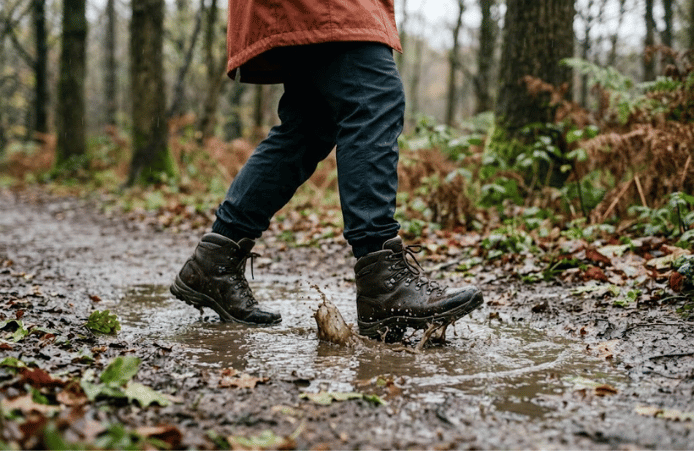
Countryside use places greater demands on tread and water protection. Deeper lugs can improve traction across loose or muddy surfaces. A gusseted tongue can also reduce water entering around the laces.
How Much Should You Expect to Pay in the UK?
Current UK listings cover a wide price range. Budget waterproof walking footwear can start around £30 to £40. Mid-range options typically cost £75 to £110.
Premium running and outdoor models can cost £120, £150, or more. Higher prices may reflect specialist membranes, branded outsoles, lightweight materials, or sport-specific engineering. Price alone does not guarantee better comfort for your feet.
Choose based on how often you will wear the pair. Occasional urban use may not justify technical trail features. Regular walkers can benefit more from better grip, fit, and durable construction.
Seven Features Worth Checking Before You Buy
- Waterproof construction: Look for a stated membrane, sealed construction, or another clearly explained protection system.
- Wet-weather grip: Check the outsole pattern and choose deeper tread for uneven or muddy ground.
- Comfortable toe room: Your toes should move naturally without sliding around inside the footwear.
- Secure heel fit: Excess movement can cause rubbing, especially on longer walks.
- Breathability: Waterproof protection should still allow heat and moisture to escape where possible.
- Suitable height: Low styles suit urban use, while higher collars provide more splash protection.
- Easy maintenance: Removable insoles and straightforward cleaning can make frequent wet-weather wear easier.
Choosing the Right Pair for Everyday Walking
Start by thinking about your longest regular journey. A comfortable five-minute school-run option may not suit an hour-long weekend walk. Distance changes how important cushioning, support, and breathability become.
Try footwear with the socks you normally wear outside. Your toes need space, but your heel shouldn’t lift too much. Tight footwear can become uncomfortable as your feet warm up while walking.
Do not assume thick cushioning always means better support. The entire shape needs to match your foot. Stable contact with the ground can matter as much as softness.
What About Waterproof Trainers?
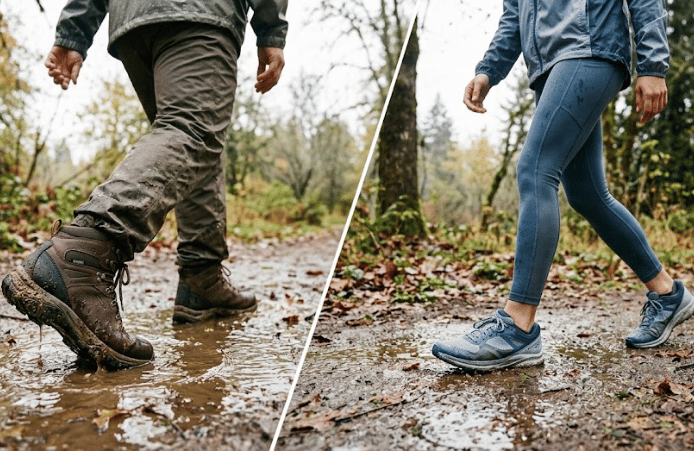
Waterproof trainers combine a familiar athletic shape with added rain protection. They are useful for commuting, dog walking, travel, and light outdoor routes. Their lighter construction can feel less restrictive than traditional walking boots.
They also work well with casual clothing. Jeans, cargo trousers, leggings, and practical outerwear all pair easily with them. Their understated look makes them easy to wear outdoors and in everyday settings.
If styling versatility matters, compare them with other low-profile footwear. Trendara’s guide to women’s flat shoe styles explains how shape and fit affect everyday outfits. A weather-ready trainer can fill a similar practical role during wetter months.
Grip Matters as Much as Water Protection
Keeping water out does not prevent slipping. Smooth soles can feel insecure on wet leaves, paving stones, metal covers, and muddy surfaces. A suitable outsole should match the surfaces you expect to encounter.
Urban footwear needs enough tread for rain-soaked pavements without feeling heavy. Trail-focused pairs need deeper patterns for softer ground. Outdoor models may also use rubber compounds developed for stronger traction.
Check the heel and forefoot rather than judging tread by appearance alone. Both areas need stable contact during your stride. Worn tread also signals that replacement may be needed soon.
Are Waterproof Pairs Breathable?
Many modern waterproof membranes are designed to release some internal moisture. They still tend to feel warmer than highly ventilated mesh footwear. Your activity level therefore matters when choosing between protection and airflow.
A commuter may spend more time indoors than outside. In that situation, a heavily insulated pair could become uncomfortable. Lightweight membrane footwear can provide a better balance.
Socks also influence moisture management. Choose materials designed to move moisture away from your skin. Thick cotton socks can stay damp after absorbing sweat.
How to Care for Wet-Weather Footwear
Cleaning helps preserve both appearance and performance. After use, remove surface mud with a suitable brush or damp cloth. Follow the manufacturer’s instructions for leather, suede, textiles, or mixed-material uppers.
Allow wet pairs to dry naturally in a ventilated area. Strong direct heat can damage adhesives, leather, coatings, and some synthetic components. Removing the insoles can help the interior dry faster.
Proper storage matters after the pair dries. Trendara’s shoe storage and seasonal-care guide explains practical ways to protect footwear between uses. Avoid putting damp pairs into sealed boxes or crowded cupboards.
When Should You Replace Them?
A worn outsole can reduce traction before the upper shows visible damage. Regularly inspect the heel, forefoot, and tread. Uneven wear can also change how stable the footwear feels.
Repeated water entry may indicate damage to the upper, seams, or internal membrane. First, check whether moisture entered over the collar. Deep puddles can defeat low-cut footwear without any material failure.
Comfort changes can also signal it’s time to replace them. Compressed cushioning may no longer support your normal walking pattern. If a pair suddenly starts rubbing, it deserves closer inspection.
Waterproof Shoes: What Should UK Buyers Prioritise?
The strongest buying decision starts with your actual routine. Waterproof shoes for urban commuting need reliable grip, moderate protection, and all-day comfort. Outdoor use may require deeper tread and stronger upper coverage.
Think about exposure time rather than rain alone. Five minutes between a car and office is different from forty minutes on wet paths. Your footwear should match the tougher situation you face regularly.
UK shoppers also have options across several price levels. Current ranges span affordable walking models through technical running and outdoor designs. Compare fit and construction before paying extra for features you may never use.
Frequently Asked Questions
Are waterproof shoes completely waterproof?
Waterproof shoes are designed to keep water out through their protected construction during normal use. Water can still enter over the collar if puddles exceed the footwear’s height. Damage or worn components can also reduce protection over time.
Are waterproof trainers good for everyday walking?
Yes, they can work well for commuting, errands, dog walks, and everyday travel. Choose enough cushioning and grip for the distance you usually cover. Make sure they stay comfortable after extended wear.
Is waterproof better than water-resistant?
It depends on how much wet weather you encounter. Full waterproofing makes more sense for sustained rain, wet grass, and regular outdoor walking. Water resistance may feel lighter for shorter journeys and occasional showers.
Do waterproof pairs get hot?
Some can feel warmer because protective membranes reduce airflow compared with open mesh. Breathable membranes and suitable socks can improve comfort. Lightweight designs also tend to suit mixed indoor and outdoor use better.
How long should waterproof footwear last?
There is no single lifespan because usage and materials vary widely. Frequent walking, rough surfaces, cleaning habits, and drying methods all affect durability. Replace footwear when grip, fit, support, or reliable water protection deteriorates.
Find the Right Pair for Your Routine
Wet British weather makes dependable footwear a practical wardrobe choice. Start with protection, traction, fit, and the surfaces you use most. Then compare style, weight, and additional features within your budget.
You do not always need the most technical model available. Commuters can often prioritise lightness and everyday comfort. Longer outdoor walks call for stronger tread and more protective construction.
Before you buy, compare several pairs in your size and intended category. Check the returns policy when shopping online. Choose the pair that matches your real routine rather than the most impressive specification sheet.