
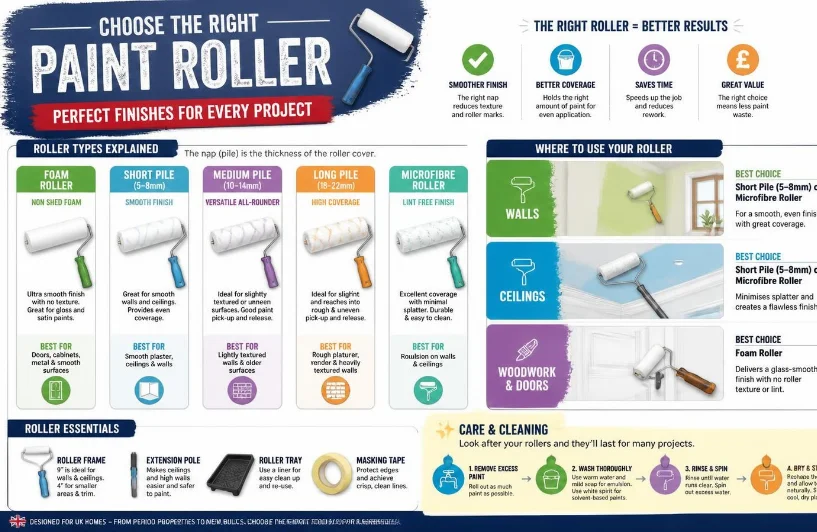

Choosing the right paint roller can make decorating faster, cleaner, and easier. The wrong sleeve can leave texture, bubbles, missed patches, or visible roller marks. Your choice should match the surface, paint, and finish you want.
Quick answer: For most smooth UK interior walls and ceilings, a medium-pile microfibre roller is a dependable choice. Short-pile sleeves suit smoother surfaces and finer finishes. Long-pile sleeves reach into textured walls and masonry. Mini rollers give better control on doors, furniture, trim, and awkward areas.
| Decorating job | Roller to consider | Why it works |
| Smooth interior walls | Short or medium-pile microfibre | Good balance between coverage and finish |
| Standard ceilings | Medium-pile microfibre | Holds enough emulsion for larger areas |
| Textured walls | Long-pile sleeve | Reaches deeper surface texture |
| Rough masonry | Long or extra-long pile | Covers irregular and porous surfaces |
| Doors and woodwork | Mini short-pile microfibre | Provides control and a finer finish |
| Furniture | Mini foam or suitable short pile | Helps reduce visible texture |
| Tight spaces | Mini roller | Easier to control around obstacles |
How to Choose the Right Paint Roller
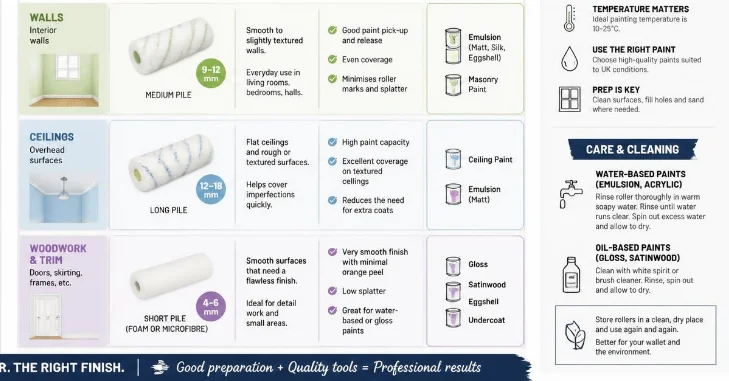
Start by looking at the surface rather than the roller packaging. Smooth plaster needs less fibre depth than textured masonry. The paint type and desired finish should then narrow your options.
Pile length describes the depth of the fibres on the sleeve. Longer fibres generally reach further into uneven surfaces and carry more coating. Shorter fibres usually leave less texture on smooth surfaces.
The sleeve material matters as well. Microfibre is widely used for interior emulsions and offers useful paint carrying capacity. Foam and short-pile options can suit finer work when the coating manufacturer permits them.
Understanding Roller Pile Length
Short pile
Short-pile sleeves suit flat surfaces where a fine finish matters. They carry less coating than longer sleeves but usually leave less surface texture. Consider them for smooth plaster, prepared woodwork, doors, and similar surfaces.
They can become inefficient on rough walls because the fibres cannot reach deep recesses. You may press harder to compensate, which can create uneven application. A longer pile usually performs better once the texture becomes noticeable.
Medium pile
A medium pile is the practical starting point for many UK interior walls. It balances coating capacity with a reasonably smooth finish. It also works well across many ordinary plastered ceilings.
This option is particularly useful with standard wall emulsions. You can cover larger areas without constantly reloading the sleeve. A quality microfibre version can also help control unwanted splatter.
Long pile
Long-pile sleeves are designed for rougher and more textured surfaces. Their deeper fibres can carry coating into small depressions that shorter sleeves may skim over. They are useful on textured walls, render, brickwork, and some exterior masonry.
Using them on perfectly smooth plaster can create more texture than you want. They also hold more coating, so careless loading can increase splatter. Match the extra fibre depth to surfaces that need it.
Which Roller Material Should You Choose?
Microfibre is a versatile option for many decorating projects. It holds and releases water-based coating effectively when matched with the correct pile. That makes it useful for walls and ceilings in many homes.
Foam sleeves have a different purpose. Their smooth surface works well for doors, cabinets, furniture, and selected gloss or satin finishes. They are less suitable for rough surfaces because they cannot reach deep texture.
Natural and woven synthetic sleeves are also available. Always check that the sleeve suits your chosen coating before starting. The instructions on the paint tin should take priority over general decorating advice.
For timber projects, Trendara’s wood paint guide explains how coating choice changes between doors, furniture, skirting, and exterior timber. Roller selection becomes easier once you know which coating system the surface needs.
What Roller Size Works Best?
A standard roller around nine inches wide suits many domestic walls and ceilings. It covers a useful area while remaining manageable in normal rooms. Larger versions can speed up open spaces but become cumbersome around obstacles.
Mini rollers work well for narrow surfaces and detailed work. They can handle doors, furniture, skirting, radiator areas, and small wall sections. Their smaller width also helps when you need to work close to edges.
An extension pole is worth considering for walls and ceilings. It reduces repeated climbing and gives you a wider working range. Good control also makes maintaining consistent pressure easier across larger areas.
Best Roller for Interior Walls
For typical smooth or lightly textured walls, start with a medium-pile microfibre sleeve. A shorter pile may suit exceptionally smooth plaster where you want less visible stipple. Older textured walls may need deeper fibre.
Surface preparation still determines much of the final appearance. Fill defects, smooth repairs, and remove dust before opening the paint. A premium sleeve cannot hide poor preparation beneath the coating.
If repainting forms part of a larger renovation, Trendara’s room-by-room makeover guide provides ideas for coordinating paint with broader room updates. Planning the whole room first can prevent unnecessary repainting later.
Best Roller for Ceilings
A medium-pile microfibre sleeve is suitable for many smooth ceilings. The sleeve should carry enough emulsion without becoming difficult to control overhead. Textured ceilings may require a longer pile to reach recessed areas.
An extension pole can make ceiling work more comfortable. Load the sleeve evenly and avoid pushing hard against the surface. Excessive pressure can create lines and squeeze coating from the roller edges.
Work systematically across the ceiling while maintaining a wet edge. Avoid repeatedly rolling areas that have started drying. This technique reduces visible overlaps after the coating settles.
Best Roller for Doors, Skirting and Furniture
Small surfaces usually benefit from a mini roller rather than a full-width frame. Short-pile microfibre can work well with suitable water-based wood coatings. High-density foam may suit selected smooth finishes and compatible paints.
Preparation matters even more on reflective satin or gloss finishes. Sanding marks, dents, and old coating edges can remain visible after painting. Clean and prepare the surface carefully before applying the new finish.
Trendara’s guide to Skimming Stone and interior colour choices can also help when coordinating painted details with neutral walls. Colour and sheen should be considered together because reflected light changes how a finish appears.
Best Roller for Masonry and Textured Walls
Rough surfaces need fibres long enough to reach their low points. A long or extra-long pile can therefore suit render, brick, and coarse masonry. Smooth sleeves tend to skim raised areas and leave small gaps.
Expect rough masonry to require more coating than smooth plaster. Porous surfaces can absorb paint quickly, while deep texture increases the surface area to cover. Check the coating manufacturer’s coverage guidance before buying materials.
Exterior decorating often sits alongside other maintenance work. Trendara’s patio cleaner guide covers another common UK outdoor maintenance task. Planning exterior jobs together can reduce repeated setup and cleaning.
How to Get a Smoother Roller Finish
Good technique starts before coating reaches the wall. Remove loose fibres from a new sleeve and prepare it according to its manufacturer’s instructions. Keep the surface clean because dust can become trapped in the finish.
Load the sleeve evenly instead of soaking one side. Apply coating with steady pressure and spread it before the roller becomes dry. Pressing harder rarely fixes an underloaded sleeve.
Work in manageable sections and maintain a wet edge. Finish with controlled passes rather than repeatedly working partly dried coating. Consistent loading and pressure usually produce a more uniform result.
Avoid rushing the second coat. Follow the drying and recoating times stated by the paint manufacturer. Applying another layer too early can disturb the first coat and spoil the finish.
Common Roller Mistakes to Avoid
Several decorating problems come from tool choice rather than the coating itself. A sleeve that works beautifully on smooth plaster may perform poorly on brick. Matching the tool first prevents unnecessary corrective work.
Common mistakes include:
- Choosing a pile that is too long for smooth plaster.
- Using a short pile on heavily textured masonry.
- Pressing hard when the sleeve needs more coating.
- Overloading the sleeve and creating splatter.
- Rolling repeatedly over coating that has begun drying.
- Ignoring the compatibility between sleeve material and paint.
- Skipping cleaning, filling, sanding, or dust removal.
- Using a large frame where a mini version offers better control.
Cleaning and Storing Roller Sleeves
Check the paint manufacturer’s cleaning instructions before washing a sleeve. Water-based coatings often require a different cleaning method from solvent-based products. Never assume one method suits every coating.
Remove as much excess coating as practical before cleaning. Wash compatible sleeves thoroughly until the cleaning liquid runs clear. Let them dry properly before storing them somewhere clean.
A good sleeve can often be reused when maintained correctly. Replace it when fibres become damaged, compressed, or difficult to clean. A worn sleeve can undermine careful preparation and technique.
Final Decorating Checklist
The right roller is the one that matches your surface, coating, and desired finish. Use shorter fibres for smoother surfaces and longer fibres as texture increases. Choose a manageable width that gives you good control.
Prepare the surface before worrying about application speed. Load the sleeve evenly, maintain a wet edge, and avoid excessive pressure. Follow the coating manufacturer’s instructions for drying, recoating, and cleaning.
Once the basic choices are correct, decorating becomes far more predictable. Browse Trendara’s Home Improvement section for more practical renovation and maintenance guidance. Plan your materials before starting so the project can move smoothly from preparation to the final coat.
Frequently Asked Questions
Which paint roller gives the smoothest finish?
Short-pile sleeves usually create less texture on suitably smooth surfaces. High-density foam can also produce fine results on compatible doors, furniture, and woodwork coatings. Surface preparation remains essential because a roller cannot hide every defect.
What roller should I use for emulsion?
A medium-pile microfibre sleeve is a practical choice for many standard walls and ceilings. Very smooth plaster may suit a shorter pile. Textured surfaces usually need longer fibres for complete coverage.
Should I use a short or medium pile on walls?
Choose according to the wall’s texture and your finish expectations. Short pile suits particularly smooth surfaces, while medium pile handles many normal interior walls. Slight texture usually makes medium pile the more forgiving option.
Can I use a foam roller on walls?
Foam is generally better suited to smooth, smaller surfaces and compatible coatings. Standard wall emulsion usually works better with an appropriate microfibre or woven sleeve. Always check the coating manufacturer’s application guidance.
Why does my roller leave marks?
Marks can appear when the sleeve is too dry, overloaded, or pressed too firmly. They can also develop when fresh coating overlaps an area already beginning to dry. Consistent loading and a wet edge help prevent them.
Do I need an extension pole?
You don’t always need one, but it can make large walls and ceilings easier. A pole increases reach and reduces repeated movement up a stepladder. It can also help you maintain smoother, longer passes.