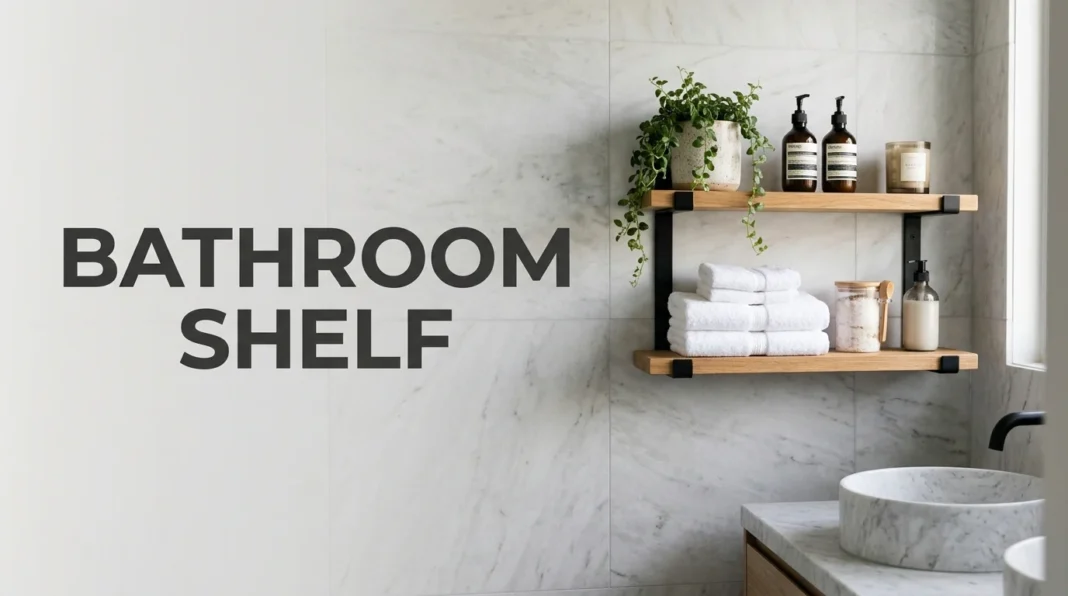

A bathroom shelf can turn unused wall space into practical storage without crowding the room. The right design keeps toiletries accessible while freeing your basin, bath edge, and floor. Your best choice depends on moisture resistance, available space, fixing method, and what you plan to store.
Quick answer: Choose bathroom shelving by matching its size, material, and fixing method to your room. Wall-mounted designs save floor space, while corner shelves suit compact bathrooms. Metal, Glass, and moisture-resistant materials are easier to maintain. Check dimensions carefully before drilling or using adhesive fixings.
| What to consider | Practical guidance |
|---|---|
| Location | Choose an unused wall, corner, basin area, or space above the toilet |
| Material | Favour moisture-resistant metal, Glass, treated wood, or suitable composites |
| Fixing | Choose screws for strength or suitable adhesive systems where drilling is undesirable |
| Depth | Keep shelves shallow in narrow walkways and compact bathrooms |
| Storage needs | Match the shelf to bottles, towels, toiletries, or decorative items |
| Cleaning | Choose smooth surfaces and simple shapes where possible |
| Style | Coordinate finishes with taps, handles, mirrors, and other fittings |
Why Bathroom Shelving Makes Such a Difference
Bathrooms often need to store more items than their floor area comfortably allows. Towels, skincare products, toiletries, brushes, and cleaning supplies quickly compete for limited surfaces. Moving suitable items onto walls creates storage without adding another bulky cabinet.
This approach can be especially useful in smaller British bathrooms and en-suites. For this reason, UK retailers offer wall shelves, corner storage, floating designs, and multi-tier units. Choosing carefully matters because poor placement can make even useful storage feel intrusive.
Before buying anything, look at the room when it is being used. Notice where doors open, towels hang, and people naturally stand or move. A practical shelf should make everyday routines easier, not create another obstacle.
Which Bathroom Shelf Type Should You Choose?
Different shelf styles solve different storage problems. A wide floating design suits one space, while a compact corner unit may suit another. Comparing the main options makes the buying decision much simpler.
| Type | Best for | Main advantage | Possible drawback |
|---|---|---|---|
| Floating wall shelf | Modern bathrooms | Clean appearance and useful display space | Usually needs secure wall fixing |
| Corner shelf | Small rooms and showers | Uses awkward corner space | Storage width can be limited |
| Glass shelf | Light, modern interiors | Visually unobtrusive | Requires regular cleaning |
| Metal shelf | Busy family bathrooms | Strong and easy to coordinate | Finish quality matters in damp conditions |
| Freestanding unit | Renters or flexible layouts | No wall drilling required | Uses valuable floor space |
| Adhesive shelf | Tiles and rental homes | Can avoid drilling | Weight capacity varies by product |
Floating and Wall-Mounted Shelves
Wall-mounted shelving usually gives the strongest space-saving benefit. It moves storage upwards while leaving the floor clear. That can make a compact bathroom feel less crowded.
Slim designs work well above a basin or beside a mirror. Wider versions can hold folded towels or several everyday products. Always check shelf depth before placing one beside a narrow route through the room.
The main disadvantage is installation. Secure fixing may require drilling into tile, masonry, plasterboard, or another wall surface. Use fixings designed for both your wall and the expected load.
Corner Shelves
Corners frequently become wasted space, particularly around showers and baths. A triangular or curved shelf can turn that area into useful storage. It also keeps bottles away from basin edges and window ledges.
Corner designs are particularly helpful when full-width wall shelving would project too far. Multi-level units offer more capacity without taking much horizontal space. UK retailers currently list both wall-mounted and freestanding corner storage options.
Check whether the shelf will sit inside a wet shower zone. Products used there need materials and fittings that can withstand repeated water exposure. Drainage gaps can also help prevent water pooling around bottles.
Freestanding Storage
Freestanding shelving works when drilling is unsuitable or flexibility matters. You can reposition the unit during cleaning or after changing the room layout. Taller designs also provide several storage levels from a small footprint.
The trade-off is floor space. A narrow room can feel tighter when furniture interrupts the clear area around a bath or basin. Measure the available footprint before choosing a tall shelving unit.
Trendara’s guide to console table placement explains similar clearance principles for home furniture. The same planning idea matters in bathrooms. Storage should never compromise comfortable movement.
Choose Materials That Suit a Damp Room
Bathrooms create more moisture than most rooms. Steam, splashes, condensation, and cleaning products can affect unsuitable finishes over time. Material choice therefore matters as much as appearance.
Stainless steel and suitable coated metals work well for modern sheGlass. Glass is another common choice because it doesn’t absorb bathroom moisture. Both materials can coordinate easily with chrome, black, brass, or brushed-metal fittings.
Wood can add warmth to a bathroom, but it needs the right protection. Untreated or unsuitable timber can react poorly to persistent moisture. Consider the room’s ventilation and likely splash exposure before choosing wooden storage.
Colour also affects how shelving fits the room visually. Trendara’s article about texture and colour at home offers useful guidance for coordinating finishes. A shelf can either blend quietly into the scheme or provide deliberate contrast.
Measure Before You Buy
Start by measuring the wall area rather than estimating it. Record the available width, depth, and vertical clearance. Include doors, mirrors, taps, sockets, towel rails, and other nearby fittings.
Next, consider what will sit on the shelf. Tall shampoo bottles need different clearance from folded face towels or small skincare containers. Measuring your largest regular items can prevent an expensive sizing mistake.
Depth deserves particular attention in small rooms. A deep shelf may offer more capacity but can cut into usable space. A shallower design often works better where people pass close to the wall.
Screw-Fixed or No-Drill Storage?
Screw-fixed shelving is usually the better choice for heavier loads when installed correctly. The fixing must suit the wall construction and shelf specification. Poor fixings can fail even when the shelf itself is strong.
Adhesive and suction-mounted storage can suit lighter items and situations where drilling is undesirable. These options are common across UK bathroom ranges. Their capacity depends on the product, wall finish, installation method, and surface preparation.
Do not assume every adhesive product will suit every tile or painted wall. Follow the manufacturer’s fitting instructions and weight limits. Clean and prepare the mounting surface exactly as directed before installation.
Where Should Bathroom Shelving Go?
Placing shelves above the basin is convenient for items used during morning and evening routines. Keep the shelf high enough so it doesn’t obstruct the tap or basin. Check mirror positioning before deciding on the final height.
The wall above a toilet offers valuable storage without taking up floor space. This area suits spare toiletries, towels, baskets, or less frequently used supplies. Keep objects secure and avoid overcrowding the shelf.
Near a bath or shower, prioritise products designed for wetter conditions. Easy access matters, but safe positioning matters more. Avoid placing storage where reaching for a bottle could make someone lose balance.
For wider renovation planning, Trendara’s guide to bath panel materials can help coordinate nearby bathroom surfaces. Matching practical materials can make the finished room easier to maintain.
How to Keep Shelves Looking Tidy
Start by storing daily items within easiest reach. Reserve higher or less accessible areas for spare toiletries and occasional products. This simple hierarchy reduces unnecessary clutter.
Group smaller items in trays, baskets, or containers where appropriate. Several loose objects can make even a large shelf look untidy. Grouping them also makes cleaning the surface much quicker.
Avoid filling every centimetre with products. Leaving some visible space makes items easier to find and gives the arrangement a calmer appearance. Remove empty bottles and rarely used products regularly.
Common Buying Mistakes to Avoid
Buying without measuring is the easiest mistake to prevent. Product photos rarely show exactly how much space a shelf will take up in your bathroom. Check every listed dimension against the intended wall.
Choosing based on appearance alone can create practical problems. A beautiful design still needs suitable moisture resistance, adequate capacity, and secure installation. Think about daily use before deciding which finish looks best.
Another mistake is expecting one shelf to store everything. Several smaller storage zones can work better than one overloaded surface. Keep frequently used items near where you use them.
The Best Choice for Most Bathrooms
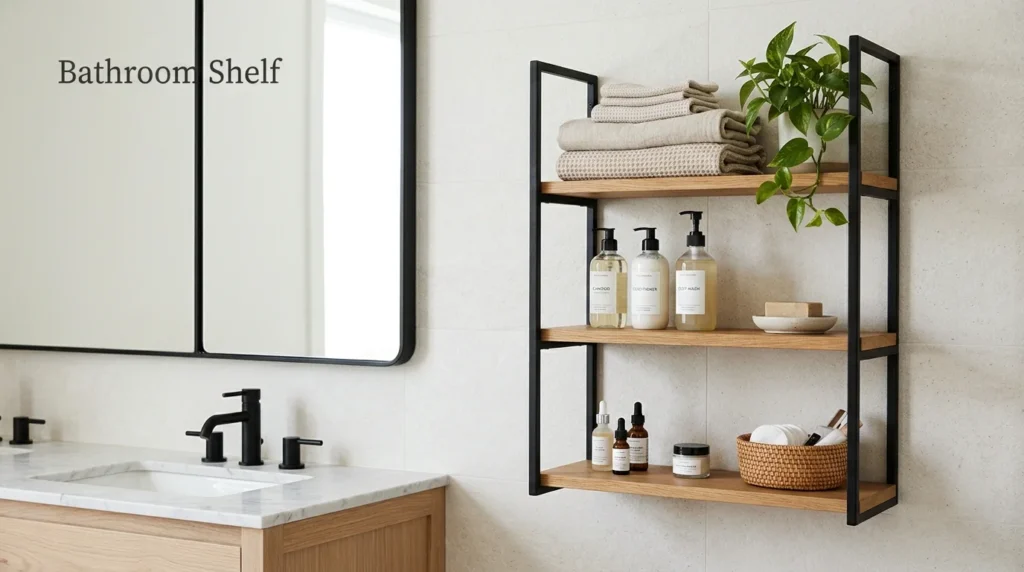
For many homes, a slim wall-mounted design offers the strongest balance of storage and floor-space efficiency. Choose corrosion-resistant materials and dimensions that suit the available wall space. Use secure fixings that match both the surface and expected load.
A corner model may be the better choice when wall width is limited. Renters may prefer freestanding or suitable no-drill storage instead. No single design suits every bathroom layout.
The practical winner is the option that fits your room without restricting movement. It should also hold your normal products comfortably and withstand bathroom conditions. Measure first, then compare material, fixing method, and capacity.
Frequently Asked Questions
What is the best material for a bathroom shelf?
No single material suits every Glass Glass and certain metals are popular because they handle bathroom conditions well. Treated wood can also work if it’s designed for damp environments.
Can you put shelves in a small bathroom?
Yes, wall and corner shelving can be particularly useful in compact spaces. They provide storage without taking up as much floor space as a cabinet. Keep the depth modest so the shelf does not obstruct movement.
Are adhesive bathroom shelves reliable?
They can be reliable when the product matches the surface and intended load. Installation quality also affects their performance. Always follow the manufacturer’s instructions for preparation, curing, and weight limits.
How high should bathroom shelving be?
The correct height depends on its location and intended user. Place daily products within comfortable reach, and keep the shelf clear of taps and doors. Shower storage should also stay within reach without unsafe stretching.
How do I choose the right bathroom shelf?
Measure the available space and decide what the shelf must hold. Then compare moisture resistance, depth, fixing method, and stated capacity. Choose the simplest design that meets those practical requirements.
Make Your Bathroom Storage Work Harder
Good bathroom storage begins with the space you already have. Walls and corners can provide useful capacity without demanding a larger room. Measure carefully to avoid unsuitable sizes and awkward placement.
Choose materials that can cope with the room’s moisture and cleaning routine. Match the fixing method to your wall and expected load. Then keep frequently used items accessible instead of filling every available surface.
Once those basics are right, choosing style becomes much easier. Coordinate the finish with your taps, mirror, handles, or broader colour scheme. The result should feel organised, practical, and comfortable every day.