
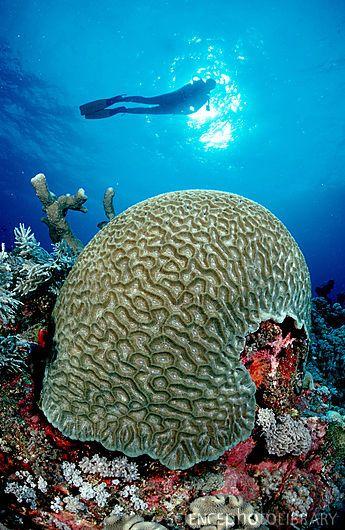

Natural sea sponges are among the ocean’s most ancient and unique creatures. Though they may appear to be lifeless, motionless objects clinging to rocks, sea sponges are living animals with surprising complexity. Belonging to the phylum Porifera, these creatures have been around for over 600 million years, making them some of the oldest multicellular life forms on Earth.
Despite their plant-like appearance, sea sponges are filter-feeding animals. They don’t have a mouth, stomach, brain, or central nervous system. Instead, their bodies are full of pores and channels that allow water to circulate through them. Tiny hair-like structures called choanocytes line the interior chambers of the sponge. These specialized cells use their flagella (tiny whip-like tails) to create water currents that draw in water carrying microscopic plankton, bacteria, and organic particles—this is how sea sponges “eat.” The food is then absorbed directly by the sponge’s cells.
Sea sponge is also remarkable in how it “moves,” though not in the way we typically think of movement. Adult sponges are sessile, meaning they are fixed in place and don’t swim or crawl. However, during their larval stage, they are free-swimming and use small cilia to move through the water until they find a suitable surface to attach to. Once settled, they transform into their adult form and remain in that spot for the rest of their lives. Interestingly, sponges can also slowly reshape or reposition themselves by shifting their cells, particularly if their environment changes or if they need to adapt to water flow.
One of the most fascinating abilities of sea sponges is their regeneration. A sponge can be broken apart, and if its cells are not damaged, it can reorganize itself and form a new, functioning sponge. This makes them incredibly resilient to injury and a subject of interest in regenerative medicine and biology.
Additionally, natural sea sponges don’t produce waste like most animals. Instead, their filtering system helps keep the ocean clean. They also provide shelter for various marine life such as shrimp, small fish, and bacteria, creating mini ecosystems within their porous bodies.
In short, sea sponges may seem simple, but they play an essential role in marine environments. Their feeding habits, unique method of movement, and regenerative abilities make them one of nature’s quiet marvels—delicate yet enduring, ancient yet still full of secrets waiting to be discovered.
Ancient Survivors
These aquatic animals have existed for over 600 million years, ranking among the earliest multicellular life forms. Despite resembling plants, they are living creatures with fascinating biological systems.
Feeding and Circulation
Their bodies contain countless pores and canals that allow water to flow through. Specialized cells generate currents to capture plankton and organic matter, providing vital nourishment.
Life Cycle and Adaptation
While adults remain fixed in place, their larvae swim freely until settling on a surface. Some can also reshape slowly to adapt to environmental changes.
Resilience and Ecological Role
They regenerate when damaged and act as natural water filters. Additionally, they create habitats for smaller organisms, supporting biodiversity beneath the waves.