
Feeling anxious is your body’s way of signaling overstimulation, uncertainty, or fear. While some degree of anxiety from time to time is normal, ongoing worry can disrupt daily activities. The good news? You can regain control by using effective relaxation techniques that calm your body and ease tension. From managing everyday stressors to providing long-term answers, these scientifically proven methods will help.
Deep Breathing Techniques
Breathing is possibly the most powerful tool to manage your nervous system. Shallow breathing tends to exacerbate anxiety, but deep breathing calms it down. Diaphragmatic breathing, also known as belly breathing, leads you to inhale deeply into your diaphragm, not your chest. This technique stimulates the parasympathetic nervous system, reducing stress hormones and the fight-or-flight state of the body.
Anxiety can manifest in various ways, and for medical documentation, using the correct ICD-10 code for anxiety ensures proper diagnosis and treatment. Along with medical support, breathing exercises can be highly effective in managing symptoms. One such technique is the 4-7-8 breathing exercise: breathe deeply for four seconds, hold your breath for seven seconds, and exhale gradually for eight seconds. This measured breathing rate calms the heart rate and encourages relaxation.
Box breathing is another systematic breathing exercise used in high-pressure situations, even by the military. Breathe in for four seconds, hold for four seconds, breathe out for four seconds, and wait for another four seconds before resuming. Repetition of these breathing exercises for a few minutes daily can greatly reduce anxiety levels, boost oxygen supply to the brain, and enhance emotional control.
Mindfulness and Meditation
Mindfulness helps you remain present instead of getting caught up in concerns. Meditation builds concentration and assists in soothing runaway thoughts. Mindfulness meditation is sitting still and watching thoughts without judgment. It increases awareness and decreases emotional reactivity. Guided meditation offers a structured process, sometimes with audio or apps to guide you through a relaxation exercise. Guided sessions frequently include soothing imagery, calming voices, or soft music to maximize relaxation.
Another useful technique is body scan meditation, where you notice various areas of your body and consciously release tension. It is especially useful at night, as it relaxes the body and mind, making it simple to sleep. Stress is decreased, emotional control is better, and overall well-being increases by regular meditation. Even half a dozen minutes daily can create significant differences in anxiety control.
Progressive Muscle Relaxation (PMR)
Anxiety tends to become physical in the form of tension in muscles. Progressive Muscle Relaxation (PMR) is a technique where one alternately tenses and relaxes various muscle groups to undo bodily tension. Begin at your feet, tightening the muscles hard for five seconds and then relaxing. Gradually work your way up to your legs, stomach, arms, shoulders, and face. Pay attention to the difference between tension and relaxation, as this teaches your body to notice and wind down on stress signals.
PMR is very efficient in lowering stress and enhancing the quality of sleep. Performing PMR at night is a good strategy for individuals with ongoing stress or sleep issues to unwind more deeply. Most therapists utilize PMR when treating anxiety since it offers a straightforward, yet effective, technique for soothing the nervous system as well as eliminating tension in the muscles due to stress.
Visualization and Guided Imagery
The mind is very influential in terms of emotional states. Visualization methods are used to develop a mental image of a calming environment or experience to redirect emotional and physiological responses. Sit or stand comfortably and shut your eyes. Visualize a quiet environment, e.g., a beach or wood. Use all your senses—listen to the waves, feel the sun’s heat on your skin, smell the clean air, and concentrate on the details. The more vivid the imagery, the better the technique.
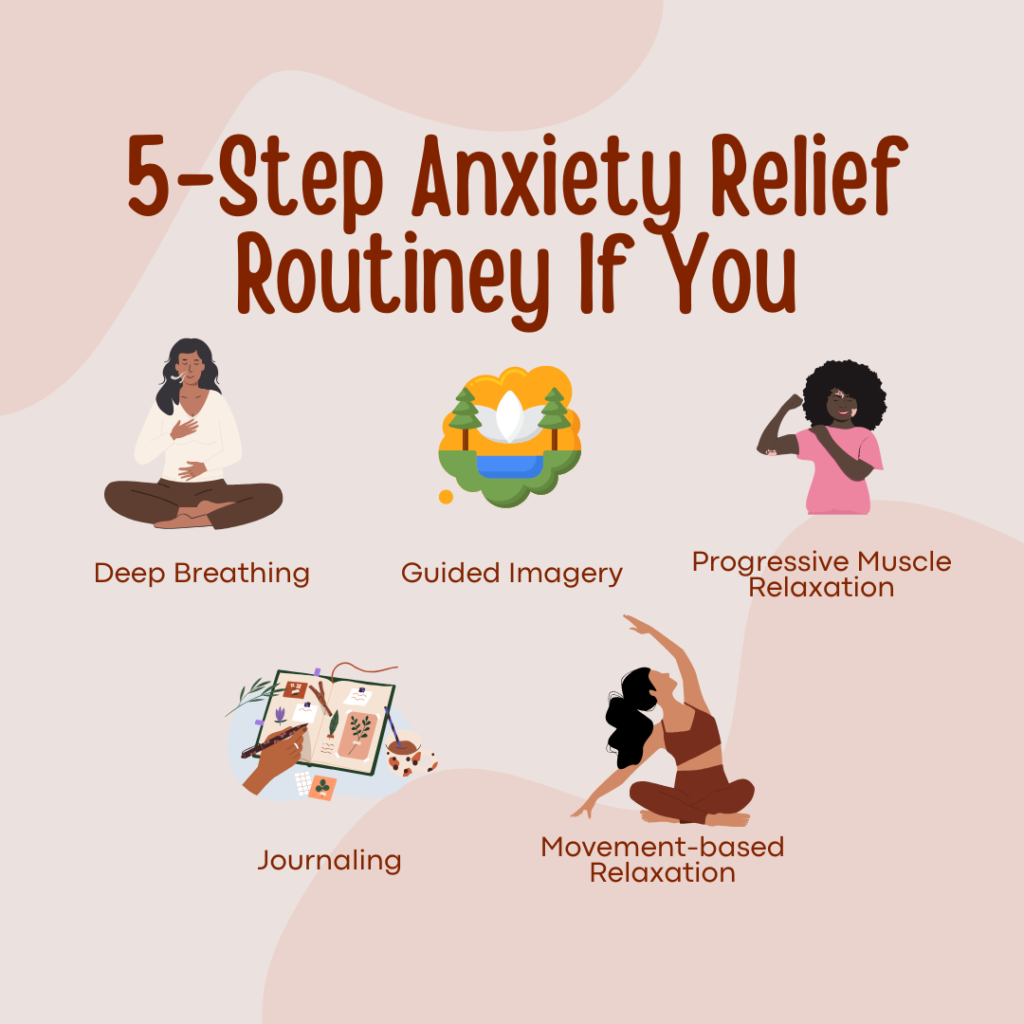
Guided imagery tapes can also guide you through this relaxation exercise. Hearing a recorded script that leads you through a serene setting can enhance relaxation. This technique is especially helpful for individuals who have difficulty with intrusive thoughts, as it diverts attention to a calm and controlled experience. Repetitive practice can condition the brain to connect certain imagery with relaxation, which can be easier to do in actual stressful situations.
Physical Activity and Movement-Based Therapies
Exercise triggers endorphins, which are natural mood stabilizers. Movement-based relaxation techniques intended to reduce anxiety include yoga, Tai Chi, and aerobic exercise. Yoga uses controlled breathing, stretching, and meditation to decrease cortisol levels and facilitate overall relaxation. Most yoga styles emphasize reducing stress, and restorative yoga is especially helpful in calming the nervous system.
Tai Chi and Qigong consist of slow, flowing movements that induce relaxation and mental clarity. These traditional exercises emphasize balancing the flow of energy and enhancing body awareness. Aerobic exercise, including walking, cycling, or dancing, enhances serotonin and dopamine levels, leading to improved mood and general mental health. Engaging in regular movement for at least 30 minutes a day can lead to long-term reductions in anxiety.
Aromatherapy and Sensory Relaxation
Some aromas have been found to soothe the nervous system and induce relaxation. Aromatherapy may be applied by using diffusers, bath soaks, or inhalation. Essential oils with anxiety-relieving properties are lavender, chamomile, and bergamot. Lavender is very effective in lowering heart rate and reducing stress hormones. Chamomile induces relaxation and is used to enhance sleep. Bergamot, which is a citrus oil, has uplifting properties that reduce tension.
Pairing aromatherapy with deep breathing enhances its effects, making it a valuable addition to other relaxation techniques. Many people use essential oils in their nighttime routine to prepare for restful sleep. Incorporating scents into daily life through scented candles, body lotions, or bath salts—can provide continuous exposure to calming aromas.
Journaling and Expressive Writing
Writing provides an outlet for anxious thoughts and helps process emotions. Expressing worries on paper can reduce their intensity and provide clarity. Free writing allows thoughts to flow without judgment, which can help release pent-up stress. Gratitude journaling involves listing three things you’re grateful for each day, which shifts focus from stress to positivity. Thought reframing is another effective technique to write down anxious thoughts and replace them with rational alternatives.
Journaling is an easy but effective method for monitoring emotional patterns and understanding triggers. Many therapists recommend journaling as a means of managing anxiety because it provides a concrete means of working through emotions.
Music and Sound Therapy
Sound is instantaneously influencing mood and relaxation. Music or sound frequencies will adjust anxiety levels. Slow, quiet music like classical, acoustic, or ambient can soothe the nervous system. Nature is conducive to the calm atmosphere generated by ocean sounds, rain, or birds, making one feel relaxed. Binaural beats are special sounds programmed to act upon brainwaves and induce relaxation, minimizing tension.
Deep breathing with soothing music increases relaxation responses. Music therapy is commonly incorporated into anxiety therapies because it is easily accessible and highly effective.
Lifestyle Changes for Long-Term Anxiety Management
Outside of relaxation methods, longer-term lifestyle modifications effectively manage anxiety. Good sleep is key developing a pre-bedtime routine, staying off screens before bedtime, and having a consistent sleep schedule promote better mental health. Proper eating also aids the brain by restricting caffeine, alcohol, and processed foods and focusing on nutrient-rich foods. Staying well-hydrated keeps stress hormones from spiking due to dehydration. Establishing boundaries and limiting contact with toxic situations further reduce anxiety levels.
When to Seek Professional Help
Although relaxation measures assist, other anxiety levels call for professional assistance. Indicators you need assistance with are chronic anxiety affecting daily routines, regular panic attacks, or the inability to control stress after experimenting with numerous methods. You can be referred to a therapist for Cognitive Behavioral Therapy (CBT) that can retrain your thoughts of anxiety. Should you need to, medication will also be suitable. The right ICD-10 code for anxiety disorders, including Generalized Anxiety Disorder (GAD), is F41.1.
Conclusion
Anxiety doesn’t have to dominate your life. By using deep breathing, meditation, movement, sensory relaxation, and lifestyle changes, you can regain control of your mental health. We all react in different ways, so try different techniques to see what works for you. With regular practice, relaxation becomes an automatic response, allowing you to get through life more easily and confidently.
Apart from that, if you are interested to know about “The Science of Skincare” then visit our “Health” category.
FAQs
Some techniques, like deep breathing and guided imagery, can provide immediate relief within minutes. Others, such as meditation and exercise, require consistent practice for long-term benefits.
Progressive Muscle Relaxation (PMR) and deep breathing are highly effective for immediate relief. For chronic anxiety, combining meditation, therapy, and lifestyle changes yields the best results.
While they help manage symptoms, they may not fully replace medication for severe cases. A healthcare professional should assess whether medication, therapy or a combination is necessary.