
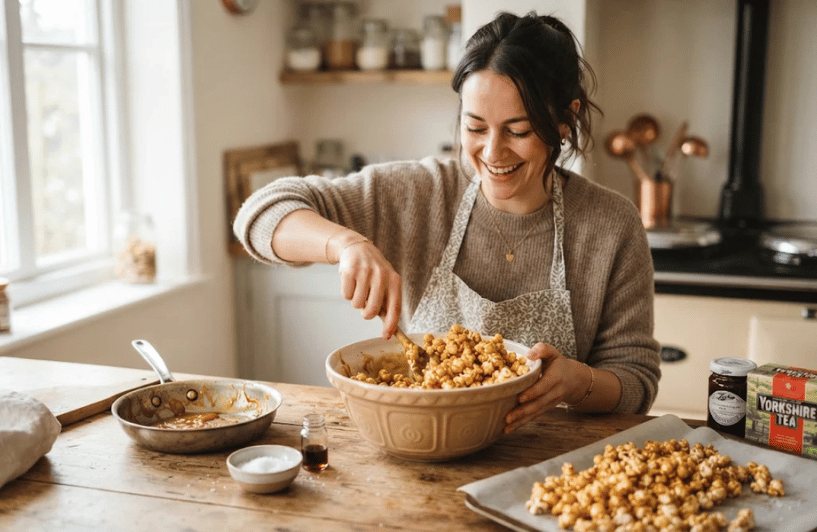

Toffee popcorn combines crisp corn with a sweet, buttery coating that sets around every piece. You can make it at home with simple supermarket ingredients and basic kitchen equipment. The key is controlling the heat so the coating becomes golden without burning. This guide explains how to make a crunchy batch, avoid common mistakes, and store it properly. You’ll also learn how homemade versions differ from ready-made bags sold across the UK. The method works well for film nights, parties, homemade gifts, and weekend treats. Quick answer: To make toffee popcorn, pop the corn first and set it aside. Gently heat the butter and sugar until smooth, then cook until glossy and slightly darker. Quickly coat the popped kernels, spread them out to cool, and separate any large clusters before serving.
| Recipe detail | Information |
|---|---|
| Preparation time | About 10 minutes |
| Cooking time | About 10–15 minutes |
| Difficulty | Easy to moderate |
| Main ingredients | Popping corn, butter, brown sugar, golden syrup |
| Best texture | Crisp outside and light inside |
| Suitable for | Film nights, parties, gifts and desserts |
| Storage | Airtight container in a cool, dry place |
| Main allergen | Milk when butter is used |
| Best eaten | Once completely cooled and crisp |
Why This Sweet Snack Works So Well
Freshly popped corn has a dry surface and plenty of irregular edges. Those edges give the warm sugar mixture somewhere to cling. Once cooled, the coating hardens and creates a crisp contrast with the light centre. Butter adds richness and prevents the sweetness from tasting flat. Brown sugar brings a deeper caramel flavour than white sugar alone. A little salt sharpens the flavour and makes the finished snack less one-dimensional. British supermarket versions use similar flavour ideas, though recipes vary by brand. Some products use glucose syrup, sugar, butter, rapeseed oil, salt, and caramelised sugar syrup. Always check the packet because ingredients and allergen statements can change.
Ingredients You’ll Need
A small ingredient list is enough for a generous homemade batch. Measure everything before heating the sugar because the coating moves quickly once ready. Keep the popped corn nearby so you can combine both parts without delay.
* 80g popping corn * 1 tablespoon neutral cooking oil * 100g unsalted butter * 120g light brown sugar * 2 tablespoons golden syrup * ¼ teaspoon fine salt * ½ teaspoon vanilla extract, optional * Small pinch of bicarbonate of soda, optional
Golden syrup helps create a smooth coating and gives the recipe a familiar British flavour. Light brown sugar adds colour without becoming too bitter. Dark brown sugar also works, but it produces a stronger molasses note. For the neutral oil, rapeseed or sunflower oil works well. Use only enough oil to coat the base of the pan.
How to Make Toffee Popcorn Step by Step
The main job is keeping moisture away from the finished coating. Prepare the corn first, then cook the sugar mixture separately. Work carefully because hot sugar can cause serious burns.

1. Pop the corn. Heat the oil in a large lidded pan over medium heat. Add the kernels, cover, and shake the pan occasionally until the popping slows. 2. Remove unpopped kernels. Tip the popped corn into a large heatproof bowl. Check the bottom carefully and discard any hard kernels you can find. 3. Melt the butter. Place the butter, brown sugar, golden syrup, and salt in a saucepan. Heat gently while stirring until the butter melts and the mixture looks smooth. 4. Cook the coating. Increase the heat slightly and let the mixture bubble for several minutes. Stir carefully and watch for a deeper golden colour. 5. Add the finishing ingredients. Remove the pan from the heat before adding vanilla. Add a tiny pinch of bicarbonate if you want a lighter, less dense coating. 6. Coat the corn quickly. Pour the hot mixture over the prepared bowl. Fold everything together with a heatproof spatula until the pieces look evenly coated. 7. Spread and cool. Transfer the mixture onto a lined baking tray. Separate large clumps while still warm, then allow everything to cool completely.
The coating firms up as it cools. Avoid sealing the batch inside a container while it remains warm. Trapped steam will soften the crisp sugar shell.
How to Get a Crisp Toffee Coating
A crisp result depends more on technique than extra ingredients. The sugar mixture needs enough cooking time to lose excess moisture. Removing it too early can leave the finished batch sticky. Use a medium heat rather than rushing the process over a high flame. Sugar can move from golden to burnt surprisingly quickly. A heavy-based saucepan gives you better temperature control and reduces hot spots. Cooling matters as much as cooking. Spread the coated pieces across a wide tray instead of leaving them piled in a bowl. More exposed surface area lets heat and moisture escape faster.
Common Mistakes That Make It Sticky
Sticky results usually come from moisture or undercooked sugar. Steam can also collect when warm pieces go straight into a sealed tub. Let the batch reach room temperature before storing it. Another problem is using too much coating for the amount of corn. A heavy layer takes longer to set and can form dense lumps. Aim for a thin, even covering rather than soaking every piece. Humid kitchens can soften sugar coatings after they cool. Keep the container closed between servings and store it away from the hob. Avoid the fridge because condensation can affect texture.
Homemade Versus Ready-Made Options
Both versions can work well, but they suit different situations. Homemade batches give you more control over sweetness, salt, portion size, and flavour. Packaged products are easier when you want something ready to open.
| Factor | Homemade | Ready-made |
|---|---|---|
| Preparation | Requires cooking | Ready to eat |
| Sweetness | Easy to adjust | Fixed by manufacturer |
| Texture | Best when freshly cooled | Designed for shelf storage |
| Portion size | Flexible | Set by packet size |
| Ingredients | Chosen by you | Check product label |
| Convenience | Lower | Higher |
| Flavour options | Easy to customise | Depends on brand |
UK supermarkets and specialist food shops sell wide-ranging varieties. Pack sizes and recipes differ, so compare labels rather than assuming products are identical. Pay particular attention to milk, soya, nuts, and cross-contamination warnings if allergies matter.
Easy Flavour Variations
Once you know the basic method, small additions can change the flavour without complicating the recipe. Add dry ingredients after coating so they remain noticeable. Avoid adding watery ingredients because they can soften the sugar shell.
* Sea salt: Sprinkle a small amount over the warm coating. * Cinnamon: Add half a teaspoon with the brown sugar. * Chocolate: Drizzle melted dark or milk chocolate over the cooled batch. * Gingerbread spice: Add cinnamon, ginger, and a tiny pinch of nutmeg. * Toffee apple: Mix in crisp dried apple pieces after cooling. * Nut version: Add toasted pecans or peanuts if allergies are not a concern.
For a richer dessert table, pair the sweet snack with something savoury rather than another sugary dish. Our cheesy leeks recipe provides a contrasting savoury option for relaxed family meals. The combination can work well when guests prefer different flavours.
Is Toffee-Coated Corn Healthy?
It is best treated as a sweet snack rather than an everyday health food. The corn itself contains fibre, but the coating adds substantial sugar. Commercial versions can also contain meaningful amounts of salt and saturated fat. Nutrition varies considerably between products and homemade recipes. Serving sizes and sugar levels also differ between brands. Check the nutrition panel when you need accurate figures for a particular product. Portioning the batch before a film can make serving simpler. Small bowls also stop everyone repeatedly reaching into one large container. Pairing a sweet snack with fruit or an unsweetened drink can balance the occasion. For another food-and-drink guide, our guide to the benefits of black coffee explains the drink without relying on added sugar. That can be useful if you prefer a less sweet drink beside dessert. Tea, sparkling water, and plain coffee also pair easily with caramel flavours.
How to Store It Without Losing the Crunch
Wait until the batch is completely cold before transferring it. Use a clean, dry container with a tight lid. Keep the container somewhere cool and away from direct sunlight. Moisture is the biggest enemy of the finished texture. Do not store the container beside a steaming kettle or warm oven. Open it briefly when serving, then close it again. If the pieces soften slightly, a short period in a low oven may help dry them. Watch them closely because the sugar can darken fast. Allow everything to cool again before deciding whether the texture has recovered.
Serving Ideas for Film Nights and Parties
A large shared bowl is the simplest option for family film night. Individual paper cups work better at parties because guests can grab a portion easily. Small sealed bags also make practical homemade food gifts. You can also use crushed pieces as a topping. Scatter them over vanilla ice cream, chocolate mousse, or a simple sundae. Add the topping immediately before serving so it keeps its crunch. For a mixed snack table, combine sweet treats with salted nuts, pretzels, or savoury bites. Keep allergens clearly separated when serving several people. Label homemade gifts if they contain milk, nuts, or other common allergens.
Frequently Asked Questions About Toffee Popcorn
What is toffee popcorn made from?
It is usually made from popped corn covered in a cooked sugar-based coating. Butter, brown sugar, syrup, and salt are common ingredients. Commercial recipes may also contain glucose syrup, oils, flavourings, or emulsifiers.
Why does my homemade batch stay sticky?
The coating may contain too much moisture or may not have cooked long enough. Warm pieces can also soften when sealed before cooling. Spread them widely and let them reach room temperature first.
Can I make it without golden syrup?
Yes, but the final texture and flavour may change. Other sugar syrups can help reduce crystallisation during cooking. Choose a substitute with a similar consistency rather than using extra water.
Can I make a vegan version?
Yes, you can replace dairy butter with a suitable plant-based alternative. Check that the replacement behaves well under heat and has enough fat for the coating. Always verify individual ingredient labels if dietary restrictions are strict.
How long does homemade toffee popcorn keep?
Its best quality depends on how dry the coating becomes and how well you store it. An airtight container helps protect the crunch from moisture. Discard it if it develops an unusual smell, taste, or appearance.
Make Your Next Batch Better
The best results come from preparing everything before the sugar reaches the heat. Pop the corn, line the tray, and measure every ingredient first. That preparation gives you enough time to coat the batch evenly. Start with the basic recipe before experimenting with extra flavours. Once you understand how the coating behaves, cinnamon, chocolate, sea salt, or dried fruit become easy additions. Small changes are usually better than loading several flavours into one batch. For more UK-focused food ideas, browse Trendara for more recipes and practical ingredient guides. You can build an entire film-night menu around one homemade snack and a few simple sides. Keep the portions relaxed, serve everything fresh, and enjoy the crunch. —