
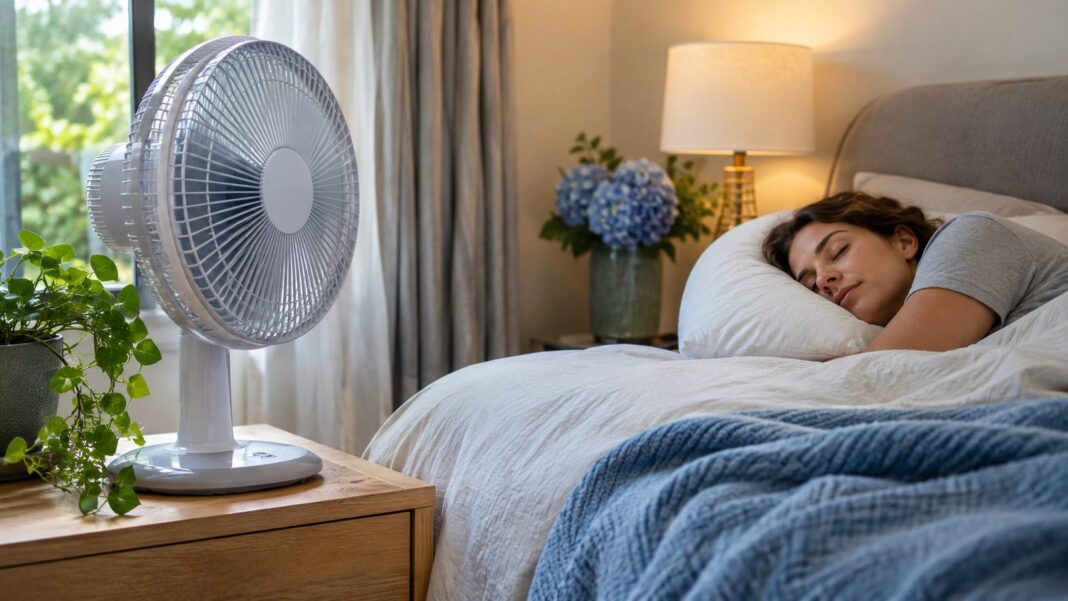

A hot bedroom can make falling asleep difficult, especially during a humid British summer. The best cooling fan for bedroom UK shoppers should prioritise low noise, useful airflow, and simple night controls. Our leading choice is the DREO TurboPoly Fan 512 because it combines strong airflow with bedroom-friendly operation. Quick answer: The DREO TurboPoly Fan 512 is our best overall bedroom pick for 2026. Good Housekeeping named it its best pedestal fan for bedrooms after testing. The Levoit Windi Mini Pro suits bedside use, while Meaco’s Sefte 19-inch tower offers an appealing lower-cost option.
Best Bedroom Fans at a Glance
| Fan | Best for | Current indicative price | Bedroom advantage | Main drawback |
|---|---|---|---|---|
| DREO TurboPoly Fan 512 | Best overall | £109.99 | Strong, smooth airflow and broad oscillation | Takes more floor space |
| Levoit Windi Mini Pro | Best bedside fan | £89.99 | From 20dB and cordless operation | Smaller cooling area |
| Meaco Sefte 19-inch Tower | Best value quiet tower | £69.99 | From 22dB and slim design | Less independent testing available |
| Honeywell QuietSet HY254E | Best simple tower fan | Around £63 when reviewed | Five speeds and sleep-focused controls | Availability can vary |
| Dyson HushJet Mini Cool | Best personal fan | £99.99 | Tiny, portable and focused airflow | Too noisy for some light sleepers |
Prices and stock can change quickly, especially during UK heatwaves. Check the seller before ordering, and compare the lowest-speed noise figure rather than relying on words such as “silent”. Bedroom comfort depends on both sound quality and airflow strength.
How We Chose the Best Cooling Fan for Bedroom UK Shoppers
Bedroom fans need different qualities from powerful living-room models. We prioritised independently tested performance, published noise figures, practical night controls, and current UK availability. Price also mattered because premium features do not always improve overnight comfort. Good Housekeeping named the DREO TurboPoly Fan 512 its best pedestal option for bedrooms in 2026. Its tests praised the smooth oscillation, strong airflow, and straightforward settings. DREO UK currently lists the model at £109.99. We also considered models highlighted by Expert Reviews, Women’s Health, and other established UK publications. Their testing repeatedly places quiet operation among the most important bedroom features. Sleep modes, timers, and dimmed displays also appear across leading recommendations.
1. DREO TurboPoly Fan 512: Best Overall
The DREO TurboPoly Fan 512 is the strongest all-round recommendation for most bedrooms. Good Housekeeping scored it 87 out of 100 and named it best for the bedroom. Testers praised its powerful airflow, smooth oscillation, and easy controls. Its £109.99 current price places it above basic pedestal fans but below many premium alternatives. DREO currently sells the 512 directly through its UK website. That makes it easier to recommend than excellent models facing seasonal stock shortages. Pros
- Strong airflow for medium and larger bedrooms.
- Smooth oscillation spreads air around the room.
- Controls are easy to adjust at night.
- Current UK direct pricing is competitive for this class.
Cons
- It needs more floor space than a compact tower.
- Height adjustment is more limited than some rivals.
Verdict: Choose the DREO 512 if you want one fan that can handle hot nights without becoming a bedside-only appliance. Its balance of tested performance, usable controls, and current availability makes it our first choice.
2. Levoit Windi Mini Pro: Best for a Bedside Table
The Levoit Windi Mini Pro is a compact option for people who want airflow close to the bed. Levoit states that its lowest setting reaches 20dB and offers five speeds. It also provides up to 20 hours of battery operation. Its small tower shape uses less space than a pedestal design. The fan also offers 90-degree oscillation and a warm nightlight. Levoit currently lists the Windi Mini Pro at £89.99 in the UK. Pros
- Published minimum noise level of 20dB.
- Cordless operation reduces bedside cable clutter.
- Compact footprint suits smaller bedrooms.
- Oscillation improves coverage over fixed desk fans.
Cons
- Smaller size limits whole-room circulation.
- Battery features add cost compared with basic desk fans.
This model makes most sense when you sleep close to the fan. It provides focused airflow without occupying valuable floor space. Couples wanting strong room-wide circulation may prefer the DREO instead.
3. Meaco Sefte 19-Inch Tower Fan: Best Quiet Value
Meaco’s Sefte 19-inch Tower Fan is one of the most interesting newer choices for quiet bedrooms. Meaco currently lists it at £69.99 with a published minimum noise level of 22dB. The slim tower format also suits rooms where floor space is limited. Meaco has built a strong reputation for quiet air circulators. Several Sefte products have earned favourable reviews from major UK publications. Women’s Health measured the larger Sefte pedestal model from 25dB and praised its overnight usability. Pros
- Attractive £69.99 listed price.
- Published minimum noise level of 22dB.
- Slim design fits beside furniture easily.
- Low-speed operation should suit noise-conscious users.
Cons
- This newer tower model has less independent test coverage.
- Manufacturer noise claims should not replace real-room comparisons.
This is our value pick for shoppers prioritising quiet operation and compact dimensions. It costs considerably less than many premium bedroom models. Buyers wanting the strongest independent testing should favour DREO.
4. Honeywell QuietSet HY254E: Best Simple Tower Fan
The Honeywell QuietSet remains a useful option for buyers who dislike complicated controls. Expert Reviews selected it as its best bedroom fan overall in its 2026 quiet-fan guide. The publication highlighted its low noise and practical night-friendly design. Five speed settings range from sleep-focused airflow to stronger cooling. It also includes timer settings covering one, two, four, or eight hours. Expert Reviews recorded a review price around £63, although retail pricing and availability vary. Pros
- Straightforward controls.
- Five useful speed settings.
- Multiple timer choices.
- Strong independent bedroom recommendation.
Cons
- Current UK availability can be inconsistent.
- Its tower design offers fewer placement options than compact fans.
The QuietSet suits people who want traditional controls without apps or complicated smart features. Check current stock before comparing it directly on price. Heatwaves can push older popular models out of stock quickly.
5. Dyson HushJet Mini Cool: Best for Personal Cooling
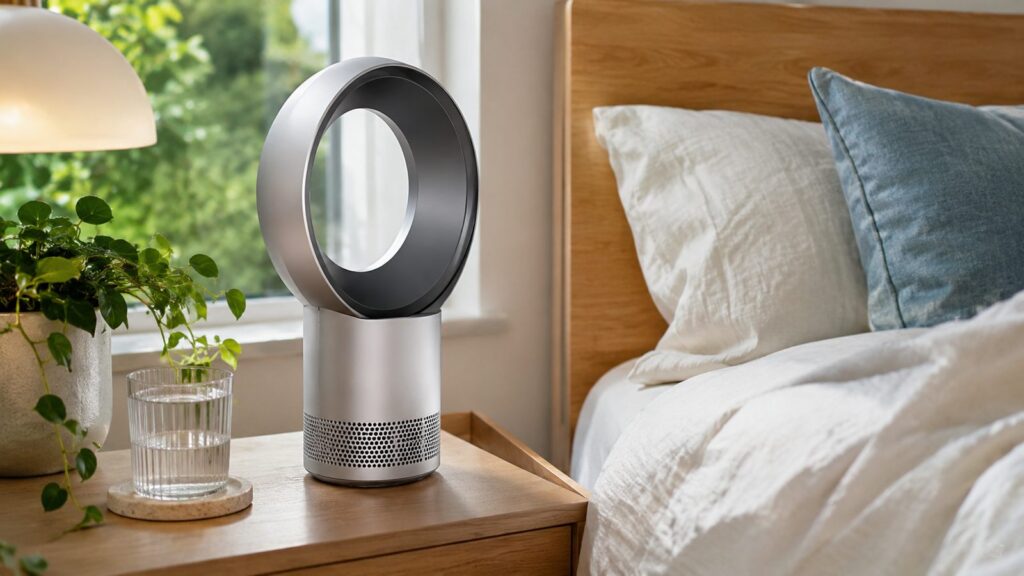
The Dyson HushJet Mini Cool is designed for focused personal airflow rather than whole-room circulation. Dyson lists the model at £99.99 and quotes airflow speeds reaching 25 metres per second. Its compact body weighs only 212 grams. There is an important bedroom drawback. Dyson publishes a 52dBA figure on its quiet setting, rising considerably at maximum output. That makes it less suitable for light sleepers than quieter bedside alternatives. Pros
- Extremely compact and portable.
- Focused airflow works well close to the bed.
- USB-C charging simplifies travel use.
- Up to six hours of stated battery life.
Cons
- Published low-speed sound is higher than several rivals.
- £99.99 is expensive for personal rather than room-wide airflow.
Buy this model when portability matters more than silence. It can move between the bedroom, desk, commute, and travel bag easily. For uninterrupted overnight use, the Levoit offers stronger bedroom credentials.
Which Type of Bedroom Fan Should You Choose?
A pedestal fan usually gives the strongest room-wide airflow. Its higher position can direct air across a bed without needing furniture for support. Larger bases require more clear floor space. Tower fans suit tighter bedrooms because their footprints are narrow. They can distribute air through oscillation while fitting beside wardrobes or bedside furniture. A quiet tower can be particularly useful where space matters more than maximum airflow. Desk and portable fans work best for close-range cooling. They use little space and can provide a gentle breeze beside one sleeper. Couples may find their focused airflow too narrow for shared comfort. If moving air is not enough, consider whether you need active refrigeration instead. Trendara’s portable air conditioner guide explains BTU sizing, venting, bedroom noise, and UK running costs. You can also compare fixed and portable systems in our air-conditioning unit guide.
What Noise Level Is Good for Sleeping?
Lower noise usually matters more at night because the room becomes quieter around you. Models around the low-20dB range on their gentlest setting can be easier to ignore. The character of the sound also matters alongside the measured number. Look for a dedicated sleep mode if you are sensitive to changing fan sounds. Good modes reduce speed, dim displays, and silence control beeps. A timer can also stop the machine after you have fallen asleep. Do not assume the highest setting will remain sleep-friendly. Even quiet models become louder as their motors and blades speed up. Compare the lowest useful setting for your bed distance.
Do Fans Actually Cool a Bedroom?
A fan normally does not lower the room’s air temperature. It moves air across your skin, which can increase evaporation and make you feel cooler. This distinction matters when comparing fans with air conditioners. During cooler evenings, position the fan near an open window when outdoor air is genuinely cooler. Close blinds or curtains earlier when strong sunlight hits the room. Reducing incoming heat makes your chosen fan more useful later. For severe indoor heat, a refrigerant air conditioner may provide greater relief. Trendara’s guide to portable AC units explains why those machines can reduce room temperature. Fans remain cheaper and simpler when personal comfort is enough.
Bedroom Features Worth Paying For
Noise should come first, followed by airflow control and practical placement. Extra technology only adds value when you will use it regularly. A basic remote can matter more at 2am than an elaborate smartphone app. Look for these useful bedroom features:
- A published low-speed noise figure.
- Sleep or night mode.
- A timer lasting several hours.
- Adjustable oscillation.
- A remote control.
- Dimmable or switchable displays.
- Several genuinely different speed settings.
- A stable base that fits your available space.
Lighting also affects how restful a bedroom feels. If you are redesigning the room, Trendara’s battery wall lights guide covers cordless bedside lighting and colour-temperature choices. More household guides are available in the Home Improvement section.
Our Final Recommendation
For most shoppers, the DREO TurboPoly Fan 512 is the strongest current choice. It combines independent bedroom testing with powerful airflow and straightforward controls. Its £109.99 listed UK price remains reasonable beside premium alternatives. Choose the Levoit Windi Mini Pro if you need something compact beside your bed. Pick the Meaco Sefte tower when low published noise and value matter most. Honeywell remains a solid simple option when you can find it at a competitive price. The best cooling fan for bedroom UK homes is not automatically the strongest machine available. The right choice moves enough air without disturbing your sleep. Prioritise low-speed noise, placement, and usable night controls before paying for extra features.
Frequently Asked Questions
What is the best cooling fan for bedroom UK homes?
The DREO TurboPoly Fan 512 is our best overall recommendation for 2026. Good Housekeeping named it its best pedestal fan for bedrooms after independent testing. The Levoit Windi Mini Pro is better for compact bedside use.
Is 20dB quiet enough for sleeping?
Twenty decibels is a low published operating level for a household fan. Many sleepers should find gentle airflow at this level unobtrusive. Personal sensitivity and changing motor tones can still affect comfort.
Is a tower fan better than a pedestal fan for a bedroom?
A tower fan is often better where floor space is limited. Pedestal models can produce stronger or more directional airflow across larger rooms. Your room layout should decide which shape works better.
Should I leave a bedroom fan running all night?
Many modern fans include timers or sleep modes designed for extended use. Always follow the manufacturer’s safety guidance and keep airflow paths clear. A timer can reduce unnecessary operation after the room becomes comfortable.
Should I buy a fan or portable air conditioner?
Choose a fan when moving air provides enough personal comfort. Choose air conditioning when you need to reduce the room’s actual temperature. Air conditioners cost more to buy and usually consume considerably more electricity. —