
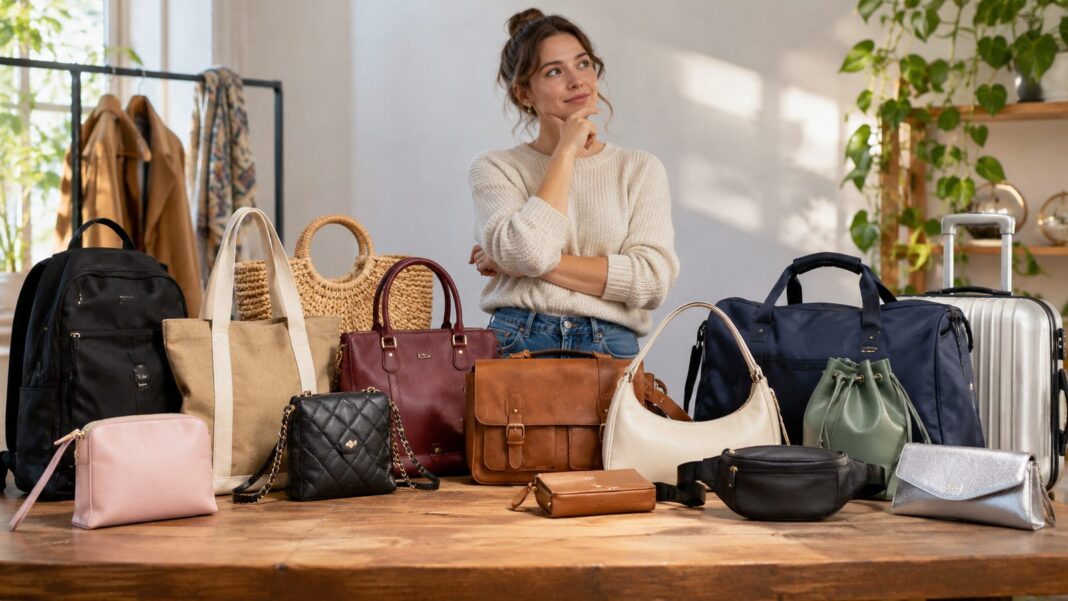

Understanding the main types of bags makes shopping easier because every style solves a different practical need. Some prioritise space, while others focus on security, comfort, or a polished appearance. Knowing the differences helps you choose something suited to your routine rather than its appearance alone. British shoppers also encounter several names that differ from American terminology. A waist-worn design is usually called a bum bag in the UK. A sturdy backpack may also be described as a rucksack, especially for travel or outdoor use. Quick answer: The most useful styles include totes, crossbodies, shoulder designs, satchels, backpacks, clutches, buckets, and holdalls. Choose according to what you carry, how long you carry it, and where you use it. Work usually needs structure, while travel favours secure closures and comfortable straps.
Popular Styles at a Glance
| Style | How it is carried | Capacity | Best for |
|---|---|---|---|
| Tote | Hand or shoulder | High | Work, shopping, everyday use |
| Shoulder | One shoulder | Medium | Daily outfits |
| Crossbody | Across the torso | Small to medium | Travel, commuting, errands |
| Satchel | Handle or long strap | Medium | Work and smart outfits |
| Hobo | Shoulder | Medium to high | Relaxed everyday wear |
| Bucket | Shoulder or crossbody | Medium | Casual days |
| Top-handle | Hand or forearm | Small to medium | Smart daytime outfits |
| Clutch | Hand | Small | Weddings and evenings |
| Baguette | Underarm | Small | Fashion-focused outfits |
| Mini | Hand or strap | Very small | Light essentials |
| Backpack | Back | High | Work, university, travel |
| Bum bag | Waist or chest | Small | Walking, festivals, travel |
| Messenger | Across the body | Medium to high | Work and commuting |
| Holdall | Hand or shoulder | High | Gym and short trips |
| Laptop style | Hand, shoulder, or back | Medium | Commuting and office use |
Key Takeaways
- Choose capacity around what you genuinely carry each day.
- Crossbody and backpack designs provide convenient hands-free movement.
- Totes and satchels work well when you carry documents or work essentials.
- Clutches and mini styles suit occasions where you need only a few items.
- Secure zips are useful for public transport, travel, and crowded locations.
- Strap width matters when you regularly carry heavier contents.
- One versatile everyday option usually earns more use than several impractical purchases.
15 Types of Bags Worth Knowing
1. Tote
A tote has two parallel handles and a roomy main compartment. Many versions have an open top, although zipped designs provide extra security. Its simple shape makes it useful for shopping, work, university, and casual travel. Structured versions feel smarter and can hold documents without bending them. Softer canvas versions suit errands and lighter everyday use. Measure your laptop before buying one for commuting.
2. Shoulder Style
This design hangs from a strap resting on one shoulder. It usually sits beneath the arm or near the hip. That position makes frequently used items easy to reach. Medium versions work particularly well for everyday routines. Shorter straps can feel awkward over thick winter coats. Check the strap drop if you expect year-round use in Britain.
3. Crossbody
A crossbody uses a longer strap worn diagonally across the torso. The position keeps your hands free while holding essentials close. It works particularly well for shopping, commuting, sightseeing, and busy city days. A zipped closure adds useful security in crowded places. Adjustable straps also help you position the design comfortably over coats. Choose a strap length that suits your usual coats and outfits.
4. Satchel
A satchel usually combines structure with a top handle and longer strap. Many designs use a flap, zip, or buckle closure. Its organised shape makes it suitable for offices, university, and smarter daytime outfits. Choose a wider version when carrying documents or technology. A smaller satchel can replace a traditional handbag during lighter days. Neutral colours generally make this shape easier to repeat across outfits.
5. Hobo
A hobo has a soft body and curved, relaxed silhouette. It usually hangs from one shoulder and moulds around its contents. This creates a less formal appearance than a rigid satchel. The generous interior suits people carrying several everyday items. Internal pockets become valuable because soft interiors can become disorganised. Avoid overfilling the design because excess weight can distort its shape.
6. Bucket
A bucket shape has a deep body with a rounded or oval base. Many versions close using a drawstring or gathered top. The vertical shape gives useful capacity without creating excessive width. This style suits casual outfits and relaxed weekend dressing. Small internal pockets improve organisation within the deep compartment. Consider a zipped inner pouch when you carry valuables.
7. Top-Handle
Top-handle designs are carried using one or two short handles. They often have a structured body and polished appearance. Many modern versions include a detachable shoulder strap for greater flexibility. This shape works well with tailoring and smarter daytime clothing. It can also sharpen simple jeans and knitwear. Trendara’s capri trouser styling guide shows how structured accessories can support modern proportions.
8. Clutch
A clutch is compact and normally carried in the hand. Its small size encourages you to carry only essential items. Weddings, dinners, parties, and formal occasions are common settings. Check whether your phone fits before buying a particularly narrow design. A detachable chain makes the piece easier to carry during longer events. Neutral metallics and simple finishes often work across several occasion outfits.
9. Baguette
The baguette is a narrow, elongated style usually carried beneath the arm. Its short strap creates a distinctive compact silhouette. The shape became strongly associated with late-1990s and early-2000s fashion. Modern versions range from simple leather to embellished evening designs. They suit outfits where you need little more than a phone and cardholder. Keep other accessories restrained when the piece has strong colour or decoration.
10. Mini
Mini styles deliberately reduce capacity in favour of a compact shape. Some hold a phone and cards, while smaller versions carry even less. They work best when you already know your essential items. A mini design can add colour without dominating your outfit. It also pairs easily with dresses and tailored evening looks. Trendara’s white tights styling guide offers more ideas for balancing noticeable accessories.
11. Backpack or Rucksack
A backpack uses two straps and distributes weight across both shoulders. That makes it practical for commuting, university, travel, and longer walking days. British shoppers may also see sturdier versions described as rucksacks. Look for padded straps when carrying a laptop or heavy contents. Separate compartments keep technology away from bottles and food. A water-resistant outer fabric can also help during changeable UK weather.
12. Bum Bag
A bum bag fastens around the waist and carries a small number of essentials. Many modern versions can also be worn diagonally across the chest. The style leaves both hands free and keeps valuables close. It works well for festivals, sightseeing, walking, and quick errands. Adjustable straps matter because people wear the same design in different positions. A secure zip is preferable when using it in busy public areas.
13. Messenger
A messenger uses a long strap and typically sits across the body. It usually offers more capacity than a compact crossbody. Traditional versions have a flap covering a broad rectangular compartment. The shape works well for notebooks, tablets, and work supplies. A padded interior is useful when carrying technology. Choose a wider strap if your usual load becomes heavy during commuting.
14. Holdall or Duffel
A holdall has a roomy horizontal body with two handles. Many versions also include a detachable shoulder strap. It is commonly used for gym visits, overnight stays, and short journeys. Separate compartments can keep shoes away from clean clothing. Lightweight materials help when you expect to carry it for longer periods. Check airline measurements before treating any holdall as cabin luggage.
15. Laptop Style
A dedicated laptop carrier provides protection for work technology. It may resemble a briefcase, slim tote, messenger, or backpack. The defining feature is a padded compartment sized for a computer. Measure your device rather than relying on broad size labels. Strong handles and secure closures matter during frequent commuting. For complete work outfits, Trendara’s flat-shoe guide offers practical footwear ideas.
How to Choose Between Different Types of Bags
Start by listing what you carry on a normal day. A phone, purse, keys, and lipstick require far less space than office equipment. Choosing around your real contents prevents unnecessary bulk. Next, consider how far you normally walk. Crossbody and backpack designs often feel easier when you need both hands free. Wider straps can also reduce pressure when your everyday load becomes heavier. Your usual clothing matters too. A structured shape can complement tailoring, while softer silhouettes suit relaxed outfits. Trendara’s fashion section provides more ideas for matching accessories with current UK styling. Finally, inspect the closure and interior before focusing on colour. Zips provide stronger security than completely open tops. Useful pockets can also prevent small items disappearing inside larger designs.
Which Style Works Best for Each Occasion?
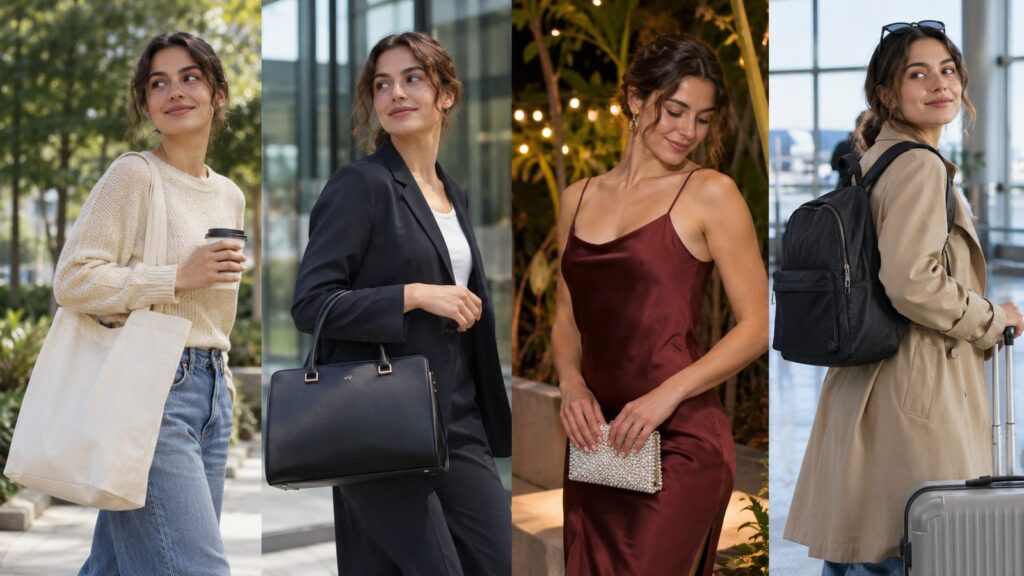
For work, start with capacity and organisation rather than decoration. A structured tote, satchel, messenger, or laptop carrier can handle office essentials. Choose padding if a computer travels with you regularly. Travel requires different priorities. A crossbody keeps passports and phones accessible, while a backpack handles heavier loads. A holdall works better when you need clothing for an overnight stay. Evening events favour smaller proportions. A clutch, baguette, or mini design carries essentials without overpowering formal clothing. Consider a detachable strap if you expect to stand for several hours. Everyday use demands the greatest flexibility. Shoulder, crossbody, bucket, and hobo shapes can all work well. Your ideal choice depends more on capacity and comfort than fashion labels.
Materials Worth Considering
Leather offers structure and can develop character through regular wear. It normally requires more care than synthetic or woven materials. Always follow the maker’s cleaning guidance for the specific finish. Canvas feels lighter and suits casual totes or travel styles. Nylon and polyester can also work well for commuting or wet weather. Check construction quality because material alone does not determine durability. Suede creates a softer appearance but dislikes moisture. That matters during British autumn and winter conditions. Protective treatment may help, although you should follow the manufacturer’s instructions.
Frequently Asked Questions
What are the most common types of bags?
The most familiar styles include totes, shoulder designs, crossbodies, satchels, backpacks, clutches, and holdalls. Each differs mainly through shape, capacity, or carrying method. Your routine should determine which style deserves the most use.
What is the difference between a shoulder style and a crossbody?
A shoulder version hangs from one shoulder using a shorter strap. A crossbody uses a longer strap running diagonally across your torso. The second option usually provides better hands-free security while moving.
What should I choose for everyday use?
Start with a medium size that carries your essentials without feeling heavy. A shoulder or crossbody design covers many ordinary routines. Choose a zipped version if you regularly use crowded public transport.
Which option works best for a UK commute?
A backpack suits heavier loads because two straps distribute the weight. A structured tote works well when you carry lighter office essentials. Crossbody designs are useful when you want quick access and free hands.
What do British people call a fanny pack?
The common British term is bum bag rather than the American phrase. Modern versions may sit around the waist or across the chest. Retailers also sometimes use the broader term belt bag.
Is a purse the same as a handbag in the UK?
Usually not. In British English, a purse normally means a smaller item holding money and cards. Handbag refers to the larger accessory carrying personal belongings.
Build a Useful Collection Around Your Routine
You do not need every named style in your wardrobe. Start with one reliable everyday option, then identify genuine gaps. Work, travel, or formal events may justify an additional shape. Comfort and usefulness should come before trend appeal. Check capacity, straps, closure, weight, and construction before buying. A well-chosen design should make your daily routine easier while fitting naturally with your wardrobe. —