
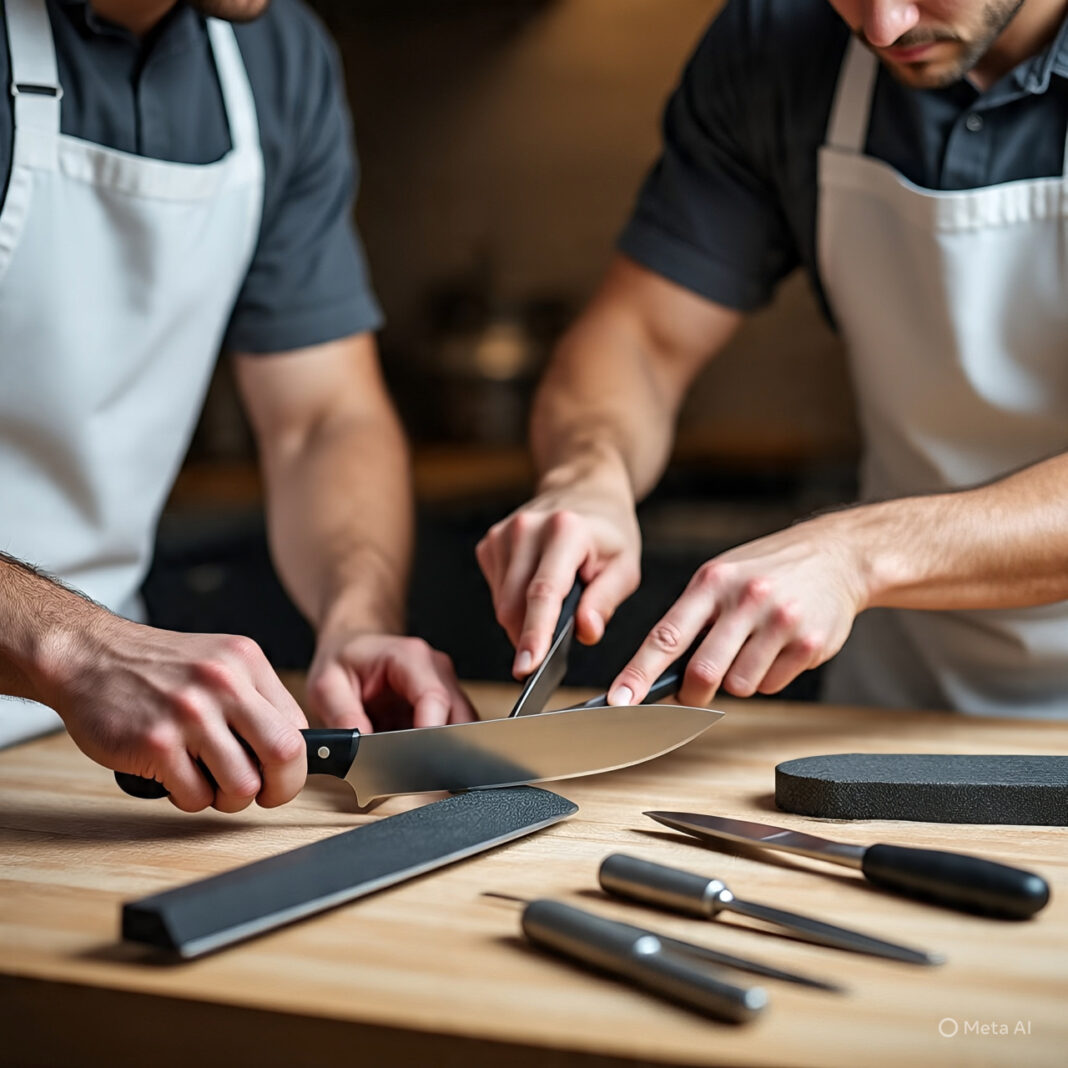

Every cook knows that a sharp knife makes all the difference in the kitchen. From slicing vegetables to cutting meat, a dull blade slows down preparation and increases the risk of accidents. That’s why investing in professional knife sharpeners is essential. Unlike cheap alternatives, these tools are designed to restore blades with accuracy, keeping them efficient and long-lasting. By choosing the right knife sharpening tools, both chefs and home cooks can maintain knives that perform at their best, ensuring safer and smoother cutting experiences.
Whether you are a professional chef working in a high-pressure kitchen or a home enthusiast experimenting with recipes, professional sharpeners deliver consistency and precision that basic gadgets can’t match. Understanding their value and knowing the different types available helps you select the perfect sharpener for your needs.
Why Knife Sharpeners Are Important
A sharp knife doesn’t just make cooking easier—it makes it safer. Dull knives require more pressure, increasing the risk of slips and injuries. Sharp blades glide through food effortlessly, improving speed, presentation, and overall efficiency. For anyone serious about cooking, keeping knives in top condition is non-negotiable.
Types of Professional Knife Sharpeners
Professional sharpeners come in several forms, each suited to different levels of skill and preference:
1. Electric Knife Sharpeners
These are favored in professional kitchens where speed matters. With motorized wheels and multi-stage sharpening, electric models can grind, hone, and polish blades in minutes.
Best for: Busy chefs or those who need quick, reliable results.
2. Manual Pull-Through Sharpeners
These compact devices feature slots with preset angles. By pulling the blade through, you achieve consistent results without needing advanced skills.
Best for: Home cooks who want easy, effective sharpening.
3. Whetstones (Sharpening Stones)
Traditional and versatile, whetstones give complete control over sharpening angles. While they require practice, they’re the preferred choice for those who want precision and customization.
Best for: Culinary professionals and enthusiasts who value craftsmanship.
4. Honing Rods
Although not true sharpeners, honing rods keep edges aligned between sharpening sessions. They help maintain sharpness and prolong the time between full sharpening.
Best for: Everyday maintenance of frequently used knives.
Features to Look for in Professional Knife Sharpeners
When investing in a professional sharpener, consider these features:
- Sharing Stages: Multi-stage options (coarse, medium, fine) deliver the sharpest results.
- Angle Guides: Built-in guides ensure blades are sharpened at the correct angle.
- Durable Abrasives: Diamond or ceramic materials provide lasting performance.
- Ease of Use: Ergonomic designs make sharpening stress-free.
- Portability: Lightweight models are convenient for traveling chefs.
How to Maintain Knives with Professional Sharpeners
Owning a sharpener is only part of knife care. Experts recommend:
- Honing regularly to realign edges.
- Sharpening only when needed to avoid unnecessary wear.
- Cleaning knives after sharpening to remove fine metal shavings.
- Proper storage, such as knife blocks or magnetic strips, to protect edges.
Why Choose Professional Knife Sharpeners?
Unlike budget tools, professional sharpeners are built to protect the longevity of your knives. They ensure blades are not ground down unevenly and deliver consistent sharpness every time. For culinary professionals, this translates to greater efficiency in the kitchen and improved safety. For home cooks, it means enjoying a smoother, more enjoyable cooking experience.
Conclusion
Knives are the most important tools in any kitchen and keeping them sharp is essential. By using professional knife sharpeners, you can preserve the performance of your blades while ensuring safety and efficiency. From fast electric sharpeners to skill-demanding whetstones, there’s a professional solution for every user. Investing in the right sharpener means investing in the heart of your kitchen—the knife.