
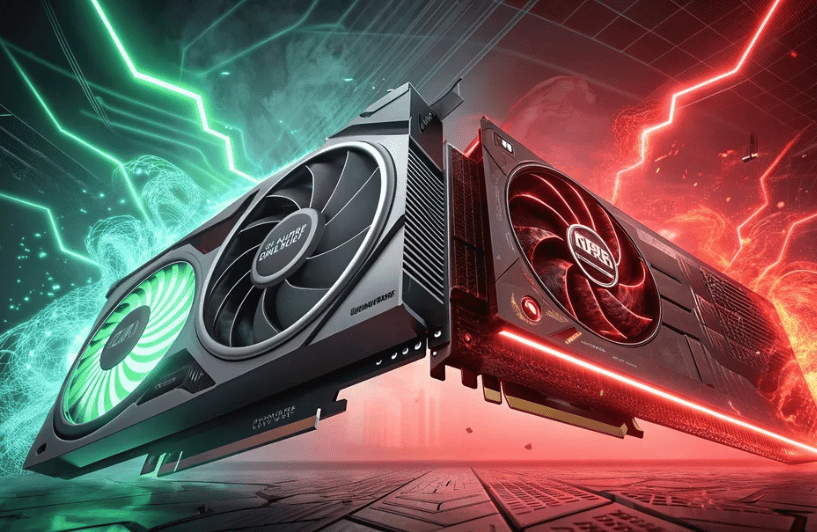

The Nvidia 5000 series represents the latest evolution of graphics processing units (GPUs), designed to redefine performance across gaming, content creation, AI, and professional workloads. This new generation builds on the successes of the RTX 3000 and 4000 Series, introducing advanced architectures, improved ray tracing, enhanced AI capabilities, and higher memory bandwidth.
Whether for high-end gaming or demanding professional applications, the 5000 Series promises unmatched speed, efficiency, and versatility. Overall, the Nvidia 5000 Series combines cutting-edge technology with versatility, making it a top choice for high-end gaming, creative professionals, and enterprise workloads, solidifying Nvidia’s position as a leader in the GPU market.
| Category | Details |
| Series Name | NVIDIA 5000 Series |
| Architectures | Blackwell (consumer), Ada Lovelace (professional) |
| Release Timeline | Consumer: Late 2025 / Early 2026, Professional: Already available |
| Target Users | Gamers, Content Creators, AI/ML Developers, Professionals |
| Key Features | Ray tracing, AI-enhanced rendering, high memory bandwidth, PCIe 5.0 support |
| Consumer Cards | RTX 5090, 5080, 5070 Ti, 5070, 5060 Ti |
| Consumer Memory | 8–24 GB GDDR7 |
| Professional Cards | High CUDA cores (up to 14,080+), Tensor 5th-gen, Ray-Tracing 4th-gen, GDDR7 memory up to 72 GB |
| Performance | 4K–8K gaming, 3D rendering, AI workloads, simulations |
| Use Cases | Gaming, 3D modeling, video production, AI research, and scientific computing |
| Memory & Connectivity | GDDR7, PCIe 5.0, low-latency, high-bandwidth |
| Power & Cooling | Advanced efficiency, optimized thermal design |
| Advantages | High performance, versatility, long-term reliability, professional-grade precision |
| Summary | Combines cutting-edge tech with versatility; sets new standards in gaming, AI, and professional GPU workloads |
Overview of the Nvidia 5000 Series

The Nvidia 5000 series represents the latest leap in GPU technology, designed to deliver unprecedented performance across gaming, professional, and AI applications. Built on the Blackwell architecture for consumer GeForce cards and Ada Lovelace architecture for professional workstation models, the 5000 Series introduces significant improvements in speed, efficiency, and computational power.
For gamers and content creators, it offers advanced ray tracing, AI-enhanced rendering, and support for high-resolution displays, including 4K and 8K gaming, while maintaining smoother frame rates and lower latency. Professional-grade models, meanwhile, provide massive CUDA core counts, fifth generation.
Tensor cores and fourth-generation ray-tracing cores, along with enormous GDDR7 memory, enable seamless handling of AI training, scientific simulations, 3D rendering, and video production. The series also incorporates PCIe 5.0 support, improving data transfer rates and overall system throughput, and optimized power efficiency ensures high performance with better thermal management.
Architecture and Key Innovations

Blackwell Architecture (Consumer Cards)
The Blackwell architecture is the cornerstone of the next-generation GeForce cards. Its key features include:
- Increased CUDA core counts for faster parallel processing
- Next-generation RT cores for high-performance ray tracing
- Advanced Tensor cores for AI-assisted rendering and DLSS
- Improved power efficiency, allowing higher performance with less heat output
- Support for high-speed GDDR7 memory, providing faster data access for gaming and creative workloads
Ada Lovelace Architecture (Professional Cards)
Professional 5000 Series GPUs use the Ada Lovelace architecture, optimized for high-precision workloads. Key enhancements include:
- Massive memory capacity, up to 72 GB, for AI, 3D rendering, and large datasets
- Advanced tensor cores to accelerate machine learning and AI model training
- Enhanced ray-tracing cores for real-time simulation and visualization
- PCIe 5.0 support for ultra-high bandwidth data transfer
- Optimized drivers for professional applications like CAD, 3D modeling, and video production
Expected Consumer Lineup
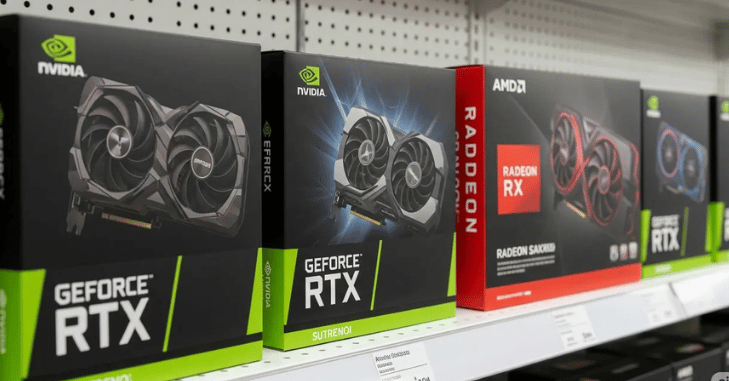
| Model | CUDA Cores | Memory | Target Users |
| RTX 5090 | ~24,000 | 24 GB GDDR7 | Flagship gaming & creators |
| RTX 5080 | ~17,000 | 16 GB GDDR7 | High-end gaming & creative professionals |
| RTX 5070 Ti | ~10,000 | 12 GB GDDR7 | Upper-midrange gaming |
| RTX 5070 | ~8,000 | 12 GB GDDR7 | Midrange performance |
| RTX 5060 Ti | ~4,600 | 8–16 GB GDDR7 | Budget-conscious gamers |
Professional & Workstation Models
NVIDIA also provides professional-grade RTX 5000 GPUs specifically designed for demanding workflows that require maximum performance and reliability. These workstation cards feature extremely high CUDA core counts, sometimes exceeding 14,000, enabling rapid parallel processing for complex tasks.
They are equipped with fifth-generation Tensor cores, which accelerate AI computations and machine learning workloads, as well as fourth-generation ray-tracing cores for precise and realistic rendering. The inclusion of massive GDDR7 memory allows these GPUs to handle large-scale simulations, 3D modeling projects, and high-resolution video production without compromise.
Optimized for professional applications such as AI research, engineering simulations, and creative production, these GPUs ensure exceptional precision, stability, and long-term reliability, making them an ideal choice for enterprise-level computing environments.
AI-Driven Performance and Next-Level Efficiency in Nvidia 5000 Series
The Nvidia 5000 Series also highlights a strong shift toward AI-driven performance optimization, where real-time neural processing plays a key role in enhancing graphics quality and system efficiency. Unlike earlier generations, these GPUs are expected to handle complex workloads such as real-time path tracing, advanced physics simulations, and large-scale AI model inference with greater stability and reduced power consumption. The integration of next-generation memory architecture and improved bandwidth allows smoother multitasking between gaming engines, creative software, and professional tools.
Performance Enhancements

Gaming and Ray Tracing
The RTX 5000 Series is expected to deliver exceptional gaming performance:
- Real-time ray tracing with improved frame rates
- AI-based features like DLSS 3.0 for smoother gameplay
- Support for 4K and 8K gaming at high refresh rates
Content Creation and Productivity
For creators, the 5000 Series offers:
- Ultra-fast rendering in 3D applications and video editing software
- AI-assisted tools for video upscaling, denoising, and automation
- Multi-monitor and high-resolution workflow support
AI and Machine Learning
Professional Ada Lovelace-based 5000 GPUs excel in AI and deep learning:
- Accelerates training of large-scale AI models
- Supports inference tasks with high efficiency
- Enables real-time simulation and predictive modeling
Memory and Connectivity
NVIDIA has significantly enhanced the memory bandwidth and capacity in the 5000 Series, ensuring faster and more efficient data handling for demanding applications. The inclusion of GDDR7 memory provides rapid data access with minimal latency, allowing gamers, creators, and professionals to experience smoother performance even in intensive tasks.
High VRAM configurations further support complex workflows such as 3D rendering, large-scale simulations, and 8K content creation, ensuring that the GPU can manage massive datasets without bottlenecks.
Additionally, PCIe 5.0 support boosts data transfer rates between the GPU and system, enhancing overall throughput and enabling faster communication for high-performance computing, gaming, and AI workloads. This combination of advanced memory technology and high-speed connectivity makes the 5000 Series highly capable of handling next-generation applications with ease.
Use Cases of the Nvidia 5000 Series
The 5000 Series is built for a wide audience:
- Gamers: High FPS 4K gaming, ray-traced graphics, and VR
- Content Creators: Video editing, 3D rendering, animation, and streaming
- AI Developers: Machine learning, neural network training, and inference
- Professionals: CAD, simulation, data analysis, and scientific computing
- This versatility ensures Nvidia continues to dominate both consumer and professional GPU markets.
Power Efficiency and Thermal Design
The 5000 Series introduces better power management and thermal efficiency:
- Advanced cooling designs in high-end cards
- Improved power-to-performance ratios for gaming and workstation tasks
- Optimized performance under sustained workloads
Release Timeline
The consumer Blackwell-based Nvidia 5000 Series is expected to launch in late 2025 or early 2026, generating significant excitement among gamers and content creators eager to experience the next level of performance. Meanwhile, the professional Ada Lovelace-based RTX 5000 GPUs are already available, catering to enterprise users.
AI researchers and creative professionals who require powerful, reliable hardware for demanding workloads. Early anticipation for the series is high, particularly for the flagship models, as both enthusiasts and professionals look forward to the advancements in speed, memory, ray tracing, and AI capabilities that the 5000 Series promises to deliver.
Conclusion
The Nvidia 5000 Series represents a major advancement in GPU technology, bringing significant improvements across gaming, AI, professional workloads, and creative applications. Built on the Blackwell architecture for consumer models and the Ada Lovelace architecture for professional GPUs, the series delivers blazing-fast ray tracing and AI performance.
Its versatility makes it suitable for high-end gaming, content creation, AI development, and enterprise-level professional use. By combining cutting-edge performance with broad application support, the 5000 Series reinforces Nvidia’s leadership in the GPU market and paves the way for the next generation of high-performance computing.
Want to know about Mounting Considerations for Multi-Cam Front and Rear Systems Check out our Tech category.
FAQs
The Nvidia 5000 Series is the latest generation of GPUs, designed for high-end gaming, AI, content creation, and professional workloads, offering improved ray tracing, AI capabilities, and higher memory bandwidth.
Consumer GPUs use the Blackwell architecture, while professional workstation models use the Ada Lovelace architecture for maximum performance and efficiency.
Professional Ada Lovelace-based GPUs are already available, while the consumer Blackwell-based 5000 Series is expected in late 2025 or early 2026.
Key features include high CUDA core counts, advanced ray tracing, fifth-generation Tensor cores for AI, massive GDDR7 memory, PCIe 5.0 support, and superior thermal efficiency.
The series targets gamers, content creators, AI/ML developers, engineers, and professionals requiring high-performance computing for 3D rendering, simulations, and AI research.
It delivers faster ray tracing, smoother AI-enhanced rendering, high memory bandwidth, low-latency data transfer, and efficient power management for both gaming and professional applications.