


Running a tech company brings legal risks a general solicitor may not fully understand. A technology law firm specialises in the contracts, data rules, and intellectual property issues unique to software, hardware, and digital services. This guide explains what these firms do, when you need one, and what they typically cost. You’ll also find answers to the questions founders most often ask before hiring a tech lawyer.
| Topic | Quick Fact |
|---|---|
| What it is | A law firm focused on tech-sector contracts, IP, and data protection |
| Typical clients | Startups, SaaS companies, fintechs, and enterprise IT teams |
| Core services | IP protection, GDPR compliance, licensing, commercial contracts, disputes |
| Pricing models | Hourly rates, fixed fees, or monthly retainers |
| UK regulator | Information Commissioner’s Office (ICO) for data protection |
- A technology law firm handles IP, data protection, and technology contracts.
- Startups often need one before their first funding round.
- Fixed fees and retainers are common alternatives to hourly billing.
- UK firms must factor in GDPR and ICO guidance from day one.
- Choosing a firm with real-sector experience saves time and costs later.
What Does a Technology Law Firm Do?

A technology law firm advises tech companies on intellectual property, data protection, and commercial contracts. It handles software licensing, cloud agreements, GDPR compliance, and disputes over code ownership. Many also support funding rounds and acquisitions. Unlike a general solicitor, the team understands how the technology actually works, not just the law wrapped around it.
That difference matters more as your product scales. A contract clause that looks fine on paper can create real problems once your API handles millions of requests or your app processes health data. Specialist tech lawyers catch these issues before they become expensive.
Intellectual Property Protection
IP work covers patents, trademarks, copyright, and trade secrets. A tech lawyer helps you register the right protections and defend them if someone copies your product. This matters even more for companies building on emerging tools, including blockchain application development, where ownership of underlying code can get murky fast.
Data Protection and Privacy
Every business that collects customer data needs a data protection counsel who understands GDPR and UK data law. This includes drafting privacy policies, running data protection impact assessments, and responding to breaches. Firms with ICO experience can also help you avoid regulatory fines.
Commercial and Licensing Contracts
Software companies rely on dozens of contracts: SaaS terms, API agreements, and vendor deals. A technology law firm reviews these before you sign, including hosting provider agreements that quietly shape your uptime obligations and liability exposure.
When Should You Hire a Technology Law Firm?
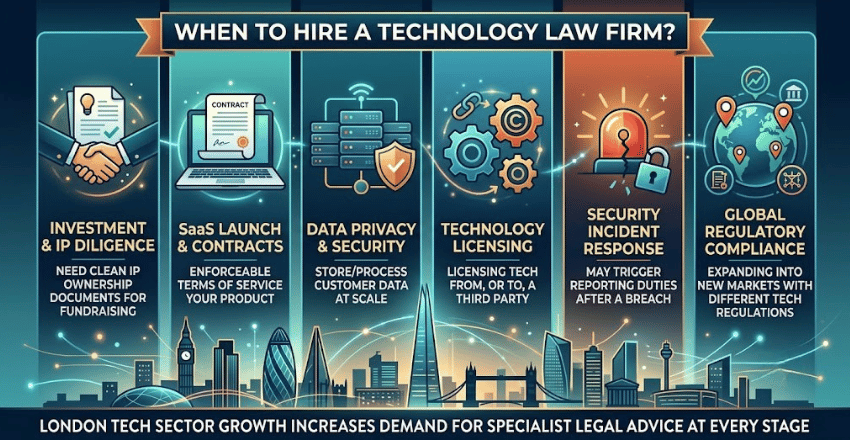
You don’t need a specialist lawyer for every task, but certain moments call for one. Here are the clearest signals it’s time to bring in expert help.
- You’re raising an investment round and need clean IP ownership documents.
- You’re launching a SaaS product and need enforceable terms of service.
- You store or process customer data at any meaningful scale.
- You’re licensing technology from, or to, a third party.
- You’ve had a security incident that may trigger reporting duties.
- You’re expanding into new markets with different tech regulations.
The UK’s tech sector continues to add jobs and new company registrations each year. This growth in London’s tech sector has driven demand for specialist legal advice at every stage of a company’s life.
Technology Law Firm vs General Commercial Solicitor
A general commercial solicitor can draft a standard contract or handle a lease. However, they may not know how open-source licensing works or what GDPR requires for automated decision-making. A technology law firm builds its practice around these specifics.
Think of it this way: you wouldn’t hire a general practitioner to perform surgery. The same logic applies when your legal issues directly touch code, data, or platforms.
How Much Does a Technology Lawyer Cost?
Costs vary by firm size and matter complexity. Junior associates at UK firms often bill between £150 and £250 per hour, while senior partners can charge £400 to £800 or more. Many technology law firms now offer fixed fees for routine work, such as NDA reviews or contract templates.
Monthly retainers are also common for growing companies. You pay a set fee and get ongoing access to a legal team. This works well if you need frequent contract reviews or compliance check-ins rather than one-off advice.
How to Choose the Right Technology Law Firm?
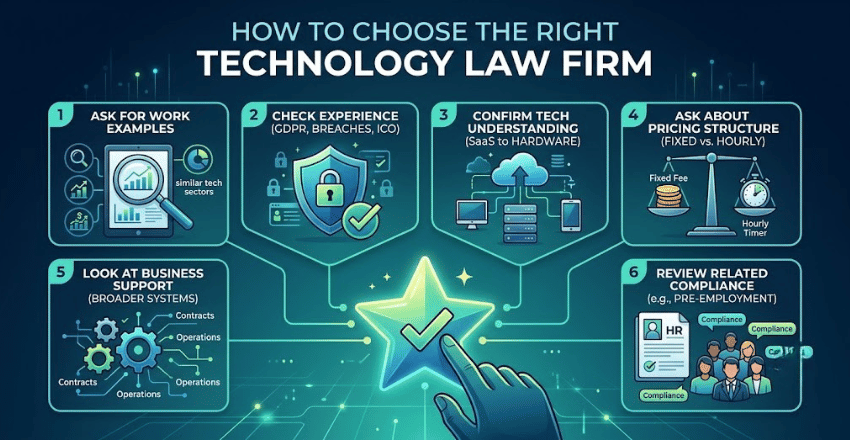
Not every firm that claims“tech expertise” actually has it. Use this checklist before you commit.
- Ask for examples of work with companies similar to yours in size and sector.
- Check their experience with GDPR, data breaches, and ICO investigations.
- Confirm they understand your specific technology, from SaaS to hardware.
- Ask about the pricing structure up front, including fixed fees versus hourly billing.
- Look at how they support broader business technology systems, not just contracts in isolation.
- Review how they handle related compliance work, such as pre-employment screening compliance for growing teams.
A firm that scores well on all six points is worth a longer conversation. One that dodges pricing questions or has no relevant case examples probably isn’t the right fit yet.
If you want to know about NSW’s New Consent Laws then visit our, Law category.
FAQs
It advises tech companies on intellectual property, data protection, and commercial contracts. This includes software licensing, GDPR compliance, and disputes over code or platform ownership.
Hourly rates typically range from £150 to £800 depending on seniority. Many firms also offer fixed fees or monthly retainers for predictable, ongoing work.
Not always, but you should bring one in before raising investment, signing major licensing deals, or handling customer data at scale.
IP lawyers focus narrowly on patents, trademarks, and copyright. A technology lawyer covers IP plus data protection, contracts, and tech-specific disputes.
Switch once your legal needs touch software licensing, data regulation, or platform disputes that a general solicitor rarely handles.
Want more guidance on running a modern tech business? Get in touch with our team to share what you’re working on.