
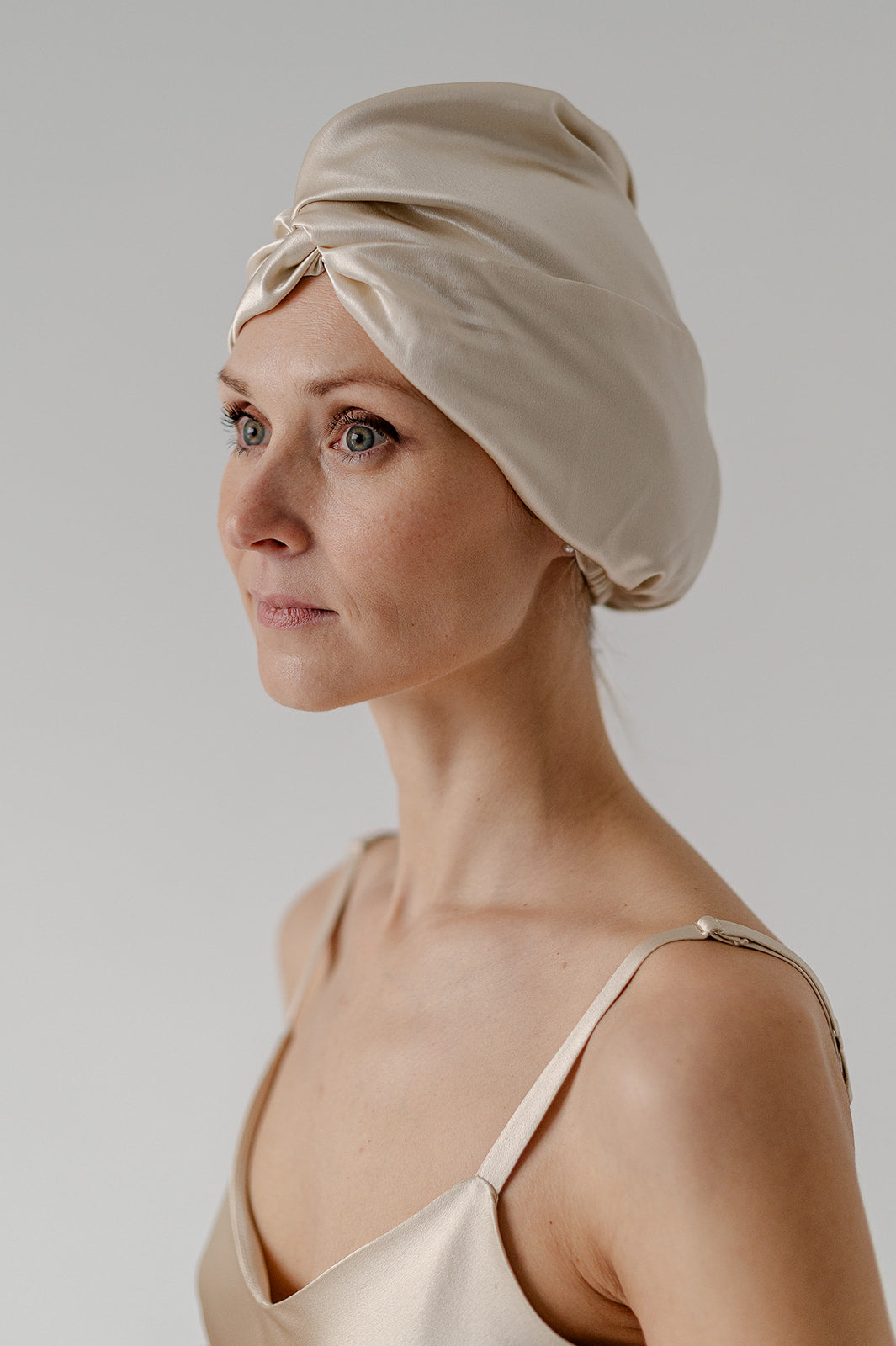

Proper care of hair is what healthy hair needs, and among the best products you may need to take care of your hair is a silk bonnet, which you can wear to take care of yourself and your hair during your sleep. However, the silk bonnets are never equal, and selecting the suitable one will rely on your hair type and desire.
So here, we have reached our ultimate guide about what you have to know to choose your ideal silk bonnet avoiding all the dilemmas; we will see through it all; the type of your hair, advantages of the silk bonnets, how to choose size and style, and how to take proper care of your bonnet that would make it into the everlasting one. No matter what type of hair (curly hair and straight hair, coily and fine hair), you can take this recommendation because it will help make a wise choice and wake up with beautiful and healthy hair every morning.
Why Choose a Silk Bonnet?
As you sink into the perfect bonnet ideas, you must first find out the beauty behind the most common hair protection material: silk.
Silk Bonnet Advantages for Hair
- Minimizes friction: The silky tendencies of silk minimize the friction between your hair and the cloth, which sustains demolition, split ends, and fuzziness.
- Maintains Moisture: As compared to cotton, which can steal moisture from your hair, silk helps preserve the natural oil and moisture on your hair.
- Eliminates tangles: The silk keeps the hair strands on track and free, preventing tangles and knots.
- Hypoallergenic: Silk is hypoallergenic by nature itself; hence it is great to use on sensitive scalps or skin.
- Temperature regulation: Silk balances out the temperatures, which makes your head feel cool and comfortable.
Understanding Your Hair Type
Opting for the ideal silk bonnet begins with understanding what kind of hair you have and, most certainly, what it needs the most.
1. Straight Hair
Straight hair is more likely to fall oily quicker and may suffer when overloaded by heavy products. Of primary concern is shine as well as avoiding breakage due to friction.
2. Wavy Hair
Curly hair finds it easy to get frizzy or tangled when one sleeps. It needs delicate handling in order to have waves that do not flatten and break down.
3. Curly Hair
Curly hair easily gets dry and crinkles, and breaks. Silk bonnets may be used to keep hair hydrated and exhibit its curl pattern during the night.
4. Coily/Kinky Hair
It is a weak hair type that tends to break easily and is always dry. It should also be covered with a silk bonnet as a proper way of protecting the moisture and deterring damage.
5. Fine or Thin hair
Delicate hair is fine and is prone to breakage, while coarse hair. Silk bonnets promote natural protection without putting weight on strands.
How to Choose the Perfect Silk Bonnet for Your Hair Type
- Mulberry Silk vs. Material Quality: Other Silks
Mulberry Silk: The best silk, which is produced by the silkworm being fed on mulberry leaves. It is softer, stronger, and even more durable, which makes it good to use on any kind of hair (but fragile or dry hair).
Charmeuse Silk: Also used in bonnets; it is not necessarily 100 per cent pure silk; quality variable.
Satin vs. Silk: Satin is a fabric and not a fiber; it may be made of polyester or nylon. On the one hand, satin is smooth and cheaper, but it does not provide the same results as the real silk.
Tip: Use only bonnets made of 100% Mulberry silk, which provides the best protection for hair.
- Select the Right Fit and Dimension
- An ill-fitting bonnet, too tight, may bring on headaches, and breakage, or be too slack, and fall off in the night.
- You should measure your head before purchasing.
- Seek bonnets that can be adjusted using an elastic band or drawstrings.
- When considering thicker or longer hair, bigger bonnets, or ones that have styles suited to volume can be used.
- Maintain the Length and Volume of hair
- Short hair: Smaller bonnets or caps.
- Medium to Long hair: More volumed bonnets or bigger ones to hold the hair.
- Thick/bulky hair: Try to find extra-large bonnets or those made of stretch material so that it does not flatten your hair.
- Style and the Type of Closure
- Elastic Band Bonnets: Fixed, can bring on strain when tightened, otherwise.
- Drawstring Bonnets: Adjustable, suitable for different amounts of hair.
- Slouchy Bonnets: It fits loosely, and it is comfortable with thick/long hair.
- Bonnet Satin-Lined Elastic: easy on hair, cannot cause so many breakages.
- Color and Design Tastes
Although it does not influence performance, the choice of a bonnet that you adore wearing makes you consistent in wearing it. Some people just like to use natural colors, others find funny prints or plain bold colors.
Specialized Silk Bonnets for Different Hair Types
Silk Bonnets for Curly and Coily Hair
- Look for larger, slouchy bonnets with drawstrings.
- Choose bonnets lined entirely with silk inside and out.
- Consider bonnets with extra depth to hold defined curls without squashing them.
Silk Bonnets for Fine or Straight Hair
- Opt for lightweight bonnets with snug but gentle elastic bands.
- Smaller sizes can prevent excessive movement during sleep.
- Keep a smooth lining to avoid friction damage.
Silk Bonnets for Thick or Long Hair
- Extra-large bonnets or “turban style” designs provide ample space.
- Adjustable features ensure comfort and a secure fit.
- Thick silk material offers durability and long-lasting use.
How to Care for Your Silk Bonnet
In order to get the objective of having the longest life of your silk bonnet and still get it to look soft, smooth, and to accomplish its purpose effectively then it is important to take good care of the bonnet. Cold-wash your bonnet in hand (and always in cold water) with a silk-safe detergent such as either Woo lite or The Laundress.
Do not wash with bleach or strong chemicals and fabric softeners, even these give away at the soft fibers. If you are a machine washer, put the bonnet in a lingerie clothing bag and run it through the delicate attachment to reduce friction, thus causing less damage. Your bonnet should be flattened out after washing or hanging in a shady spot–please do not dry it in the open air, as the sun will discolor it and injure the silk. Iron on a low heat as necessary to give back its natural shine.
Storage-wise, maintain your silk bonnet somewhere cool and dry. Do not put it on an abrasive surface or materials that might drag the cloth. One should also avoid storing it along with perfumes, oil, or any other material that can discolor or damage the silk over time. Your silk bonnet can be taken good care of and be luxurious and protective on your head through many long nights, given proper treatment.
Additional Tips for Healthy Hair with a Silk Bonnet
- Use Leave-in Conditioner or Hair Oil: Before putting on your bonnet, apply a light moisturizer to help your hair stay hydrated overnight.
- Avoid Sleeping on Cotton Pillowcases: Even with a silk bonnet, a cotton pillowcase can draw moisture out of your hair if your bonnet shifts.
- Change Bonnets Regularly: To maintain hygiene and effectiveness, rotate bonnets and wash them frequently.
- Combine with Protective Hairstyles: Braid, twist, or pineapple your hair to reduce tangling and pressure under the bonnet.
FAQs About Choosing and Using Silk Bonnets
The right size depends on your hair length, thickness, and preferred hairstyle. If you have long or voluminous hair, choose an oversized bonnet. For short or fine hair, a smaller, snug-fitting bonnet will work best. Adjustable options with drawstrings or elastic bands are ideal for a custom fit.
Yes! Wearing a silk bonnet every night helps protect your hair from breakage, friction, and moisture loss. Consistent use leads to healthier, shinier, and more manageable hair over time.
A well-fitted silk bonnet with a secure elastic band or drawstring should stay on through the night. If you’re a restless sleeper, look for bonnets with added grip or pair them with a silk pillowcase as a backup.
While both silk and satin reduce friction, silk is a natural, breathable fiber that retains moisture better and is gentler on hair. Satin is typically synthetic and may not offer the same benefits, especially for those with dry or curly hair.
It’s best to wash your silk bonnet every 1–2 weeks, or more frequently if you use oils or hair products. Always follow the care instructions, hand wash with a silk-safe detergent and air dry to maintain its softness and durability.
Conclusion
The silk bonnet that fits your hair type can become the best thing that can happen to your hair care routine. Whether you want to take care of kinky locks, keep wispy curls, or save the sleek strands, the proper bonnet minimizes harm, retains dampness, and ensures that you wake up with healthy locks.
Don’t forget that you need to choose good-quality 100 % Mulberry silk, find the right size of your bonnet according to the amount and length of your hair, and look after your bonnet properly. Silk bonnet benefits for sleeping include reducing hair breakage, preventing frizz, and helping your hair retain moisture throughout the night.