


Paralegal jobs play a vital role in the legal system by supporting attorneys in delivering efficient and high-quality legal services. From conducting research and drafting documents to managing case files and coordinating with clients, paralegals handle a wide range of responsibilities that keep legal operations running smoothly.
Their work not only improves productivity within legal teams but also contributes meaningfully to case preparation, strategy, and client communication.
With diverse career paths, flexible educational routes, and growing demand driven by legal and technological developments, the paralegal profession offers a dynamic and rewarding career option for individuals interested in law without becoming attorneys.
| Category | Summary |
| Role Purpose | Support attorneys |
| Key Tasks | Research, drafting, organization |
| Responsibilities | Case mgmt, filings, discovery |
| Practice Areas | Litigation, corporate, family |
| Employers | Firms, govt, corporate, nonprofits |
| Skills | Research, writing, organization |
| Education | Certificate, associate, bachelor’s |
| Certification | Optional but beneficial |
| Ethics | No legal advice, confidentiality |
| Career Growth | Senior roles, specialization |
| Salary Factors | Location, experience, specialization |
| Job Outlook | Growing with legal tech |
| Work Tools | E-discovery, case software |
| Benefits | Insurance, PTO, retirement |
| Overall Value | Efficiency & legal support |
The Paralegal Jobs Role
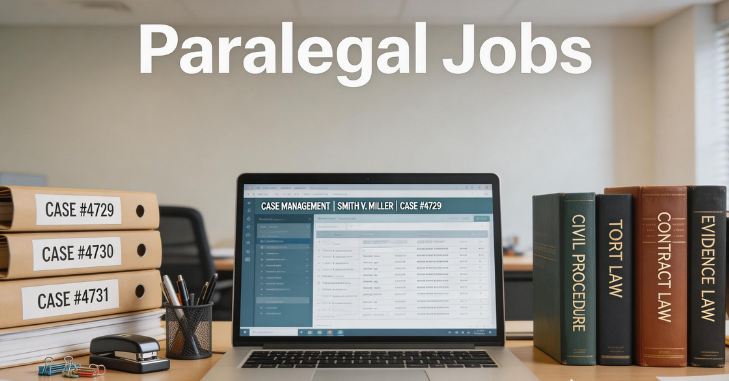
The primary purpose of a paralegal is to assist attorneys in preparing for hearings, trials, corporate transactions, and closings by handling research, drafting, and organizational work.
Paralegals prepare pleadings, motions, contracts, discovery documents, and trial exhibits; they manage case files, maintain timelines and deadlines, and communicate with clients, witnesses, and opposing counsel.
By conducting factual and legal research, summarizing authorities, and assembling materials for attorneys, paralegals increase a legal team’s capacity and contribute materially to case strategy under attorney supervision.
Typical Responsibilities and Tasks
- Case management and organization: opening, maintaining, and closing client files; creating chronologies and timelines; maintaining document databases and litigation repositories; tracking deadlines (statutes of limitations, filing dates, hearing schedules).
- Legal research and analysis: researching statutes, case law, regulations, and secondary sources; summarizing legal authorities; preparing legal research memoranda for attorneys.
- Document drafting and preparation: drafting pleadings, motions, discovery requests/responses, contracts, affidavits, settlement agreements, and transactional documents under attorney supervision; preparing exhibits and trial binders.
- Discovery and evidence management: coordinating discovery processes, organizing documents for review, performing privilege review, preparing privilege logs, and working with e-discovery platforms and vendors.
- Client-facing administrative tasks: communicating with clients, witnesses, and experts to schedule and collect information; conducting client intake and conflict checks; and gathering and organizing client documents.
- Court filings and calendaring: preparing and filing court documents in compliance with local rules and e-filing systems; managing court calendars and coordinating attorney appearances.
- Technology and systems use: working with case management and document systems, e-discovery tools, court e-filing platforms, Microsoft Office, and PDF software for Bates-stamping and redaction.
Types of Paralegal Jobs

Practice Areas
Paralegals can specialize by practice area or work broadly across matters. Common practice areas include litigation, corporate/transactional, real estate, family law, bankruptcy, intellectual property, estate planning, immigration, healthcare compliance, and environmental law.
Employer Types
Employer types range from solo and small law firms to large firms, in‑house corporate legal departments, government agencies, nonprofits and legal aid organizations, courts, and contract staffing firms.
Impact of Specialization
Specialization affects daily tasks, required technical knowledge, and career trajectory; for example, IP paralegals manage trademark and patent dockets, while bankruptcy paralegals prepare schedules and creditor matrices.
Skills Required for Paralegal Jobs
Successful paralegals combine legal knowledge with practical and interpersonal skills. Key competencies include legal research and analytical ability; strong legal writing and drafting; proficiency with software (case management systems, e-discovery platforms, Microsoft Office, PDF tools).
Specialized practice areas demand additional expertise, such as familiarity with USPTO procedures for IP work or knowledge of the bankruptcy code for insolvency matters. Attention to detail, confidentiality, and the ability to work under deadline pressure are critical across all roles.
The Importance of Paralegals in Modern Legal Practice
Paralegals are becoming increasingly important in today’s legal environment due to the growing complexity of laws and the rising cost of legal services. Law firms and corporate legal departments rely on paralegals to handle high-volume tasks such as document review, legal research, and case preparation, which allows attorneys to focus on strategic decision-making and courtroom representation.
With the expansion of digital legal tools and e-discovery systems, paralegals who are skilled in legal technology are especially valuable, as they help improve efficiency, accuracy, and turnaround time in case management. This evolving role shows that paralegals are not just support staff but essential contributors to the effectiveness of the modern legal system.
Educational Requirements and Certification

- Multiple entry pathways: employer expectations vary, so choose the route that best fits your background and goals.
- Paralegal certificate: short, focused programs (typically 6–24 months) that teach core skills and are popular for career changers or those with a bachelor’s degree.
- Associate degree (A.A.S.) in Paralegal Studies: two‑year programs combining general education with paralegal coursework—common for entry‑level roles.
- Bachelor’s degree with paralegal concentration: four‑year option offering broader academic training plus specialized paralegal classes.
- Bachelor’s degree + paralegal certificate: a common path for graduates who want targeted practical training after completing a degree in another field.
Legal and Ethical Boundaries
Paralegals must avoid the unauthorized practice of law; they may not give legal advice, sign pleadings as an attorney, or represent clients in court unless expressly permitted by jurisdictional rules.
Ethical Boundaries
Their role is to perform substantive legal work under attorney supervision while protecting client confidentiality and observing conflict-of-interest rules.
Properly distinguishing tasks that require attorney judgment from those a paralegal may perform independently is essential to maintaining professional and ethical standards.
Career Progression and Advancement
Paralegal careers offer several advancement paths. Experienced paralegals may become senior paralegals, paralegal managers, or specialists (e-discovery experts, IP portfolio managers) and may move into legal operations, practice management, or litigation support leadership.
Some paralegals attend law school and transition to become attorneys, using practical experience to strengthen their applications and legal training.
Others pursue contracting or freelance project work, or shift into compliance, contract management, or corporate roles that leverage legal expertise.
Salary and Job Outlook

- Pay varies widely: paralegal compensation depends on geography, employer size, specialization, and years of experience.
- Higher pay factors: larger metropolitan areas, major law firms, and specialized practice areas (e.g., intellectual property, corporate/transactional work) generally command higher salaries.
- Typical benefits: many employers offer health insurance, retirement plans (401(k) s or pensions), paid time off (vacation and sick leave), and tuition or professional development support.
- Non‑salary compensation: bonuses, overtime (where applicable), and reimbursement for certifications or CLE can supplement base pay.
- Job demand drivers: demand follows legal services activity—litigation volume, corporate transactions, regulatory compliance needs, and public-sector hiring.
- Impact of technology: automation, e-discovery, and legal tech reshape routine tasks; while some manual tasks decline, demand grows for paralegals proficient with e-discovery platforms, document automation, and other legal technology.
- Competitive advantage: paralegals with technical skills, specialized knowledge, and certifications tend to be more marketable and can command higher wages.
- Geographic and sector variance: government, nonprofit, and small‑firm roles often pay less than large-firm or in‑house corporate positions, though they may offer other rewards (work-life balance, mission-driven work).
Conclusion
Paralegal work occupies a unique and indispensable position within the legal ecosystem. As skilled non‑lawyer professionals, paralegals bridge the gap between clients’ practical needs and attorneys’ legal expertise.
The role’s value is measured not only by the immediate cost-savings and efficiency it brings to legal teams, but also by the deeper substantive contributions paralegals make to case strategy, client advocacy, and the smooth operation of transactional work.
They perform complex, substantive tasks, researching and synthesizing legal authorities, drafting precise documents, managing discovery and evidence, and coordinating multi-party closings, all of which require judgment, attention to detail, and a thorough grasp of procedural rules.
These responsibilities demand more than rote administrative ability; they require legal literacy, analytical thinking, clear written communication, and the capacity to work under pressure while maintaining professional composure.
Want to know about White-Collar Crime Lawyer: Premier Legal Expert Dedicated to Defending Professionals Against Corporate Fraud, Embezzlement, and Financial Misconduct Check out our Law category.
FAQs
Paalegal supports attorneys by conducting legal research, drafting documents (contracts, pleadings, affidavits), organizing case files, and managing client communication. They assist with litigation, trial preparation, and administrative tasks in specialized areas like corporate law, intellectual property, and real estate, ensuring efficient legal service delivery.
New career options in paralegal studies may become available through the Associate or Bachelor of Applied Business in Law & Paralegal Studies degree programs. If you want to continue your education while working, think about enrolling in a fully online program.
As a non-graduate entry-level paralegal, yearly salaries range from £14,000 to £22,000. At the graduate level, salaries range from £18,000 to £25,000. A paralegal with five years’ experience can expect a salary in the region of £30,000 to £40,000.
Consider AI as a helper. While it won’t completely replace paralegals, it can handle many of the repetitive tasks that take up a significant amount of the workday, such as organizing case materials, summarizing documents, or creating initial drafts of routine filings.