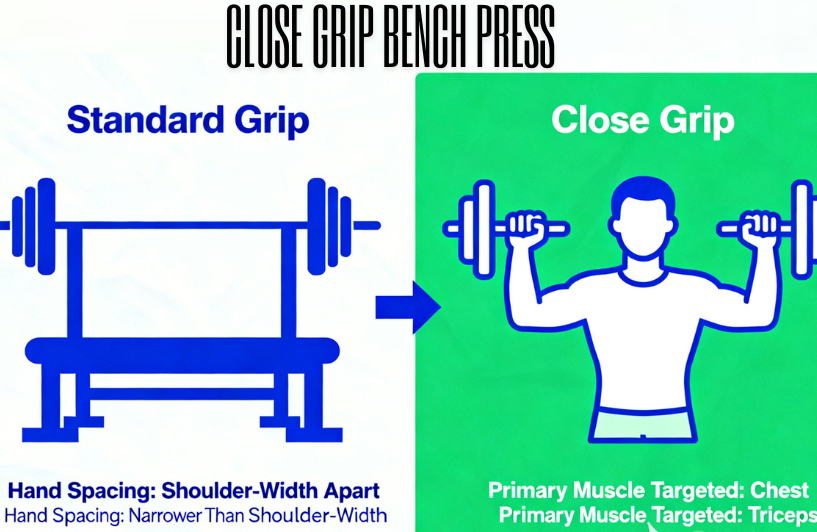

The close-grip bench press is one of the most effective compound exercises for developing upper-body pushing strength while placing greater emphasis on the triceps. Although it looks similar to the traditional bench press, subtle differences in grip width and elbow positioning significantly change muscle recruitment and training outcomes. When performed correctly, this movement builds stronger arms, improves lockout power, and enhances overall pressing performance.
This comprehensive guide explains everything you need to know, from proper setup and detailed biomechanics to intelligent programming strategies and proven injury prevention techniques, so that you can maximize results safely and efficiently. It breaks down each phase of the movement step by step, helping you understand not only how to perform the exercise correctly but also why each technical cue matters.
| Section | Key Focus | Important Details | Practical Application |
| Exercise Overview | Grip & Purpose | Narrower-than-shoulder grip; triceps-focused pressing variation | Builds stronger arms and improves lockout strength |
| Proper Setup | Body Positioning | Feet flat, slight back arch, shoulder blades retracted, wrists neutral | Ensures stability and reduces injury risk |
| Bar Path & Execution | Controlled Movement | Lower to lower chest, elbows tucked 30–45°, press in a slight arc | Maximizes triceps activation and pressing efficiency |
| Muscle Engagement | Primary & Secondary Muscles | Triceps primary; chest, delts, lats assist | Promotes balanced upper body development |
| Strength Development | Progressive Overload | Gradual weight increase, paused reps, tempo control | Enhances power and long-term strength gains |
| Programming Strategies | Sets & Reps | 3–5 sets (3–6 reps) for strength; 8–12 reps for hypertrophy | Adapts to different training goals |
| Common Mistakes | Technical Errors | Grip too narrow, elbows flared, bent wrists, bouncing bar | Prevents wasted effort and joint strain |
| Injury Prevention | Safety Measures | Warm up properly, maintain form, and use a spotter for heavy lifts | Protects shoulders, elbows, and wrists |
Understanding the Close-Grip Bench Press

The close-grip bench press is a barbell pressing variation performed on a flat bench with a grip narrower than shoulder-width. By reducing the grip width, the exercise shifts more workload onto the triceps while still engaging the chest and shoulders. Unlike isolation movements such as triceps pushdowns, this lift allows you to handle heavier loads, making it highly effective for building functional strength and muscle mass.
Primary Muscles Worked
- Triceps brachii (primary focus)
- Pectoralis major (chest)
- Anterior deltoids (front shoulders)
- Forearms (stabilization)
- Core and lats (support and control)
The narrower hand placement increases elbow flexion demands, which results in greater triceps activation compared to wider pressing variations.
Benefits of the Close-Grip Bench Press
Adding this movement to your routine offers several advantages:
1. Enhanced Triceps Development
The reduced grip width increases elbow extension demands, placing more tension on the triceps throughout the lift.
2. Improved Lockout Strength
Stronger triceps help overcome sticking points near the top of traditional bench presses.
3. Greater Joint Stability
When performed properly, the tucked elbow position can reduce shoulder strain compared to overly flared elbows.
4. Carryover to Other Pressing Movements
This exercise improves performance in:
- Standard bench press
- Overhead press
- Dips
- Push-ups
5. Balanced Upper Body Strength
It ensures your triceps are not a weak link in compound pressing movements.
One often-overlooked benefit of the close-grip bench press is its ability to strengthen weak points in compound lifts such as the traditional bench press and overhead press. Many lifters struggle during the lockout phase, where the triceps play the biggest role. By consistently training with a close grip, you can improve elbow extension strength, increase pressing stability, and develop better control under heavier loads. This makes it an excellent accessory exercise for powerlifters, athletes, and anyone aiming to improve upper-body performance efficiently.
Proper Form and Technique
Mastering technique is essential for maximizing strength while minimizing injury risk.
Step 1: Setup and Positioning
- Lie flat on the bench with eyes directly under the bar.
- Place feet firmly on the ground for stability.
- Maintain a slight natural arch in your lower back.
- Retract and depress your shoulder blades.
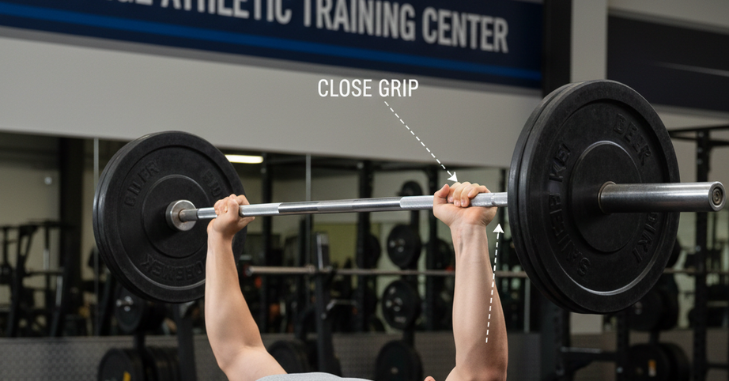
- Grip the bar slightly narrower than shoulder-width (hands about 8–12 inches apart, depending on body structure).
Avoid placing hands too close together, as extremely narrow grips can strain the wrists and elbows.
Step 2: Unrack and Bar Control
- Unrack the bar with straight wrists.
- Position it directly over your upper chest.
- Keep elbows tucked at roughly 30–45 degrees from your torso.
- Engage your core and lats for stability.
Control is critical from the very beginning of the lift.
Step 3: Lowering the Bar
- Inhale and slowly lower the bar toward the lower chest or upper sternum.
- Keep forearms vertical at the bottom.
- Avoid flaring elbows outward.
- Maintain wrist neutrality.
The descent should be controlled and deliberate.
Step 4: Pressing the Bar Up
- Drive the bar upward while exhaling.
- Focus on extending the elbows powerfully.
- Keep your feet planted and your upper back tight.
- Press in a slight backward arc toward shoulder level.
Lock out fully without hyperextending your elbows.
Muscle Engagement Breakdown
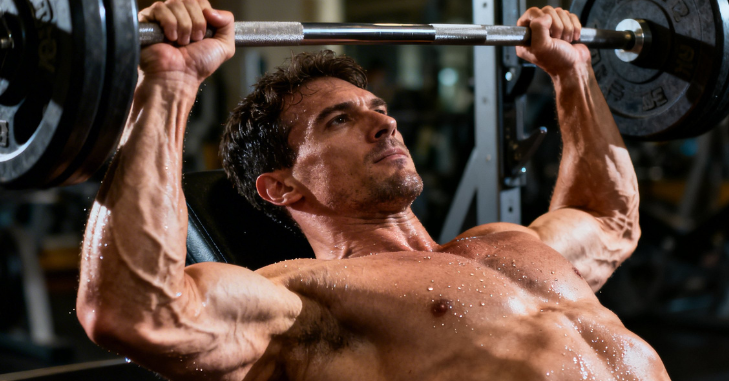
The close-grip bench press emphasizes elbow extension, making the triceps the primary mover. However, muscle coordination plays a major role in performance.
Key Muscle Roles
| Muscle Group | Role During Movement | Training Benefit |
| Triceps | Primary elbow extension | Increased arm size and lockout power |
| Chest | Secondary pressing force | Maintains upper body strength |
| Front Delts | Shoulder stabilization | Pressing stability |
| Lats | Bar path control | Improved strength efficiency |
| Core | Full-body stability | Better force transfer |
Proper engagement of the lats and core improves bar control and overall power output.
Common Mistakes to Avoid
Even experienced lifters make technical errors that reduce effectiveness or increase injury risk.
1. Grip Too Narrow
Hands placed excessively close can strain wrists and elbows.
2. Elbows Flaring Out
This shifts tension back to the chest and increases shoulder stress.
3. Bouncing the Bar
Reduces muscle tension and increases the risk of injury.
4. Poor Wrist Position
Bent wrists compromise force transfer and joint health.
5. Lifting Too Heavy Too Soon
Excessive weight can compromise technique.
Correcting these issues dramatically improves both safety and performance.
Programming Strategies for Strength and Growth
To maximize results, strategically integrate the close-grip bench press.
For Strength
- 3–5 sets
- 3–6 reps
- 2–3 minutes rest
- Moderate to heavy load
For Hypertrophy
- 3–4 sets
- 8–12 reps
- 60–90 seconds rest
- Controlled tempo
As an Accessory Lift
Use after your primary bench press movement to strengthen triceps and improve lockout.
Weekly Training Integration
You can include the close-grip bench press:
- Once per week for general training
- Twice per week for focused triceps development
- As a secondary movement after heavy bench pressing
Avoid overtraining by balancing pressing with pulling exercises.
Injury Prevention and Safety Guidelines
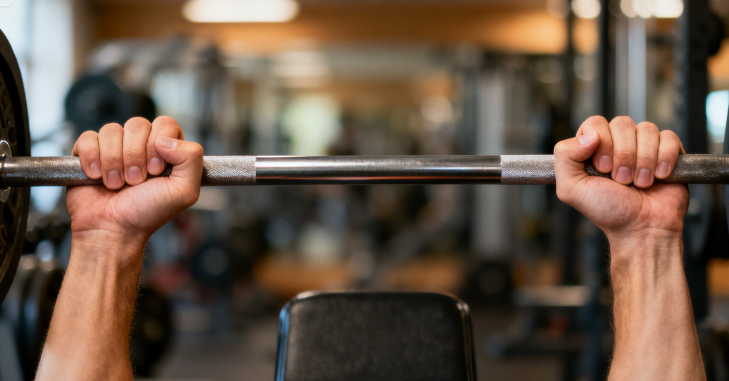
Protecting your joints is essential for long-term strength development and consistent progress. To reduce the risk of injury, always warm up your shoulders and elbows thoroughly before lifting, preparing the muscles and connective tissues for heavier loads.
Begin with lighter weights to refine your technique and ensure proper movement mechanics before increasing intensity. Maintain shoulder blade retraction throughout the lift to provide upper body stability, and keep your wrists stacked directly over your elbows to promote efficient force transfer and joint alignment.
When lifting near maximal loads, use a spotter for added safety and confidence. If you experience persistent elbow or shoulder discomfort, reassess your grip width, training volume, and overall technique to prevent further strain.
Variations to Enhance Results
To prevent plateaus, consider these variations:
- Close-grip bench press with pause
- Incline close-grip pressing
- Dumbbell close-grip pressing
- Tempo-controlled reps
- Resistance band variation
Each variation provides a slightly different stimulus while maintaining triceps emphasis.
Comparing Grip Widths
A narrower grip changes mechanics significantly:
- Greater elbow flexion
- Increased triceps activation
- Reduced chest dominance
- Shorter range of horizontal shoulder movement
Understanding these biomechanical shifts helps you use the exercise strategically rather than randomly.
Progressive Overload Techniques
To continually improve your performance and strength, focus on applying progressive overload in a structured manner. Gradually increase the weight to challenge your muscles without compromising form. You can also add extra sets to raise overall training volume or slow down the tempo of each repetition to increase time under tension.
Incorporating paused reps enhances control and builds power from the bottom position, while consistently refining your technique ensures long-term efficiency and safety. Progression should always be steady, controlled, and aligned with proper form to achieve sustainable results.
Building Maximum Upper Body Performance
When integrated intelligently, this movement strengthens weak links in pressing chains. Strong triceps improve:
- Heavy bench press lockout
- Military press strength
- Dip performance
- Overall pushing endurance
Consistency and disciplined form create measurable improvements over time.
Final Thoughts
The close-grip bench press is more than just a triceps builder; it’s a powerful compound lift that enhances upper-body strength, improves lockout performance, and supports long-term muscular development. By mastering proper technique, avoiding common mistakes, and programming it strategically, lifters can safely build impressive strength and size.
Focus on controlled execution, progressive overload, and joint health. With patience and consistency, this exercise becomes a cornerstone of a well-rounded strength-training program and a valuable tool for achieving maximum upper-body performance.
Want to know about 10 Essential Tips for Starting a Successful Workout Routine Check out our Fitness category.
FAQs
The primary purpose is to increase triceps strength and improve lockout performance in pressing movements while still engaging the chest and shoulders.
Your grip should be slightly narrower than shoulder-width. Avoid placing your hands too close together, as this can strain the wrists and elbows.
Yes, the chest is still involved, but the emphasis shifts more toward the triceps compared to a traditional wide-grip bench press.
Yes, beginners can benefit from it, provided they use light to moderate weights and focus on mastering proper form before increasing intensity.