
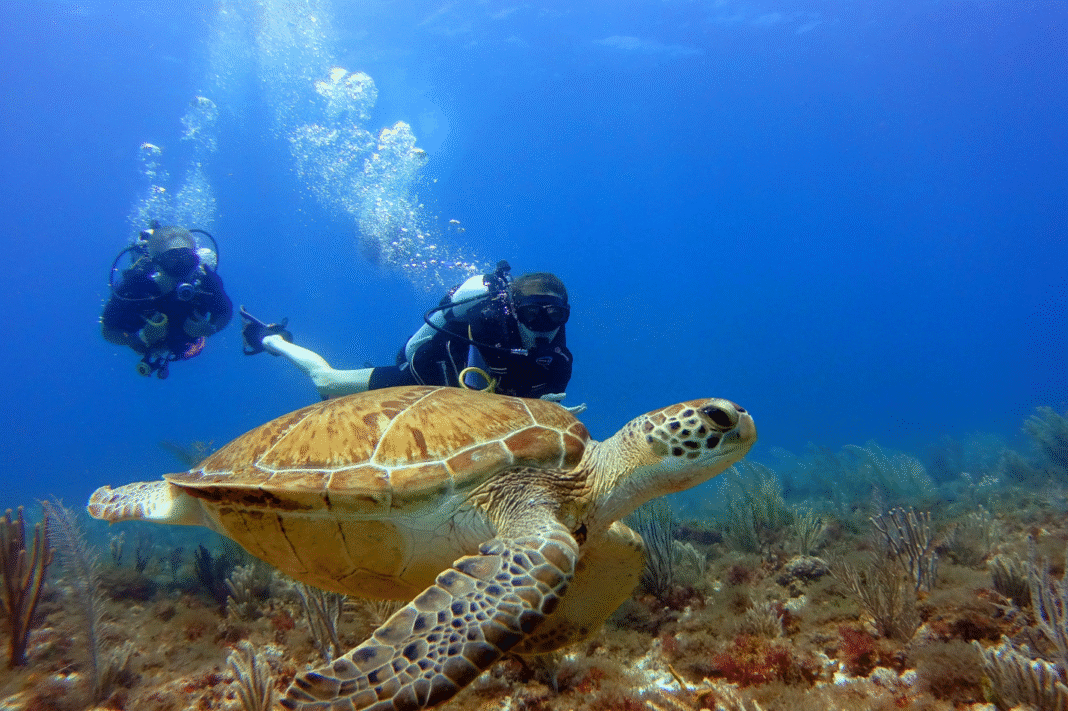

The underwater world offers endless wonders, from colorful coral reefs to historic shipwrecks and thrilling encounters with marine megafauna. Whether you’re a recreational diver exploring open waters or a technical diver navigating complex environments, the right dive site can transform your experience.
Key Takeaways
- Top dive sites like Raja Ampat, Lembongan Island, and Egypt’s SS Thistlegorm are ideal for experiencing sidemount gear benefits.
- Sidemount diving enhances flexibility in tight spaces and strong currents.
- Expert-curated lists prioritize safety and site-specific adaptability.
Understanding Different Types of Diving
Diving is a captivating way to explore the underwater world, offering a variety of styles tailored to different environments, skill levels, and interests. Below are the 5 most common diving types:
1. Recreational Scuba Diving (Backmount)
- Description: The most popular form of diving, where divers use SCUBA gear with tanks carried on the back to breathe underwater for extended periods.
- Equipment: SCUBA gear, including a tank, buoyancy control device (BCD), regulator, mask, and fins.
- Depth Range: Up to 40 meters (130 feet) for certified recreational divers.
2. Sidemount Diving
- Description: A specialized scuba configuration where tanks are carried on the diver’s sides, offering superior maneuverability for navigating tight spaces.
- Equipment: SCUBA gear with side-mounted tanks, often dual tanks for redundancy.
- Depth Range: Up to 40 meters, commonly used in technical diving scenarios.
3. Freediving
- Description: Breath-hold diving without SCUBA gear, relying on the diver’s ability to hold their breath.
- Equipment: Mask, fins, and sometimes weights for buoyancy control.
- Depth Range: Varies, from a few meters for beginners to over 100 meters for advanced freedivers.
4. Wreck Diving
- Description: Exploring sunken ships, aircraft, or other man-made structures, which often host diverse marine life and historical artifacts.
- Equipment: SCUBA gear, often with additional lights and reels for navigation.
- Depth Range: Varies, from shallow to deep wrecks requiring advanced training.
5. Cave Diving
- Description: Exploring underwater caves, requiring specialized training and equipment due to confined spaces, potential zero visibility, and entanglement risks.
- Equipment: Technical SCUBA gear, including multiple tanks, lights, and guidelines.
- Depth Range: Varies, often involving deeper dives.
Beyond these seven common types, there are many other forms of diving, including deep diving, technical diving, night diving, ice diving, drift diving, competitive diving, and more.
Things to Consider When Picking a Dive Spot
Picking the right dive location can make your underwater adventure unforgettable. Here are key factors to keep in mind for a safe and enjoyable dive.
- Current Strength: Strong currents, like those at Richelieu Rock in Thailand or Wolf Island in the Galápagos, demand a streamlined setup. Choose gear that minimizes drag to help you glide effortlessly through challenging waters.
- Depth & Visibility: Dives with varying depths, such as the Great Blue Hole in Belize, require excellent buoyancy control. Clear waters are a bonus, but deep sites need gear that supports stability at different levels.
- Site Accessibility: Narrow spaces, like the caves or wrecks of Australia’s SS Yongala, call for compact gear to avoid snags. For divers trained in sidemount diving, these environments become more manageable, as the side-mounted tank configuration allows for greater flexibility and easier navigation through tight passages.

The Best Dive Sites Around the World Worth Exploring
From colorful coral reefs to historic shipwrecks, these 5 dive sites are bucket-list destinations for any diver.
1. Raja Ampat, Indonesia
Often called the “Amazon of the Seas,” Raja Ampat is a diver’s paradise in West Papua. Its 1,500+ islands boast incredible biodiversity, with over 1,600 fish species and 75% of the world’s known coral species.
2. Nusa Lembongan, Indonesia
Just a short boat ride from Bali, Nusa Lembongan, is famous for its manta ray and mola mola encounters. For those looking to enhance their skills, taking a divemaster Nusa Lembongan in one of Bali’s trusted dive centres can provide expert guidance, ensuring safe and memorable dives in these vibrant waters.
3. Great Barrier Reef, Australia
The world’s largest coral reef system stretches over 2,300 kilometers and hosts thousands of marine species, from clownfish to sea turtles. Iconic sites like Cod Hole and Ribbon Reefs offer calm, clear waters perfect for reef diving.
4. SS Thistlegorm, Red Sea, Egypt
This WWII shipwreck, sunk in 1941, rests 30 meters deep in the Red Sea. Packed with motorcycles, trucks, and artillery, it’s a time capsule for wreck diving enthusiasts. The site requires good buoyancy control to navigate cargo holds safely.
5. Socorro Islands, Mexico
Known as the “Mexican Galapagos,” Socorro’s remote volcanic islands attract giant manta rays, humpback whales, and schooling hammerhead sharks. Sites like Roca Partida offer thrilling pelagic encounters in strong currents.
Always dive with reputable operators and check local conditions for the safest experience.
Sidemount Diving: Today’s Diving Trends
For divers passionate about exploring tight wrecks or navigating strong currents, sidemount diving is an excellent choice. Some of the best spots are Egypt’s SS Thistlegorm wreck and Mexico’s Socorro Islands.
Sidemount diving enables divers to:
- Navigate narrow passages in coral reefs or shipwrecks with ease.
- Adjust buoyancy effectively in fast-moving currents.
- Carry redundant air supplies for extended underwater exploration.
With extensive use in technical diving, sidemount has proven reliable in challenging environments.
Conclusion
Diving opens a window to an extraordinary underwater world filled with vibrant marine life, historic wrecks, and stunning coral reefs. From the biodiversity of Raja Ampat to the thrilling wrecks of the SS Thistlegorm, the best dive sites offer something for every diver.
Choosing the right dive spot involves considering factors like current strength, depth, visibility, and site accessibility to ensure a safe and memorable experience. With proper preparation, quality gear, and a reputable dive operator, you can explore these global treasures with confidence. Dive in, respect the ocean, and let each underwater journey inspire your next adventure!
Questions and Answers
The Great Barrier Reef in Australia is ideal for beginners due to its calm, clear waters and diverse marine life.
Yes, wreck diving often requires advanced training to navigate safely and manage potential hazards like confined spaces.
Streamlined SCUBA gear, a reliable buoyancy control device, and fins designed for power are key for handling strong currents.
Yes, many sites in Nusa Lembongan are suitable for recreational divers, but always check with local operators for site-specific requirements.
Dive with a reputable operator, check local conditions, use well-maintained gear, and never dive beyond your training level.