
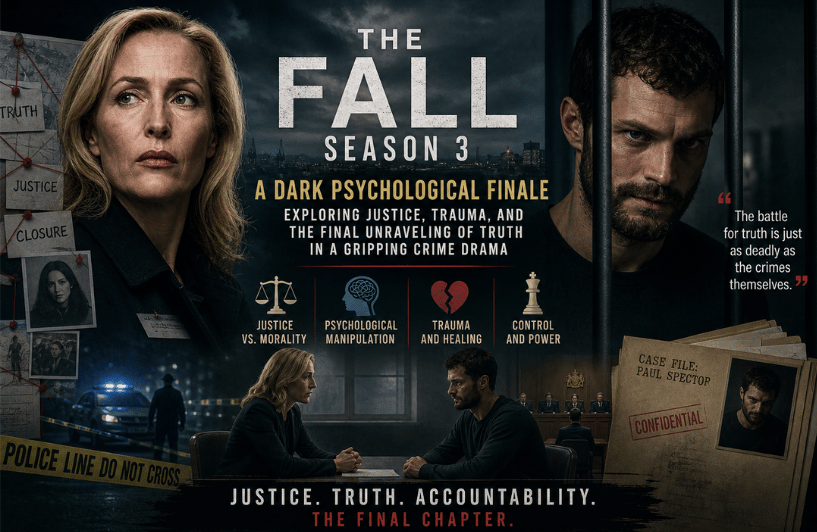

The Fall Season 3 serves as the gripping and emotionally charged final chapter of the acclaimed psychological crime drama, continuing directly after the shocking events of Season 2, where Paul Spector’s capture completely shifts the direction of the investigation. Rather than focusing on the pursuit of the killer, the story moves into a more psychological and investigative phase, where attention is placed on interrogation, evaluation, and the emotional consequences of the crimes.
This season takes a noticeably darker and more introspective tone, deeply exploring the psychological breakdown of Paul Spector as he struggles with identity, memory, and accountability while in custody.
At the same time, Stella Gibson continues her relentless pursuit of justice, maintaining a disciplined and evidence-based approach as she navigates the complexities of the case. The narrative also highlights the long-lasting trauma experienced by victims’ families and investigators, showing how the impact of violence extends far beyond the crimes themselves.
| Section | Summary |
| The Fall Season 3 | Season 3 follows Paul Spector’s capture and shifts focus from pursuit to investigation and psychological analysis. |
| Tone & Focus | Dark, slow-paced, and emotionally intense with emphasis on trauma and interrogation. |
| Main Characters | Stella Gibson remains focused on justice; Paul Spector is examined psychologically in custody. |
| Core Themes | Justice vs. morality, psychological manipulation, trauma, and power dynamics. |
| Emotional Impact | Highlights the lasting trauma on victims’ families and stress on investigators. |
| Narrative Shift | Moves from action-driven chase to psychological and legal examination. |
| Psychological Depth | Explores Spector’s identity crisis, memory issues, and mental instability. |
| Investigation Style | Focuses on interviews, evidence review, and legal case building instead of field pursuit. |
| Stella Gibson’s Role | Maintains a controlled, evidence-based approach while building a strong prosecution case. |
| Spector’s Condition | His fragile mental state creates uncertainty and complicates the investigation. |
| Story Progression | Gradually builds tension through dialogue, analysis, and emotional confrontations. |
| Overall Outcome | Leads toward a final resolution centered on truth, justice, and accountability. |
Overview of The Fall Season 3
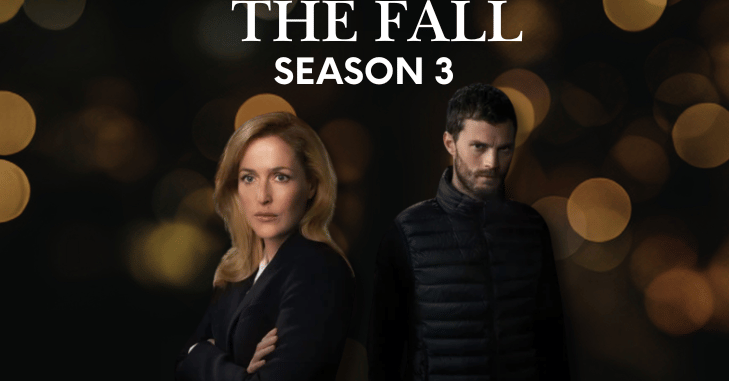
The Fall Season 3 continues directly after the shocking events of Season 2, where Paul Spector’s capture significantly changes the direction of the entire investigation. Instead of focusing primarily on the manhunt and pursuit of the killer, the narrative shifts into a more psychological and investigative phase, where the emphasis is placed on evaluation, interrogation, and the emotional aftermath of Spector’s crimes.
This season takes a more introspective and emotionally intense approach, exploring the deep psychological breakdown of Paul Spector as he struggles with memory, identity, and accountability while in custody. At the same time, Stella Gibson continues her determined pursuit of justice, carefully operating within legal boundaries to ensure that the case is built on solid evidence rather than impulse.
The series also highlights the lasting impact of trauma on both the victims’ families and the investigators involved, showing how deeply the case has affected their mental and emotional well-being. In addition, Season 3 raises important moral questions about punishment, truth, and whether legal justice is enough to address such serious crimes.
Plot Summary of Season 3
Season 3 begins with Paul Spector recovering in custody after being shot and arrested. He suffers from amnesia-like symptoms, which complicates the investigation and raises doubts about his mental state.
Key Story Developments
- Spector undergoes psychological evaluation and treatment
- Stella Gibson continues building a strong legal case
- The families of victims struggle with grief and justice
- New evidence emerges that challenges previous assumptions
- The investigation turns into a battle of intelligence and manipulation
- As the season progresses, the story becomes a psychological duel between Gibson and Spector, focusing on truth, memory, and accountability.
Main Characters in Season 3
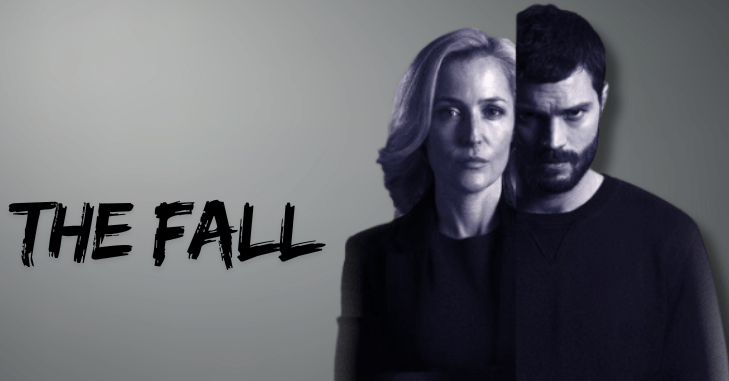
Stella Gibson
Played by Gillian Anderson, Stella remains calm, analytical, and highly focused. In Season 3, she becomes even more determined to ensure justice is served, balancing professionalism with emotional restraint.
Paul Spector
Jamie Dornan’s character is more vulnerable this season. His psychological condition raises questions about guilt, manipulation, and self-awareness, making him one of the most complex villains in modern television.
Supporting Characters
The story also includes several important supporting groups that play a key role in the progression of the case. Police investigators are actively involved in gathering evidence and building the legal case against the suspect, while the victims’ families continue to seek emotional closure and justice for their loved ones.
Themes in The Fall Season 3
| Theme | Description |
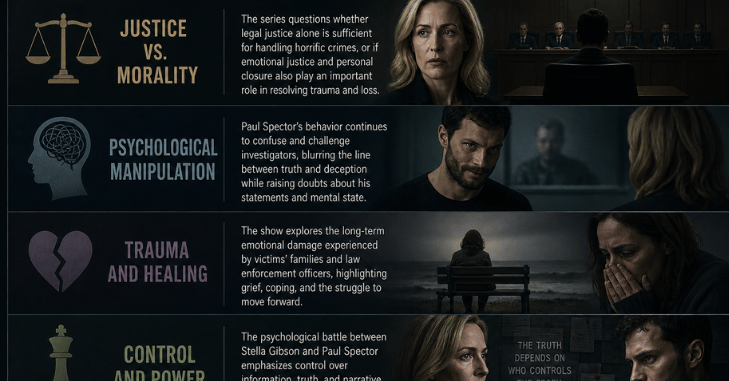
| Justice vs. Morality | The series questions whether legal justice alone is sufficient for handling horrific crimes or if emotional justice and personal closure also play an important role in resolving trauma and loss. |
| Psychological Manipulation | Paul Spector’s behavior continues to confuse and challenge investigators, blurring the line between truth and deception while raising doubts about his statements and mental state. |
| Trauma and Healing | The show explores the long-term emotional damage experienced by victims’ families and law enforcement officers, highlighting grief, coping, and the struggle to move forward. |
| Control and Power | The psychological battle between Stella Gibson and Paul Spector emphasizes control over information, truth, and narrative, showing how both attempt to dominate the case in different ways. |
Performance and Acting
One of the strongest aspects of Season 3 is the performance:
- Gillian Anderson delivers a controlled, powerful performance as Stella Gibson
- Jamie Dornan portrays a more vulnerable and psychologically complex Spector
- The supporting cast adds emotional depth and realism to the storyline
- The chemistry between the lead characters drives the entire emotional weight of the season.
Direction and Cinematic Style

Season 3 maintains the show’s signature slow-burn storytelling style:
- Dark, atmospheric cinematography
- Minimalist background score
- Realistic police procedures
- Intense psychological dialogue scenes
- The visual tone reflects the emotional heaviness of the story, making it feel grounded and unsettling.
Episode Structure
Season 3 consists of a limited number of tightly written episodes, with each one carefully structured to deepen the story and intensify the overall narrative. The season focuses on the psychological analysis of the killer, exploring his mental state, motivations, and behavior in detail while under investigation.
Alongside this, it also highlights the legal proceedings and ongoing investigations as authorities work to build a strong case and uncover the full truth behind the crimes. Another key aspect is the emotional consequences faced by both the victims’ families and the investigators, showing how the case continues to affect their lives on a deeply personal level.
As the story progresses, each episode gradually moves toward the final resolution of the central storyline. Overall, every episode builds increasing tension, leading to a powerful and gripping confrontation between truth and justice.
Reception of Season 3
The final season received mixed-to-positive reviews from critics and audiences. Many praised:
- Strong performances
- Psychological depth
- Emotional storytelling
- Closure to major story arcs
Conclusion
The Fall Season 3 brings a haunting and emotionally layered conclusion to the series, shifting away from the intensity of the manhunt and instead focusing on the psychological and legal aftermath of Paul Spector’s crimes. Through its slow, deliberate storytelling, the season explores themes of justice, trauma, morality, and human fragility in a deeply unsettling yet meaningful way.
Stella Gibson’s unwavering pursuit of truth contrasts sharply with Spector’s fractured mental state, creating a final confrontation that is less about physical action and more about psychological resolution. Ultimately, the season closes the story on a tragic yet thought-provoking note, leaving viewers with a lasting reflection on the nature of justice and the enduring impact of violence on everyone involved.
Want to know about Flower vale Street: A Time Travel Dinosaur Adventure Film with Ewan McGregor and Anne Hathaway; Complete Guide to Storyline, Characters, Production Details Check out our Entertainment category.
FAQs
Season 3 focuses on Paul Spector’s arrest and the psychological investigation that follows, along with Stella Gibson’s efforts to build a strong legal case against him.
Yes, it is more psychological and courtroom-focused, with less emphasis on the chase and more on interrogation, trauma, and legal proceedings.
Spector is in custody and undergoes a psychological evaluation, where his mental state, memory, and guilt are deeply examined.
Key themes include justice vs morality, psychological manipulation, trauma, healing, and the struggle for truth and control.
Yes, Season 3 serves as the final chapter, concluding the story of Stella Gibson and Paul Spector