
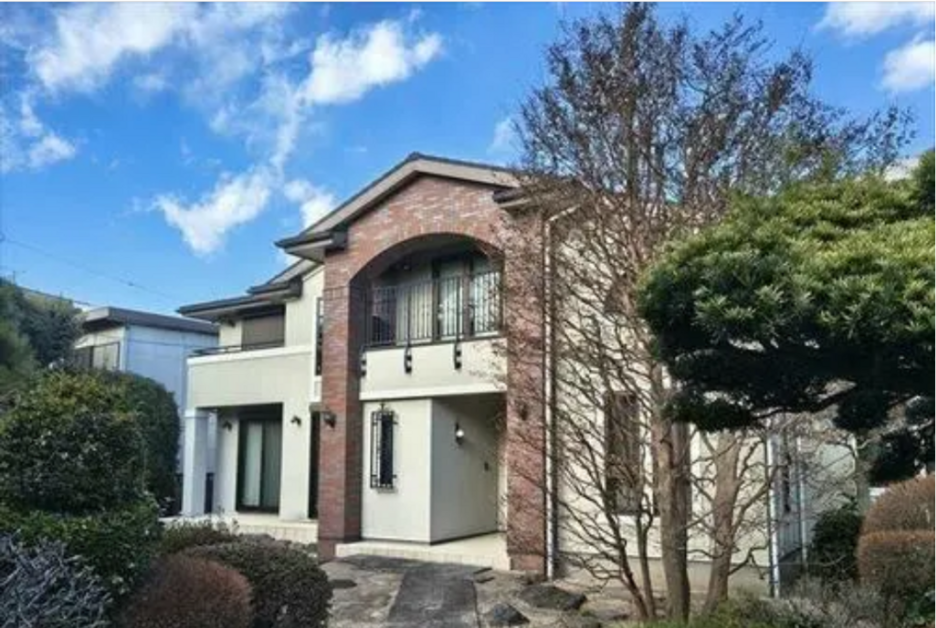

Japan has quietly become one of the most interesting real estate markets for international buyers. A combination of legal openness to foreign ownership, a wide range of property types at genuinely accessible price points, and a quality of life that consistently ranks among the world’s highest has placed housing in Japan firmly on the radar of buyers from the UK, Europe, North America, and beyond. Yet many prospective purchasers hold back, deterred by misconceptions about the process or a lack of straightforward information about how the market actually works. This guide sets out to change that.
Can Foreigners Own Property in Japan?
The most common misconception about Japan’s property market is that foreign nationals face restrictions on ownership. They do not. Japan imposes no limitations on foreign buyers purchasing real estate. There are no requirements for residency, no mandatory local partnerships, and no special visa classifications linked to property ownership. A foreign national can purchase both land and buildings in Japan on the same freehold terms as a Japanese citizen, with full title registered in their name.
This stands in notable contrast to many other Asian property markets. Countries such as Thailand, Indonesia, and Vietnam place varying restrictions on foreign land ownership, making Japan’s open legal framework one of its most significant advantages for international buyers. The property registry is transparent, well-maintained, and legally robust, providing the kind of clear title assurance that serious buyers require.
What Types of Housing Are Available?
Japan’s residential property market encompasses an exceptionally wide spectrum, from compact urban apartments to expansive rural farmhouses with considerable land.
In the major cities — Tokyo, Osaka, Kyoto, Fukuoka — buyers find everything from modern condominium units in high-rise buildings to machiya (traditional wooden townhouses), particularly in Kyoto’s preserved historic districts. Urban properties command higher prices but offer strong rental yield potential and excellent access to transport infrastructure.
Outside the cities, Japan’s countryside holds some of the market’s most distinctive offerings. The kominka — a traditional farmhouse, often centuries old, built using post-and-beam timber techniques — has attracted significant international interest. Many kominka come with substantial landholdings and outbuildings, and while some require renovation work, they represent an opportunity to own a genuinely historic structure at a price point that would be inconceivable for comparable heritage properties in Europe.
Ski resort areas, particularly Niseko in Hokkaido, have developed into a distinct sub-market of their own, with international buyers purchasing chalets and slope-side apartments for both personal use and short-term rental income during Japan’s renowned powder snow season.
Understanding Property Prices
Japan’s property market defies the assumption that it is uniformly expensive. While premium addresses in central Tokyo — Minami-Aoyama, Roppongi, Azabu — carry prices comparable to London or Paris, the vast majority of the country offers far more accessible valuations.
Real estate agents regularly list solid family homes below ¥30 million (approximately £160,000 at current exchange rates) in regional cities such as Sendai, Hiroshima, or Kanazawa. In rural areas experiencing population decline, akiya — vacant properties left empty as owners move to cities or pass away — can be found at a fraction of urban prices. Some local authorities have established akiya banks (registries of vacant properties) and offer renovation subsidies or grants to buyers willing to inhabit and restore these homes, as part of broader rural revitalisation efforts.
The weakness of the Japanese yen against sterling and the euro over recent years has further amplified purchasing power for UK and European buyers, making this an unusually favourable moment to be entering the market.
The Buying Process: Step by Step
The purchase process in Japan is well-structured and legally sound, but documentation-heavy and conducted almost entirely in Japanese. For this reason, the majority of international buyers work with a bilingual real estate agency or a specialist firm experienced in handling overseas clients.
The typical sequence runs as follows: property search and viewings (either in person or remotely via video); negotiation and offer; signing of a purchase agreement (baibai keiyakusho) in the presence of a licensed real estate agent; payment of a deposit; and completion via a notarised closing handled by a judicial scrivener (shihō shoshi), who formally registers the transfer of title. The full process from offer acceptance to completion typically takes four to eight weeks, depending on the complexity of the transaction.
Mortgage financing for non-resident foreign buyers is limited in Japan, with most domestic lenders requiring residency as a condition of lending. The majority of international purchasers, therefore, complete transactions in cash or arrange financing through institutions in their home country. Buyers should also budget for additional purchase costs: real estate agent fees (typically 3% of the purchase price plus ¥60,000 and consumption tax), registration taxes, stamp duty, and judicial scrivener fees , which add between 6% and 8% to the headline purchase price.
For a comprehensive walkthrough of each stage — including the specific documentation required, what to expect at each step, and how to navigate the legal requirements as a foreign buyer — a dedicated guide to buying property in Japan is an invaluable resource before beginning any serious search.
Older Buildings and Earthquake Standards
One practical consideration worth understanding early is Japan’s earthquake building code history. A landmark revision to Japan’s Building Standards Law in 1981 introduced significantly enhanced seismic resistance requirements. Properties constructed before this date — classified under the old standards as kyuseishin — may not meet current earthquake safety requirements without structural reinforcement work.
You should not avoid older properties because many have undergone retrofitting or are situated in regions with less seismic risk. However, it is a reason to commission a professional structural survey before committing to any pre-1981 building, and to factor potential remediation costs into the purchase budget from the outset. Reputable agents working with international clients will flag this issue proactively.
Ongoing Ownership Costs
Japan’s annual property taxes, approximately 1.4% of the assessed value of land and buildings, stand considerably lower than the market price, meaning real-world tax bills are modest by UK or European standards. Urban apartments in the mid-range of the market might attract annual property taxes of ¥100,000–¥200,000, while rural kominka with low assessed values often carry lower bills still.
Condominium buildings charge monthly management and maintenance fees covering communal areas, building upkeep, and sinking funds for major repairs. These vary by building size and age, but should be factored into ongoing cost planning. For standalone houses, the owner bears full responsibility for maintenance, and Japan’s climate — hot, humid summers and heavy snowfall in northern regions — means that wooden structures in particular benefit from regular professional upkeep.
Is Now a Good Time to Buy?
Several factors have converged to make the current environment a strong one for international buyers considering Japan. Sterling and euro purchasing power against the yen remains historically favourable. International awareness of Japan’s property market is rising, but remains well below the level seen in established expat markets such as Spain, Portugal, or Thailand, meaning that competition for well-priced properties is still limited compared to what it may become. And the domestic conditions that create buyer-friendly pricing in regional markets — demographic decline, urbanisation, and an expanding akiya stock — are structural rather than cyclical, meaning the supply side of the equation is unlikely to tighten dramatically in the near term.
For buyers who have long considered Japan a fascinating but unreachable market, the reality is more straightforward than the perception. With the right local guidance and a clear understanding of the process, purchasing a home here is an achievable goal, and one that opens the door to one of the world’s most rewarding places to live.